大宝
Oct 7, 2026
This was the activity I was most looking forward to and enjoyed the most this trip. Every temple has a different kind of beauty, just like a rural adventure.
Yunnan Yi Rural Travel | Forgotten Vernacular ArchitectureJoin this trip →🚩Activity Arrangement:
The activity requires a minimum of 2 participants and a maximum of 4. Suitable for adults and children over 6 years old.
Departure time: 9:30 AM, about 1 hour and 30 minutes' drive to Yunnan Yi.
Return time: 8:00 PM.
Lunch at a local restaurant in town (included in the activity fee).
📎Rural travel is quite casual and closely related to the lives of local villagers. For example, if there are local festivals, weddings, funerals, or daily chores, some of the ancient buildings mentioned in the text may not be open, but there may also be other unexpected encounters. We need to inform you in advance. We welcome guests with a relaxed travel attitude, who are not picky and have a delicate sensibility.
This is our second time contacting the grandmother who keeps the key to Yuqing Kuixing Pavilion. In the afternoon, it started to drizzle. After receiving the call, she came to open the door for us as before. She seemed a bit different from our impression—this time she was limping, saying it was a problem caused by the rainy weather. She was not tall, but still tried hard to step over the high threshold to unlock the door for us.
Why did we come here? Perhaps the most fundamental reason is that He Chen likes to look at old houses, and so do I. We simply enjoy looking at them and being among them. Frankly speaking, our understanding of complex Chinese architectural styles is very shallow; perhaps we are not even laymen. But in our eyes, these wood and bricks, weathered and attached by time, are not dead objects. These vernacular buildings scattered across fields, villages, mountains, and watersides, like their guardians, are like old people forgotten by the times, aging unnoticed, watching the parallel train of the era rush by.
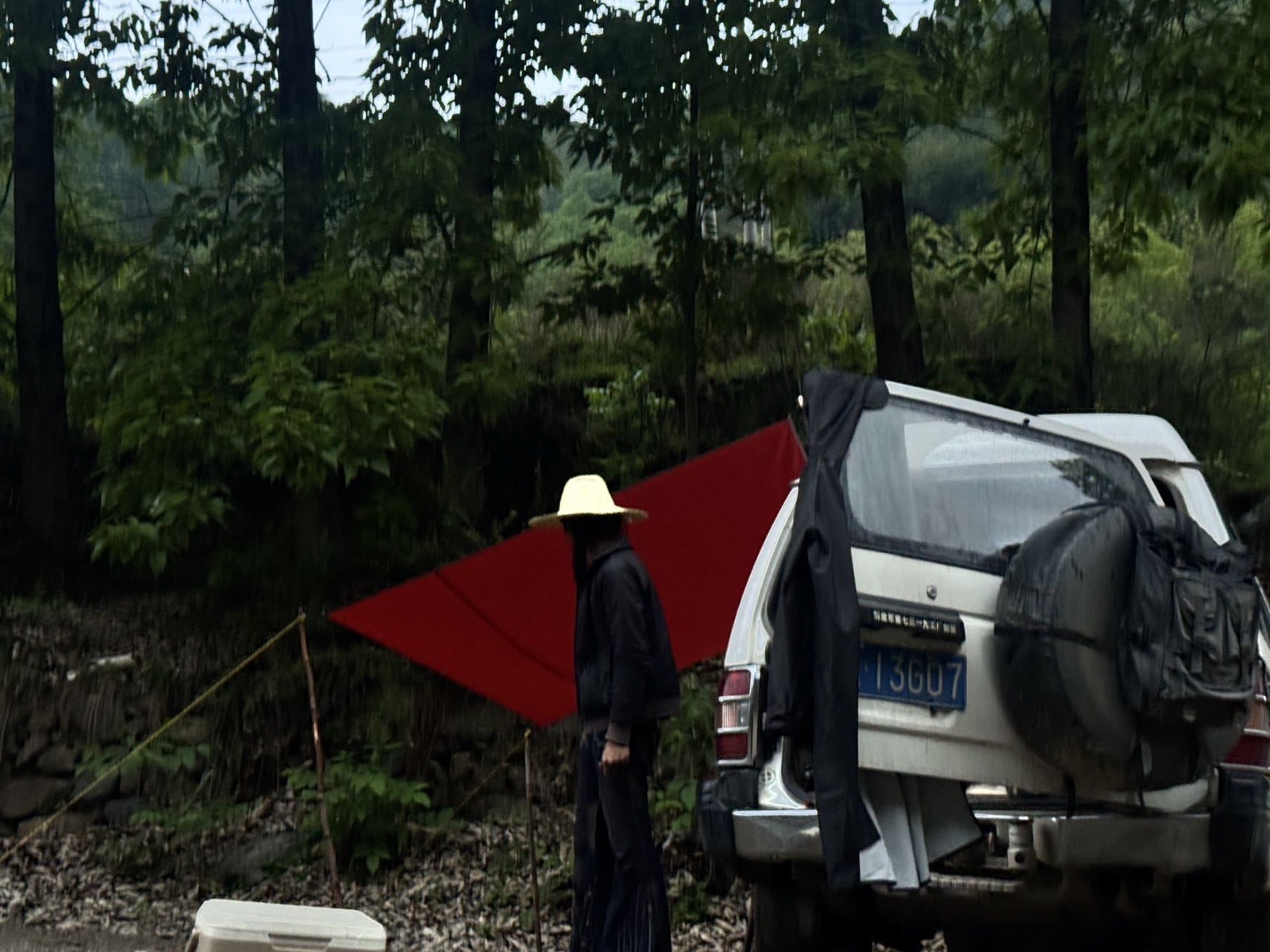
So, after the busy summer vacation, like a casual outing with friends, we came to Yunnan Yi, the origin of the word 'Yunnan', to see these forgotten vernacular buildings. The pastoral scenery receded continuously, and we rolled down the car window to ask for directions time and again. Those kind faces led us to these white-haired elders. The keys in their hands can help us open doors to different times and spaces.
Yuqing Kuixing Pavilion
First built in the 7th year of the Xianfeng reign of the Qing Dynasty, it consists of the Kuixing Pavilion, a three-story building with a pyramidal roof; the Guansheng Hall, a single-eave gable-and-hip roof structure; and the Wenchang Palace, a composite building with single-eave and double-eave gable-and-hip roofs. We found that the dougong brackets here are very finely crafted, and the carvings on the beams and eaves are also exquisite.
(The grandmother who came to unlock the door)
Ten years ago, this place was listed as a prefecture-level cultural relic protection unit, but upon closer inspection, the protection has not been effectively implemented. Many of the wooden carved lattice windows on the second-floor stage are cracked, and the adobe layer on the exterior walls is largely exposed. What annoys the grandmother most is the leaking roof of the Wenchang Palace. Compared to other elderly people in the village, her accent is not as heavy and is easier to understand. In her narration, one can feel a sense of powerlessness. When we said goodbye to her the first time, she hoped we could find someone who could help. After getting in the car, I thought, if the roof keeps leaking, the wood on the beams will soon rot from moisture.
The dilemma of being forgotten lies in the key issue of its 'non-cultural-relic' status, lacking the implementation of responsibilities and financial support from relevant departments. Even though ancient architecture experts have pointed out that it is a typical Yunnan three-story layout with 'a stage in front and a pavilion behind', a 'living fossil' of the development of opera in western Yunnan, and has important architectural and cultural-historical value, after returning to Dali, I checked all public information about this Kuixing Pavilion and found no substantial official restoration information. What barely supports it may be just some patchwork measures.
The beauty that time bestows on architecture is fully visible, but if it is completely forgotten, this vessel holding the nostalgia of the older generation will also disintegrate.
Xiaokang Village Water Pavilion
Yunnan Yi is like a maze composed of countless villages and field paths. We drove along the winding country roads, unable to tell north from south. In this maze, one can see many water pavilions, large and small, new and old, built at the water mouths of villages to suppress floods and gather wealth. But the one in Xiaokang Village, seen from afar standing in the middle of the farmland like an entrance to past times, lonely and mysterious, is my favorite.
Feima Yuhuang Pavilion
The second time we saw the grandfather who guards the Yuhuang Pavilion was on the street in the evening. Having just finished dinner, he was taking a walk in the village. We recognized him and greeted him. Although he was already 'off duty', he enthusiastically opened the door again for us to visit. In many parts of our country, for safety and cultural relic protection reasons, many ancient pavilions are not allowed for tourists to climb. But here, no one stopped us. The grandfather sat aside, took out his water pipe and started smoking, chatted with us a few words, and occasionally coughed. He is a relaxed and easygoing old man. Climbing up the old wooden stairs and dark corridors to the top floor of the pavilion, through the round wooden window, one can see the high-speed train speeding by not far away. The situation here is similar to the Kuixing Pavilion, but it retains some specific functions. As the highest point in the village, the loudspeaker fixed on the outer eave of the second floor is still broadcasting notices for the village.
The statues here are also very distinctive.
(The grandfather smoking)
Tianhua Mountain
The ancient building complex on Tianhua Mountain is built against cliffs and karst caves, divided into upper, middle, and lower hermitages. The largest upper hermitage is built inside a cave on the cliff, making the natural rock wall part of the building. Some caves have naturally become small rooms for living and cooking, used by the villagers who manage the place—very interesting. The Taoist temple, which seems far from the hustle and bustle and rarely visited by tourists, is full of life. When we arrived, several women were preparing dinner and asked if we wanted to join them. A TV in the cave was playing a urban romance drama.
Here, Buddhism and Taoism are blended, which is very practical. The statues are somewhat rough, and in some places, you can even see a lucky cat placed nearby, indicating that it is for the daily prayers of ordinary villagers, not a cold religious hall. I like this kind of daily life.
Some scenery along the way
Miaocun Great Temple, where an auntie came to open the door for us.
First built in the Qing Dynasty, it was the headquarters of the CPC Xiangyun District Committee before the founding of the People's Republic of China. Today, revolutionary slogans from the past can still be seen on the walls of the side rooms of the Wenchang Palace.
The grain station from the planned economy period is now a local residence.
Grandmothers sitting at the village entrance, weaving something in their hands. When asked, they said they were making 'parts' for straw hats and straw weaving nearby, earning a few cents per piece.
The huge 'straw hats' seen everywhere in the village—Li Zhenhao likes them very much.
The chili peppers and tobacco leaves in the fields are ripe.
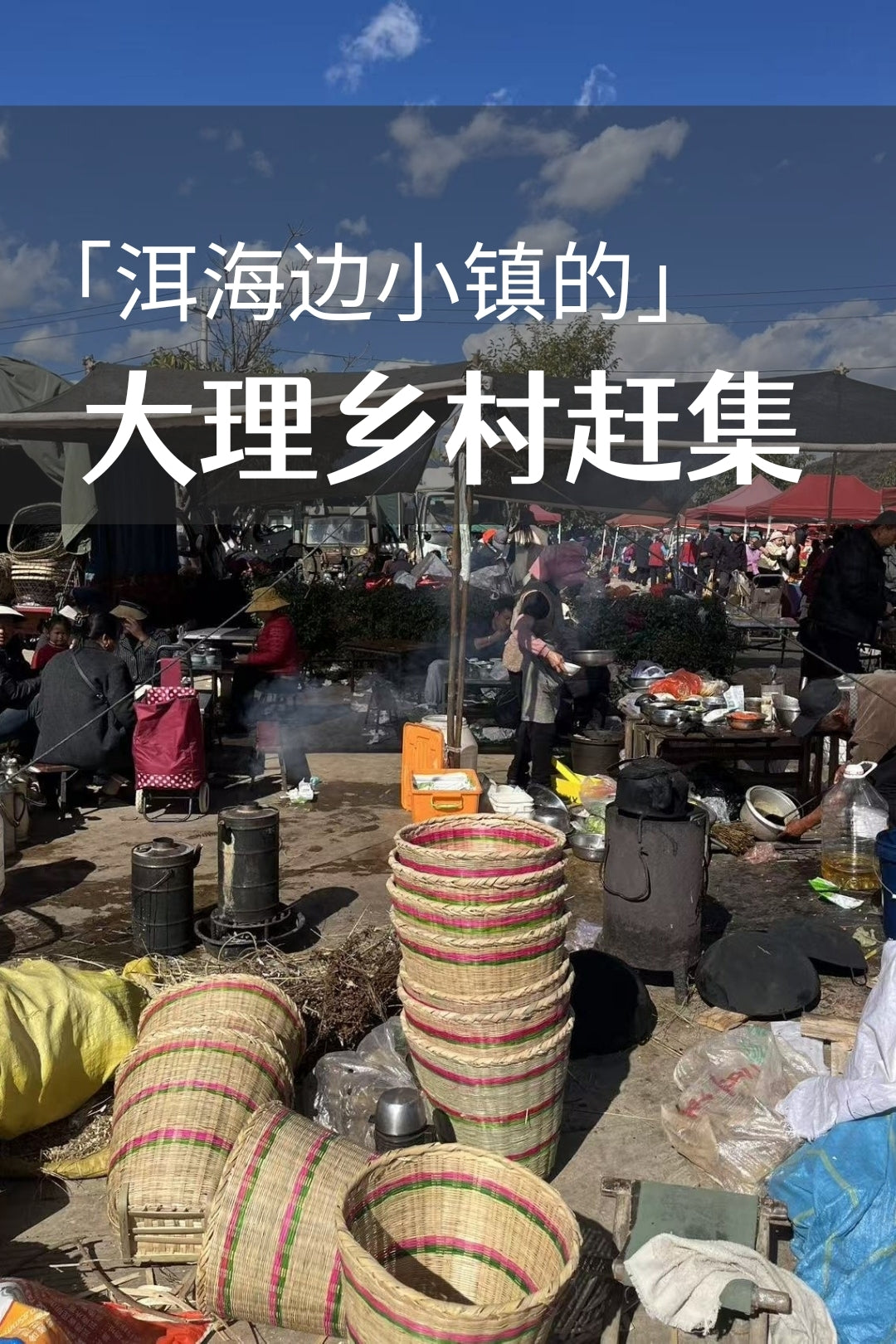
Jiangwei is about 35 km from the old town, roughly a 45-minute drive. In the morning, head to this small town by Erhai Lake for market day and see locals' vegetables, sundries, and traditional life, with a stop by the Miju River along the way; return to the old town in the afternoon.
6 hours

Meet near the Three Pagodas, then about a 1.5-hour drive to the hike's starting point. The route is about 5 km with 350 m of ascent, passing through primeval forest on an uninhabited ridge and meadow clearings where local Yi people graze their livestock. From the high point of the meadow, you can gaze out at Dali's layered mountain ranges; moss hangs like curtains in the gaps between the trees. Midway, the guide will prepare tea, snacks, and fruit, and we'll have a picnic in the forest. After the hike, we'll return near the old town in the evening.
8.5 hours
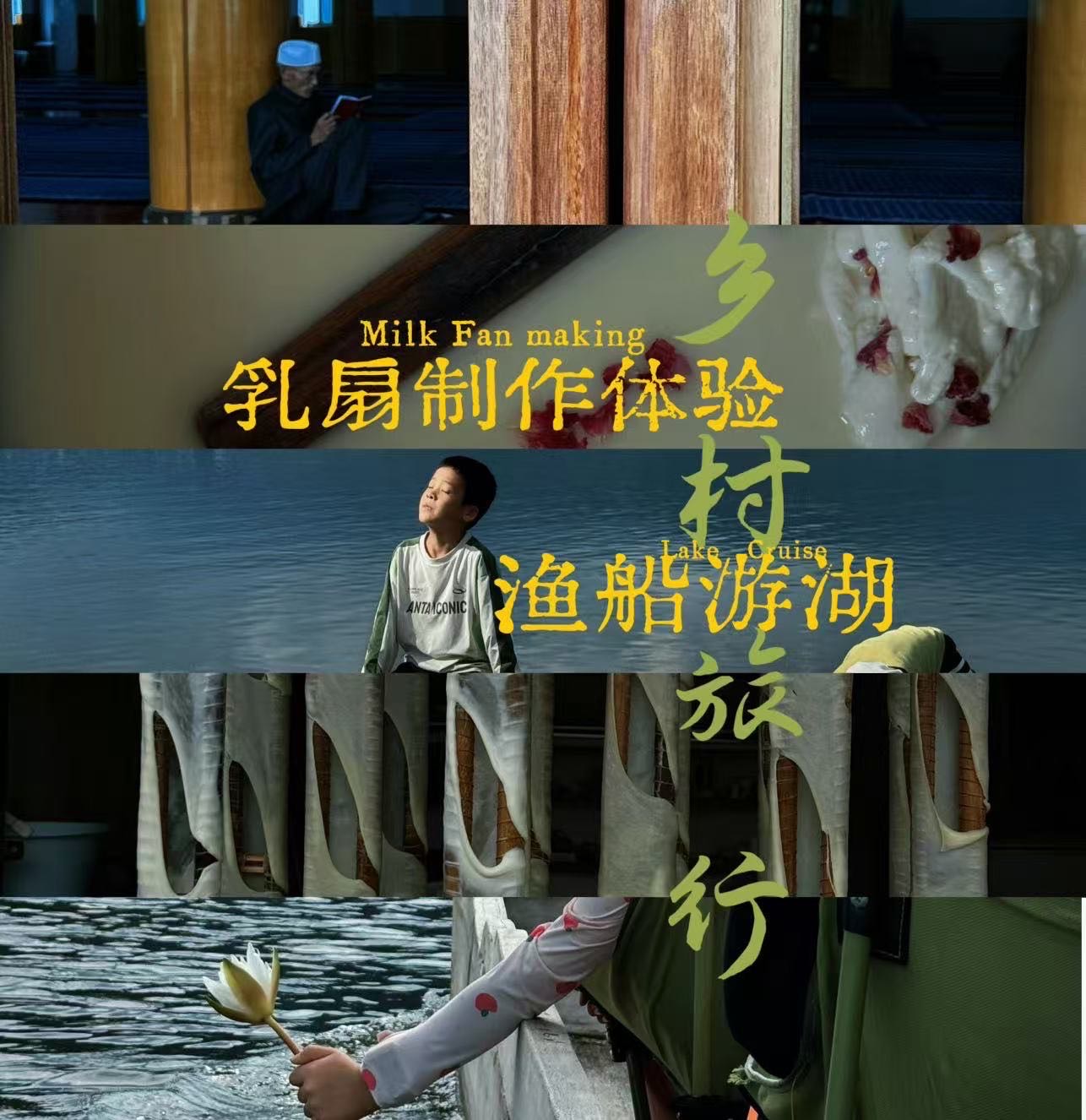
The activity is about 45 km from Dali Ancient Town, within a 40-minute to 1-hour distance range. It is a leisure itinerary around Eryuan villages (one of the sources of Erhai Lake), experiencing the making of Dali traditional snack milk fan, taking a boat across the lake, and strolling through rural fields. Suitable for slow-paced and traditional cultural experiences.
6 hours
Like a casual outing with friends, we came to Yunnan Yi, the origin of the word 'Yunnan', to see these forgotten vernacular buildings. The pastoral scenery receded continuously, and we rolled down the car window to ask for directions time and again. Those kind faces led us to these white-haired elders. The keys and memories in their hands can help us open doors to different times and spaces.