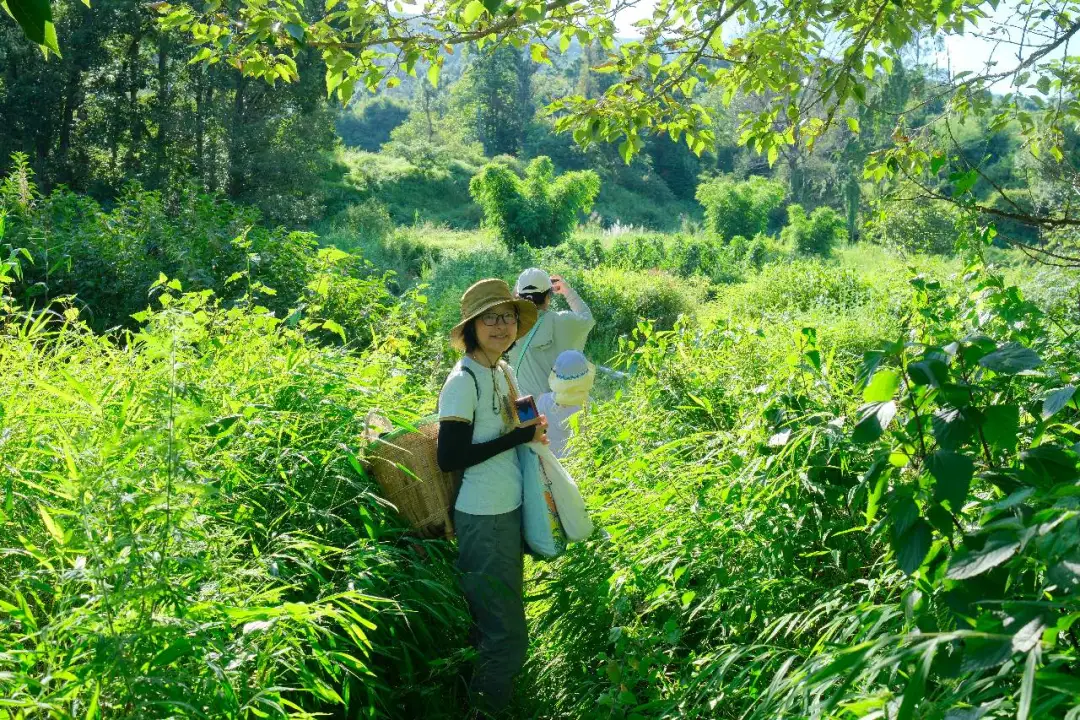
"This is a relaxed mini hiking route, about 2 kilometers long, with an elevation gain of about 100 meters. Suitable for all ages, from toddlers to the elderly. During the activity, we will walk through the fields at the foot of Cangshan Mountain, climb a small hill, and stop along the way to observe the rich and diverse flora and fauna of the area and learn their interesting stories. The route offers open views, allowing you to admire Cangshan Mountain up close while also enjoying panoramic views of Erhai Lake and nearby villages."
Note: The price is the same for adults and children. For one adult and one child, book 2 people.
About the guide Phoebe:
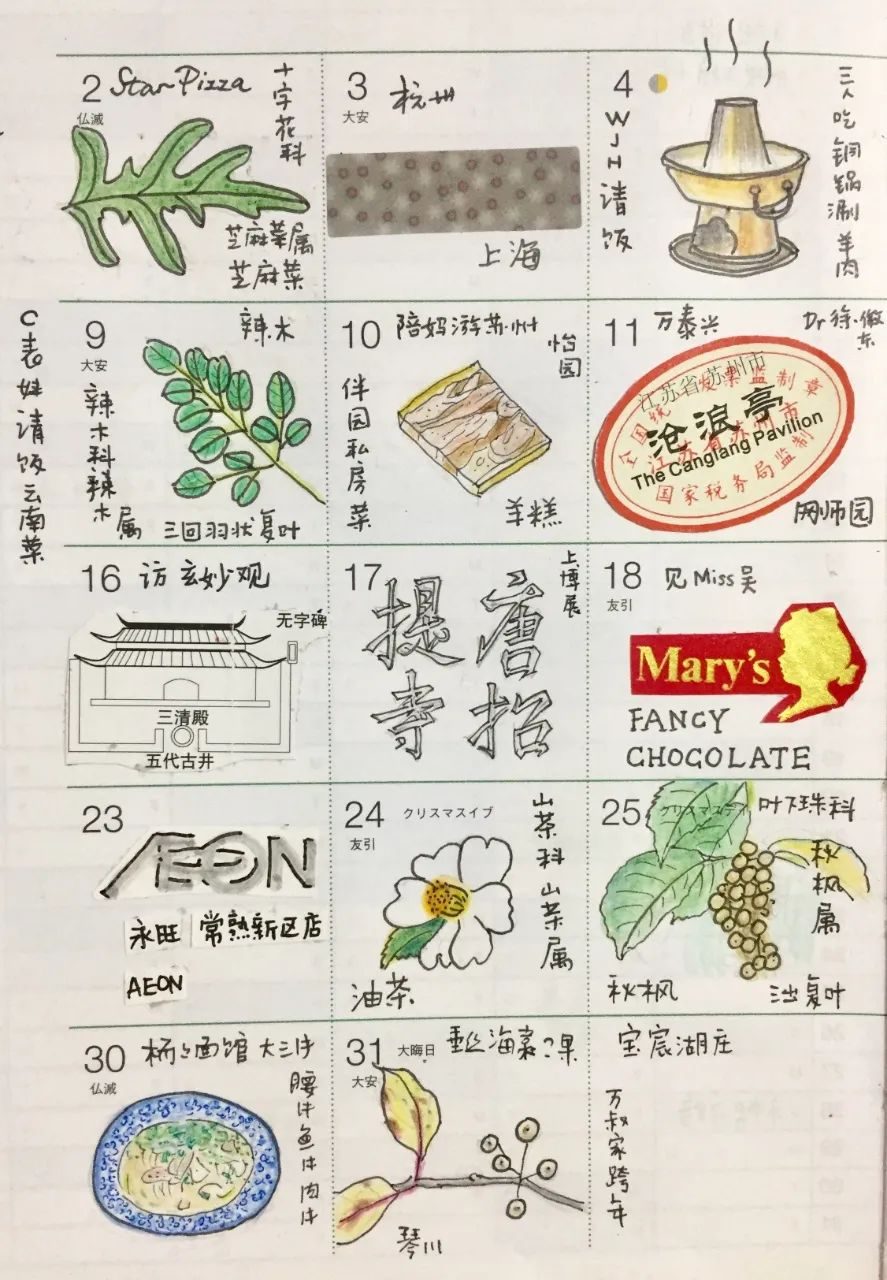
Freelance translator in English, Japanese, and French. She has translated over twenty books and picture books, including "My Nature Game Book" (French), "Roaming Space—My First Exploration Atlas" (English), and "Sustainable Beautiful Life" (Japanese). She is an enthusiast of art, humanities, and natural history. She fell in love with nature observation in 2015. She has loved drawing since childhood and started bullet journaling in 2016; her bullet journal sketches were featured in "City Pictorial". She writes the WeChat public account "Phoebe's Roaming in the World".
For a complete list of translations, see Phoebe's Douban homepage, ID: oldphoebe
Jason | What I know about Phoebe
About the activity:
Distance: 2 km round trip. Including gentle slopes, the elevation gain is about 100 meters.
Time: 14:30–18:00 (start time is not fixed; it varies with season and sunset time—later in summer, earlier in winter)
This is a relaxed hiking route, friendly for young children and suitable for all ages. During the activity, we will cross the fields at the foot of Cangshan Mountain, climb a small hill, and stop at any time to observe the rich plant and animal species of Cangshan and learn about their interesting aspects. The route offers open views, allowing you to get close to Cangshan Mountain and overlook Erhai Lake and villages.
The plants along the way are very diverse, including winter cherry, walnut, Yunnan poplar, palm, silk tree, bloodwort, nettle, ramie, crofton weed, mugwort, cudweed, tea tree, horsetail, and of course various seasonal vegetables in the fields.
I will explain the stories of these plants along the way; different plants have their origins, history, and uses. Some are native, some are introduced. Through this pleasant and relaxed hike, you can learn most of the plant ecology and knowledge on the slopes of Cangshan.
During the season when insects are active, we will also catch insects that children are interested in along the way for close observation.
If you want to know more about this activity, please feel free to add my WeChat:
In addition, I have a nature observation group for enthusiasts. After the activity, you can continue learning and see plants, insects, and birds observed by netizens from various places in different seasons. There are also natural history experts and picture book writer friends in the group, where everyone can exchange and progress together.
Frequently Asked Questions Q&A:
1. Can children participate on their own?
—— For Cangshan Hiking Home activities, children under 16 are required to have participated in at least one activity with a parent before going solo, and must be approved by the guide. Under this premise, children over 7 who are interested in the activity content and have an easygoing personality can go solo.
2. Do accompanying parents need to pay?
—— Yes, the price is the same for adults and children for this activity. The activity is not only for children; many adults sign up alone.
3. Is the fee the same for a two- or three-year-old child? My child is * years old, is this activity suitable?
—— Yes. Infants in arms and 1.5-year-olds can participate free of charge, but parents need to have experience hiking with children and ensure that the child will not easily cry and affect the experience of other guests.
This activity is suitable for children over three years old and adults. Occasionally, two-year-olds participate. Two-year-olds are mostly carried, which tests the parent's physical strength.
4. What if it rains? Will it affect the activity? Will there be fewer insects?
—— Dali's weather is changeable and difficult to predict; forecasts are often inaccurate, especially during the summer rainy season, so we can only check at the last minute. Light rain does not affect the activity. I will prepare raincoats and shoe covers, and we will take a tea break at the Mountain God Temple. On rainy days, guests can judge by the sky and decide for themselves; if they want to cancel, I can help cancel.
Insects mainly depend on the season; fewer in winter, more in summer.
5. Can we still see insects in winter?
—— In winter, the number and variety of insects cannot compare with summer, but Dali's daytime temperatures in winter are still pleasant, and you won't see nothing—you just need to look more carefully.
In winter, when winter cherry and eucalyptus bloom, they attract birds and squirrels to feed on nectar, which is also a good opportunity for observation. Winter is also suitable for birdwatching; sometimes birds of prey can be seen.
6. Where is the route roughly, how is the itinerary arranged, and what is the difficulty of the hike?
—— We meet by the fields near the Jingdi Yoga and Meditation Hotel in Shangyin Village, start hiking, cross the fields, and observe plants and animals along the way. Finally, we climb a small hill with a view, rest there, and have a tea break (the activity provides hot tea and fruit snacks). If there is still time, we go to an open place with few trees to enjoy the view, then descend via the Mountain God Temple with many foreign graffiti, and return to the starting point.
2 km round trip. Except for the last climb, most of the route is gentle slopes. Including the early gentle slopes, the total elevation gain is within 100 meters. The difficulty is suitable for all ages.
7. How long is the activity? What time does it start? Will we eat too late? Are there places to eat near the meeting point?
—— The activity generally lasts three to four hours. The duration marked in the mini-program is a median shorter time. It depends on everyone's interest. The overall pace of this activity is relatively slow; nature observation requires walking slowly and discovering slowly.
In summer, we meet around 4 PM to avoid the sun on hot days. On cloudy or rainy days, we can start earlier. The specific start time will vary and be adjusted according to weather and sunset time. The start time is set to facilitate a comfortable and smooth activity, and will not be fixed.
In summer, sunset is around 8 PM. There is actually a 2-hour time difference between Dali and eastern China, so it is normal for daily schedules and meal times to be a bit later.
In winter, we meet around 1:30 PM. We can also consider starting earlier according to everyone's needs; higher temperatures are better for observation.
About an 8-minute walk from the meeting point, there is a hotel called "Cangshan No.1" where the hotel restaurant can serve meals. In peak tourist season, guests have had lunch there after 2 PM, and it seems meals can be served at any time. In off-season, the restaurant has limited hours.
8. What is the difference between mini nature observation and nature journaling?
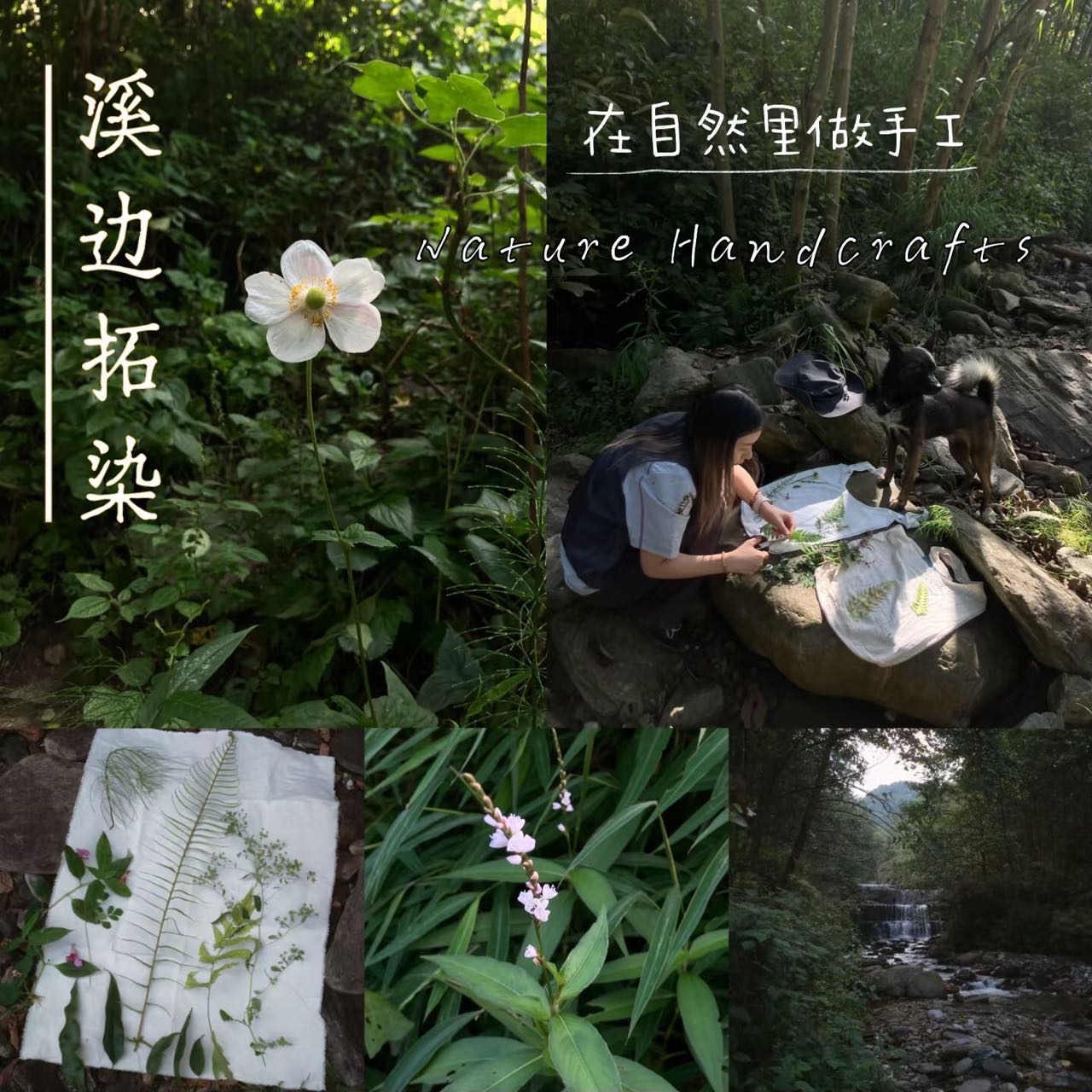
—— The route is the same, the observation is the same. Nature journaling is making a record on the basis of nature observation, using a free combination of drawing, writing, children's Polaroid photos, and specimen collages. Suitable for children and adults who love drawing or want to try drawing. The option "Observation Only (no journaling)" is equivalent to mini nature observation.
In peak season, if you want to sign up for mini nature observation and find that your desired date is full, you can also look at nature journaling on nearby dates and choose the "Observation Only (no journaling)" option. The two activities can also be mixed, but it is ideal to do them separately. Because nature journaling has a slower pace, drawing takes time, and patience is needed. In the mixed case, the journaling session will be mainly arranged after the tea break. Guests who do not draw and do not want to wait can return along the same route by themselves (the route is not complicated). When there are many people and an assistant is hired, the assistant can also lead them down the mountain first.
9. Is there a discount for groups?
—— No. With more people, I hire an assistant and need to pay the assistant. The activity is capped at ten people (occasionally one extra person during public holidays and peak summer/winter vacation seasons).
10. Are there snakes on the mountain?
—— Yes, but they are rarely encountered. In summer, when the grass is tall, the activity avoids some of the small paths that are optional in winter and chooses the main road used by villagers to go up the mountain, increasing safety.
11. Does the route pass through cemeteries and encounter graves?
—— Yes. In Dali, there are graves everywhere in the outdoor fields and fields. No matter where you go, as long as you participate in outdoor nature activities near the mountains, it is unavoidable.
12. Is parking convenient near the meeting point?
—— Parking and turning around by the fields are convenient. After placing an order, a group will be created and transportation guidelines will be sent.
13. What should I do if I encounter problems filling in the information for outdoor insurance purchase?
—— For each person, please click to enter again; after refreshing, it usually works. Do not operate too quickly; give the system some time to respond.
14. Why does the mini-program show the fee as free?
—— After selecting a time slot, the corresponding price will be displayed.
More activity-related text and image information
Activity site photos:
Route scenery:
Some insect species:
Potato ladybug
Argiope bruennichi (writes ribbons)
Indian cabbage white
Abraxas genus
Chrysolina aurichalcea
Lethe verma
Catephia alchymista
Indian fritillary
Blister beetle and froghopper
Some plant species:
Suillus luteus
Osbeckia stellata (a Melastomataceae plant endemic to Southwest China)
Nicandra physalodes (ice jelly fruit)
Nasturtium (can be used in salads)
Impatiens delavayi (want to know why the English name for impatiens is touch-me-not?)
WeChat article · WeChat article
https://mp.weixin.qq.com/s?__biz=MzU4Njk2ODc1NA==&mid=2247485399&idx=1&sn=5253288287cb51a3ad50c034adc1e36f&scene=21#wechat_redirect