老猫在大理
Oct 17, 2026
Thanks to Jason for the sharing. By explaining with examples, even beginner listeners can fully understand and grasp the introductory tools. Awesome.
AI Sharing Session | Create a Mini Program with a Live CaseJoin this trip →Qiqi October 28, Session 9 | AI Mini Program Making · Starting from a Case. Speaker: Qiqi
October 28 AI Learn Together Reservation | Starts at 19:00
The AI introduction on October 25 was given by Chen Bali. Bali is our paddleboard guide and has his own photography service. He made his own practical mini program Paris BeneathTheDali. The live case was A Yue, who runs a business in Yunnan and Hubei specialties. (I haven't uploaded the actual case production to the server yet, so it's temporarily missing.) It was Paris's first time speaking, but he was lively and detailed, with his own characteristics. Thanks to him for taking the time to share his experience.
Qiaoqiao has been running a guesthouse and living in Dali since she retired, but after hearing the sharing, she wanted to make a mini program for her personal interests. Jiang Niuniu came again and asked many good questions. Xiaofei from Xizhou Xingzhe Shangju also came specially to learn. Lisa, who has joined our previous trips over the past two years, met again in the community learning.
Team leaders Phoebe and Captain Tie also came to listen. Phoebe felt she currently has no interest in making an online mini program, but AI helped her quickly organize the e-books scattered on her hard drive into an index mini program, which is very convenient to use. She no longer has to search everywhere, and can easily search for a certain plant or insect in all e-books in one place, which makes her very happy. She said: "Organizing is a big category of work. Everyone needs it." "You only talking about 'making mini programs' is not comprehensive."
Captain Tie will also share his global sailing experience on the evening of the 27th.
On October 28, we invited Qiqi to speak for this introductory learning session. Her mini program is rich in content and complex in functionality (not yet online), and she has her own unique perspective and production methods. The content will also be more in line with what many people want to make.
Next, we will invite more students who have completed their own mini program production to share their practical applications of AI. This will better fit the real and diverse needs of the Dali community, and make it easier to draw on different creative ideas. And most importantly, it can keep this joint learning going in the long term, solving different problems at different stages. Later, we will also have sharing and learning on server deployment and payment integration for mini programs/websites.
Attachment: Qiqi's mini program "Little Mountain Village" (coming online soon)
------------
Today's (October 24) case is Dong Dama's Xihuahua Farm
demo.lingjiec.com/xihuahua
demo.lingjiec.com/xihuahua/admin
The ethnic element features were not generated very well right away. On the one hand, it's the prompts; on the other hand, AI may lack experience with Bai ethnic elements in this regard.
Tomorrow, October 25, there will be another session. Chen Bali will talk about his experience making mini programs, and I will join as well.
Reservation: October 25 AI Learn Together
In addition, Henghe (Shanlu Tea Restaurant) came today and, based only on a previous AI learning note, made a mini program demo that is both good-looking and cleverly distinguishes the "day meal, night drink" interface. Very ingenious.
Jolly, who came on the 21st, also produced her own guesthouse demo, with good aesthetics and functional detail design.
-------------
More and more friends in the Dali community are starting to join the learning. Excellent. I hope everyone can make their own things, and I think that only by solving these bottlenecks can imagination be unleashed and creative development be realized.
October 15 case: Dali Tang Bu Ping (community activity platform)
demo.lingjiec.com/dalitangbuping
demo.lingjiec.com/dalitangbuping/admin
October 17 case: Yu Xiaomeng's silverware
demo.lingjiec.com/yuxiaomeng
demo.lingjiec.com/yuxiaomeng/admin
----------------
Qiqi shared her mini program yesterday. She started learning on October 2 and spent about 10 days making it. With her enthusiastic promotion, registration for the mini program learning together filled up immediately. The added session on the 17th also filled up. A new learner being able to make such a mini program is very inspiring to friends around her.
We friends living in Dali, because we are all doing our own personal things and often have many things that can present ourselves in three dimensions, are the most suitable for making our own mini programs. Not only for making a living, but also for expression, and also a kind of creation.
Don't worry that you don't know how, because everyone learns together, can discuss with each other, and solve problems.
Livestream replay: https://weixin.qq.com/sph/AW7zD5pNDo
Yesterday's participants were friends I know: Zimeng and Xiaoyu from Dali Tang Bu Ping, Xiao Zhu Doudou from Xianlai Wushi, Yu Miao, Noma Xiaochuan, Wanwan, Strawberry Jun, Qiao, Geng.
The case used was: the work content of Dali Tang Bu Ping (unfortunately, because I changed computers, I forgot to livestream it)
The next session is on the 24th
AI Learn Together October 24
---------------
On October 8, we held the third session. Many old Dali friends came to participate, including Feiduo, Lanqing, Liu Lei from Wild Dali, Tipi, Da Chun who runs summer camps, Dong Dama from Xihuahua Farm, Jiang Niuniu who came again with friends, and Nono who has started making local guide tours herself, coming for the second time to discuss how to do it.
I feel that this new way of working with AI is what everyone needs for doing their own things. Although I am also a beginner and not an authoritative teacher, if I can help everyone get started and plant a seed, it is meaningful. And in this process, I can always learn new things: because often everyone brings new questions and new needs, and we discuss and try to solve them together, which also helps me.
So on October 15, the 4th sharing session will continue. Welcome to join. Before I leave Dali in early November, I will hold as many sessions as possible.
Reservation link: AI Sharing Session 7
The WeChat Channels account will livestream simultaneously, free to watch. For the software and configuration installation to prepare in advance, see here: AI Learning Pre-installed Software
--------------
On October 2 and October 4, we held two sessions. Quite a few people came, and some have started practicing, such as Qiqi. I think during my time in Dali, I can hold as many sessions as possible. Students who want to learn AI and make their own mini programs are welcome to join. Don't worry that you don't know how; once you start hands-on practice, you will have unexpected gains. The WeChat Channels account: Cangshan Hiking Home will livestream, switching the computer screen, similar to the on-site effect, and you can also participate in learning together.
Time: 19:00-21:00
----------
In May, I studied AI programming in Chiang Mai, Thailand. In June, I made the "Cangshan Hiking Home" mini program. After returning in July, I started teaching team leaders and Dali friends to make their own mini programs. Most people are already making them, some are already online, and some are still in production. Before this, I hardly knew programming and had never thought I could complete a mini program independently.
Many people have had a great experience after learning to make them, feeling that what AI can do is beyond their imagination, and it is not as difficult as they imagined. Before, it was all friends around me. Now, next, we will gradually hold some public learning sharing sessions.
Why learn to make your own mini program and learn AI?
I think the main thing is to gain "freedom," and at the same time your "creativity" can be maximized. You also get a whole new way of thinking to do other things, increasing "possibilities," so even if you don't have a direct need now, it will help you in the future. In the past, many ideas could only be thought about, blocked by technology and unable to be realized, and you would encounter various limitations. About this part, I mentioned my feelings in Jason | Using AI to Make Your Own Mini Program/Website: "To make something creative, you must do it yourself."
Am I someone who needs my own mini program/website?
There are two situations where you might need it. First, if your materials are scattered across Xiaohongshu, WeChat official accounts, WeChat Channels, various online stores, then you integrate them to present yourself in three dimensions and present what you are doing. Second, existing mini programs and online stores greatly limit the expression of your products, services, and content. In Jason | Today's Mini Program Moving & Some Thoughts, this part is mentioned. With your own mini program and design, you can present yourself more three-dimensionally and more as yourself.
I am someone with no programming experience. Can I do it?
Absolutely. All our team leaders and friends around us have no programming experience, but they have all made their own mini programs. Each person's level is slightly different, and some are already online. With the progress of AI, the most difficult technical problems that are also hard to learn from scratch have been solved. Now the most important thing is a person's "ideas." This determines what is made. AI is an epoch-making technology (even now I often find it incredible). This reminds me of how I felt when I saw Excel functions and pivot tables in 1996.
Different people have their own unique creativity
Cheng Chang made "Xun Guang She" in Shangri-La about photography, mountains, and local experiences; Wangwang is making a Yunnan in-depth travel experience mini program "Jiaoyou"; A Jin and Yang Qiao want to put clay animation, printmaking, painting, photography, text, and tea into the same space; Xiao Jing made a mini program for the Mushroom Elf Picking Group; Xiao Li started organizing paddleboarding and folk content; Chen Bali is doing local information and personal photography; Da Hai is doing grape growing and winemaking...
Because everyone is different, the mini programs everyone makes have different characteristics. For example, Cheng Chang inspired me with introducing sound; Bali focuses on interactive experience and details; A Jin's clay animation-style homepage is unique; Xiao Jing's simple sketches; Wangwang's homepage pre-animation... I believe there will be more special designs in various aspects in the future, which can inspire each other.
What will you see at the sharing session?
We will not talk about abstract AI concepts, the latest technologies and models. On site, we will find one or two real needs among the people who come as cases to start with.
For example, a friend who runs a guesthouse brings their room photos, text introductions, WeChat official account articles, and Xiaohongshu content. We will start from these existing materials, communicate with AI on site, and organize them into a preliminary version of a mini program or website.
It may not become a fully mature product on site, but everyone can see with their own eyes:
How to tell AI a vague idea
How to start from existing text and photos
How AI generates pages, sections, and content structure
How an ordinary person modifies unsatisfactory parts
How a mini program and website appear step by step
What AI can accomplish and what still requires human judgment
After watching, everyone will not just feel that "AI is amazing," but will have a more specific thought:
So the things I already have on hand can also become like this. So I can also start.
Bring your own laptop. After installation and configuration, you can go home and start making a draft.
With AI, making mini programs has indeed become possible and much simpler, but some subsequent steps will be more complex and require investment in learning. For example:
Installing and configuring AI tools
Setting up mini program, website, and server environments
Domain names, filing, and deployment
Databases and admin backends
Payments, bookings, and other business functions
But with everyone learning together and helping each other, there will be no insurmountable obstacles.
You will gradually have the ability to accomplish these things. Because for a platform that truly belongs to you, the most important part is not technology, but your own ideas, judgment, and continuous creation.
First sharing session
Theme: Use your own content, text, and photos to make a mini program on site
Fee: 35 yuan/person
This fee is used for the studio venue and on-site activity preparation.
Location: Mountaincafe · Handmade Studio at the foot of the mountain
Number of people: about 8-10
Time: 19:00-21:00
Reservation link: AI Mini Program Sharing Session
Some mini programs made by me and my friends:
Cangshan Hiking Home · History and Culture:
Rain's website: rain.dalitripapp.cn
Mountain Life: sandylife.dalitrip.cn
A Jin's mini program homepage
Cangshan Hiking Home English interface
Jiaoyou mini program
Xiao Jing's Mushroom Elf mini program homepage
517's Gummy Experiment website
Xiao Li's Diving Outdoor · Folk Customs
Fan's Exhibition
Wen Jin's · Xizhou Changzhu
Cheng Chang's · Xun Guang She
Read the original article on the WeChat official account · Cangshan Hiking Home
WeChat article · WeChat article
https://mp.weixin.qq.com/s?__biz=MzU4Njk2ODc1NA==&mid=2247494353&idx=1&sn=a0681d783b3aa3bdae4370e5ef71bb5a&scene=21#wechat_redirect
WeChat article · WeChat article
https://mp.weixin.qq.com/s?__biz=MzU4Njk2ODc1NA==&mid=2247494634&idx=1&sn=3d8491c502b439365a8653c84ab4b25c&scene=21#wechat_redirect
WeChat article · WeChat article
https://mp.weixin.qq.com/s/mH8Fu_scf4iwVI6ERzie-A
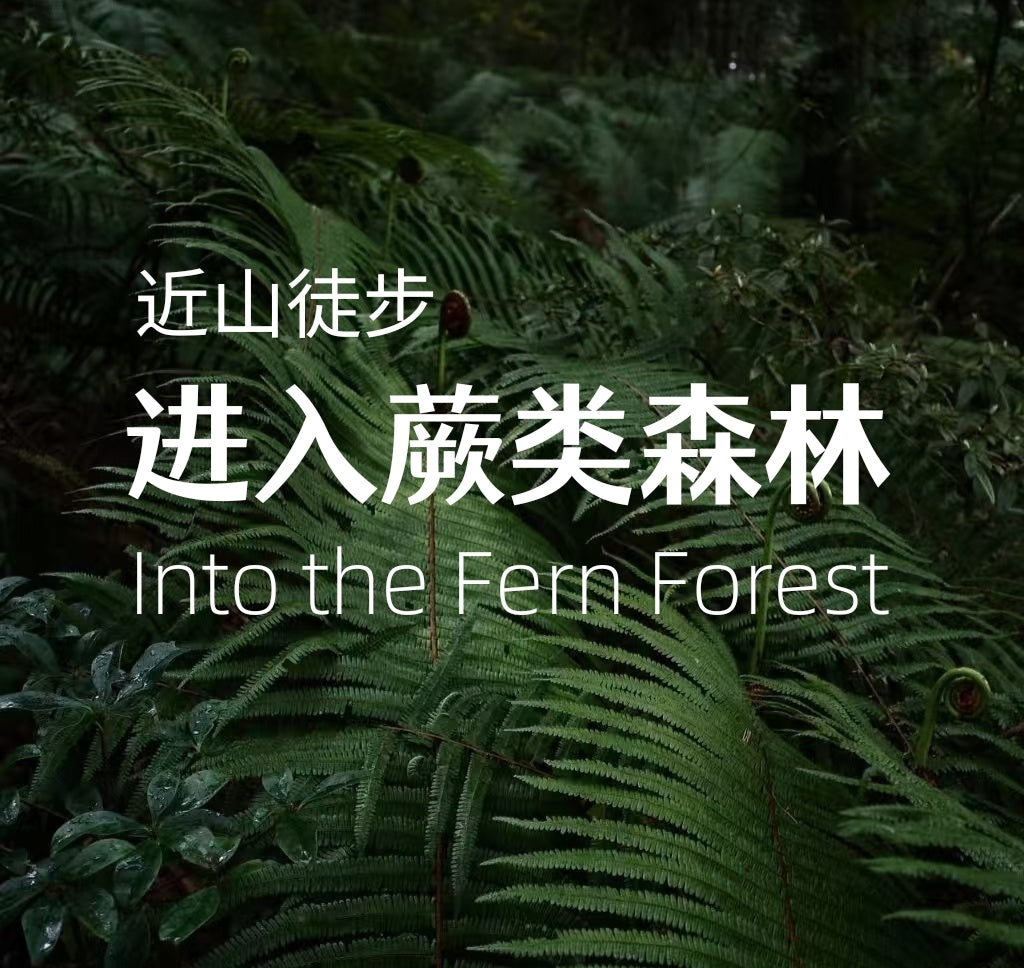
Meet about 5 km north of the old town and set off; the route is about 4 km in total. Walk slowly through a forest where ferns grow as lushly as waterfalls, and get to know ferns of various forms, spores, and habits. The intensity is moderate, suitable for travelers who want to experience Cangshan nature without getting too tired.
4 hours
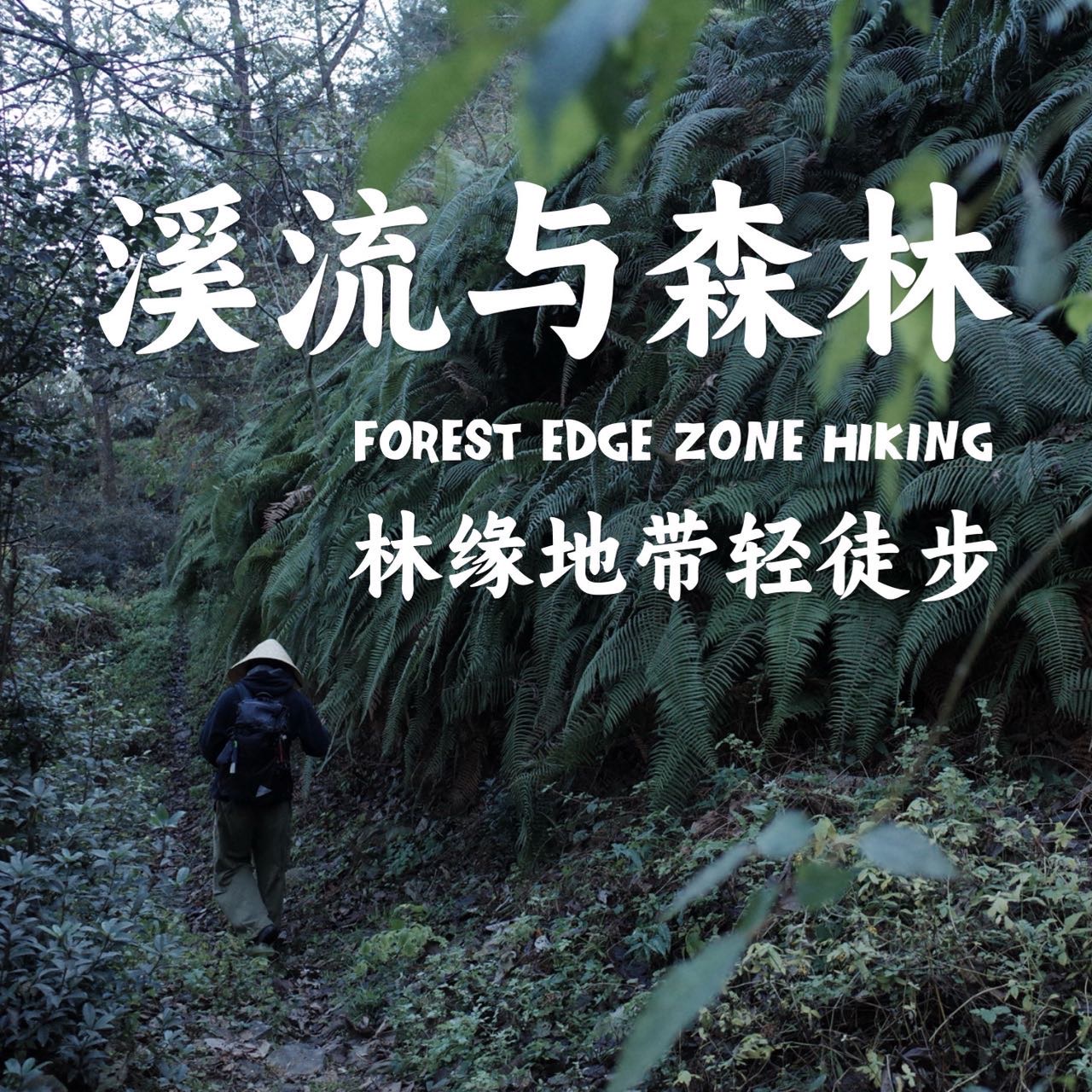
The Kuosongping gentle hike starts from village fields, crosses streams, white stone beaches, and the forest edge. Along the way, large ferns and plants that only grow at the forest edge thrive, and sometimes dogs may join you. This half-day trip is light and easy, perfect for families or guests who want a relaxed hike with rich scenery.
3.5 hours
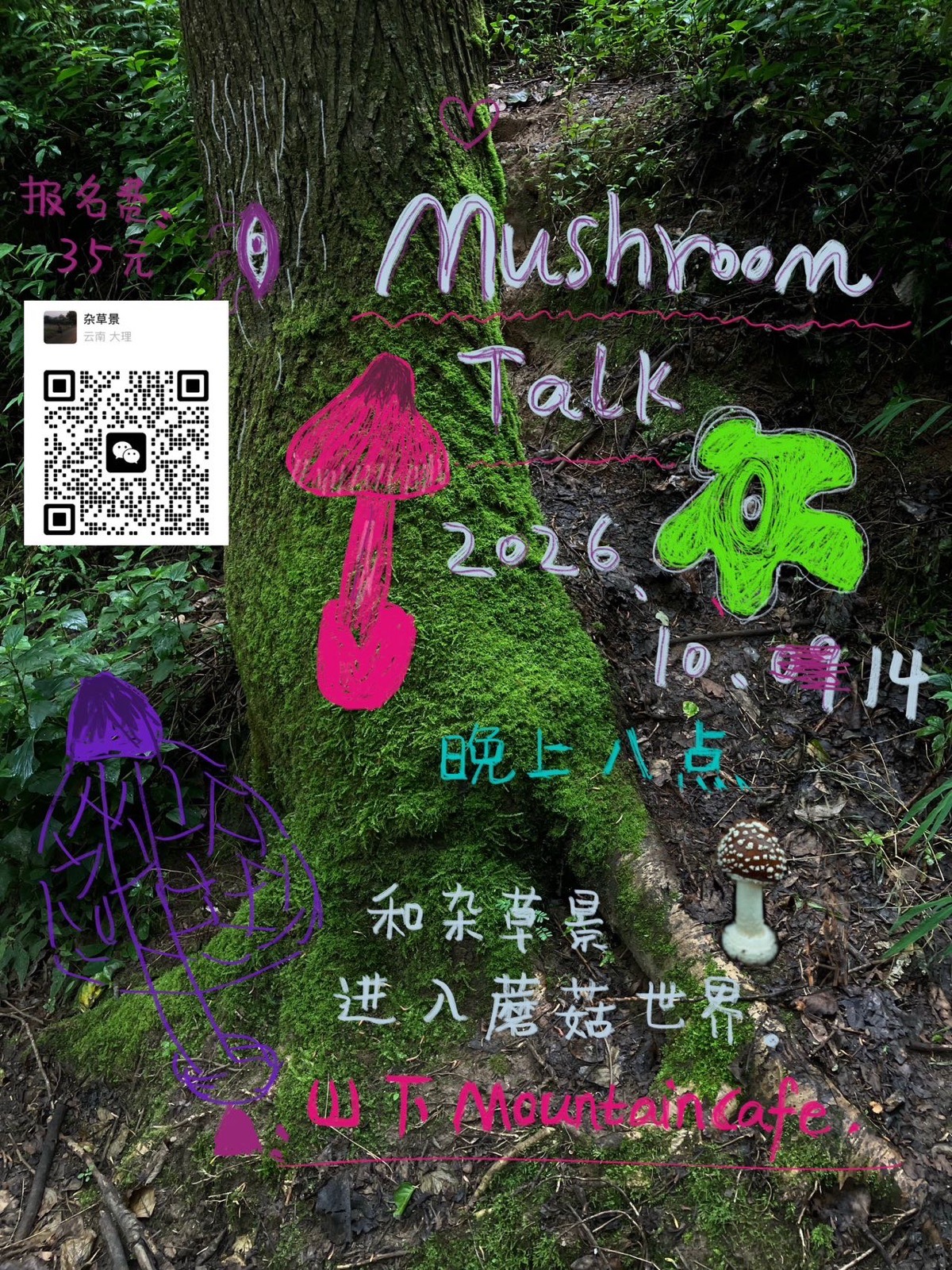
At the end of mushroom season, watch a documentary and observe fresh mushroom samples with Weeds Scenery, and chat about fungi and foraging life. Limited to 8 people, includes tea and fruit.
An AI experience sharing session for participants with zero programming background. We will use a participant's existing photos, articles, and business materials to organize and create a preliminary version of a mini program or website on the spot, so everyone can see firsthand how ordinary people can turn their ideas into something real.
You can bring your own laptop (optional), roughly 2018 or later.