Collective memories of the Leonids: 2001 was the most recent major outburst, and many places around the world, including China, witnessed about 4,000 meteors per hour. That experience of “whenever you look up, there is always a meteor falling” became a memory for many people.
Comet Tempel-Tuttle orbits the sun about once every 33.3 years. Each time it approaches the sun, the sun's heat causes it to eject large amounts of dust and debris, which scatter along its orbit. When Earth crosses this orbit every November, it encounters this debris and a meteor shower forms. The key point is that the debris is not evenly distributed. When Earth happens to pass through a particularly dense “dust band,” a spectacular meteor storm occurs. Therefore, “33 years” is not a strict outburst alarm clock, but the cycle of the parent comet's return and replenishment of the dust band. The real outburst depends on Earth's precise encounter with a dense dust band. The next return of the parent comet is expected around 2031, which may be an important window for the next “return of the king.”
But don't worry, in November we still have a chance to see Leonid meteors streak across the night sky.
Atu's invitation to the stars:
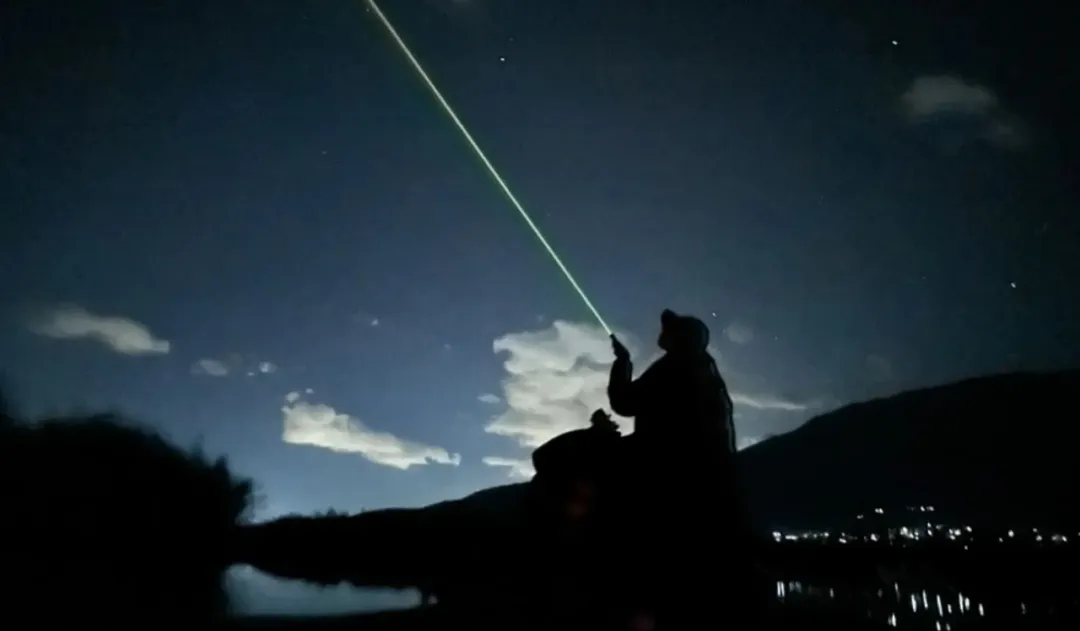
“My name is Atu, and I come from Inner Mongolia. I love stargazing and driving to places where I can see the stars. In Dali, my favorite place is West Lake, and I take a boat to the middle of the lake. Once a month, I also hope to take you to Genie Snow Mountain in Tibet to see the stars on the plateau.”
Atu's invitation is full of her love for the stars and her enthusiasm to share this experience with anyone willing to join her.
A producer came because of her reputation, and in summer they filmed a documentary about Atu's stargazing:
A blog written by guest Wawa
Stargazing at West Lake: Another highlight full of uncertainty
West Lake stargazing experience:
Itinerary:
17:30 PM: Depart from Dali (the time may vary depending on the season).
19:00 PM: Enjoy dinner by the lake (in winter, with a brazier for warmth) while watching the changing night sky (we brought food from a nearby halal restaurant we like. Their beef dishes are great! Cost: about 30-50 RMB per person).
20:00 PM: While enjoying hot tea, fruit, and snacks, wait for the first star, planet, or satellite to appear. As the sky darkens, we head deeper into the lake to see the stars more clearly and use binoculars to explore darker, more distant stars.
Around 21:00 PM: At a suitable spot we find, take photos of people together with the starry sky. (We take photos when the Milky Way is visible.)
Around 21:00 PM: Set up a telescope by the lake to observe stars that cannot be seen with the naked eye (what you see depends on the season, generally when there are bright stars in winter or near the full moon).
21:30 PM: Return to a local farmhouse for a short rest, then head back.
22:00 PM: Return to Dali Old Town.
Important notes:
Please bring a warm, windproof jacket, because nights on the lake are cold.
Key themes we will share include:
Calendar changes and stories of stars in ancient mythology
The scale of time and space in the macroscopic universe
Chinese astrological legends
The seasonal movement of Western zodiac constellations.
Using binoculars to find nebulae + star clusters
The beginning of the lake stargazing experience:
When I first met Atu, she asked me: “How does it feel to look at the stars by the lake at night?” At that time, she had just left an astronomy organization and was preparing to work independently.
I answered without hesitation: “That's wonderful!”
My answer was not just polite; it came from an image that immediately appeared in my mind: sitting on a boat at night, heading toward open water, surrounded by swaying reeds. The only sound was the gentle lapping of the water. Above, the sky was filled with brilliant stars. Nearby, the village twinkled faintly in the distance, while the majestic Cangshan outline framed the horizon. The scene felt magical—almost unreal.
The best things in life often feel “unreal.” Whether it is a beloved book, a dreamlike love, a captivating film, or a passion you deeply love, these moments take you out of the ordinary and into another world. They free you from the monotony of daily life and let you breathe fresh air before returning to reality.
This vision prompted us to quickly plan the first attempt at this experience.
The real stargazing journey:
We chose an unusual time—1 a.m., late at night. Atu wanted us to see the moon rise from behind the mountains, the stars shining after the moon set, and the Milky Way rising at dawn.
Night on the lake:
Adu piloted a small boat from the dock near the village and, under the cover of darkness, took us out into the lake. Xiaochun, the tailor, and Shuangshuang, who joined at the last minute, were all fascinated by the constellations, the moon, the Big Dipper, and the Milky Way. They used the telescope on the boat to observe the moon and stars up close and asked many questions.
Atu explained patiently, telling stories about the stars, the moon, and the Milky Way from the perspectives of modern astronomy and traditional Chinese astrology.
The silence of the lake:
The boat drifted into the middle of the lake, and we stopped beside the reeds. Occasionally, a bird gently cooed and broke the silence; sometimes a bird was startled and flew across the water with flapping wings. He Chen lay at the bow of the boat, looking up at the starry sky.
Although I am not particularly interested in astronomy, I was captivated by this experience—gliding across the silent lake at night, surrounded by darkness, immersed in heartfelt conversation. Without stargazing, I might never have had a reason to go out to the lake at this time.
Due to the season and weather, we could not see the Milky Way that night. But this was not surprising—things are not always perfect, and that is exactly where the charm lies.
On the way back, we took a different route, returning to the village across the lake.
Final thoughts:
Despite having to get up in the middle of the night, everyone thoroughly enjoyed this stargazing trip. Perhaps this is the magic of stargazing: it takes us out of the ordinary and makes us realize the vastness of the universe and our connection to it.
I hope you will enjoy this stargazing trip too.