Life in Dali
Dali's Festivals and Market Days: Understanding the Bai People Amid the Bustle
Aug 15, 2026
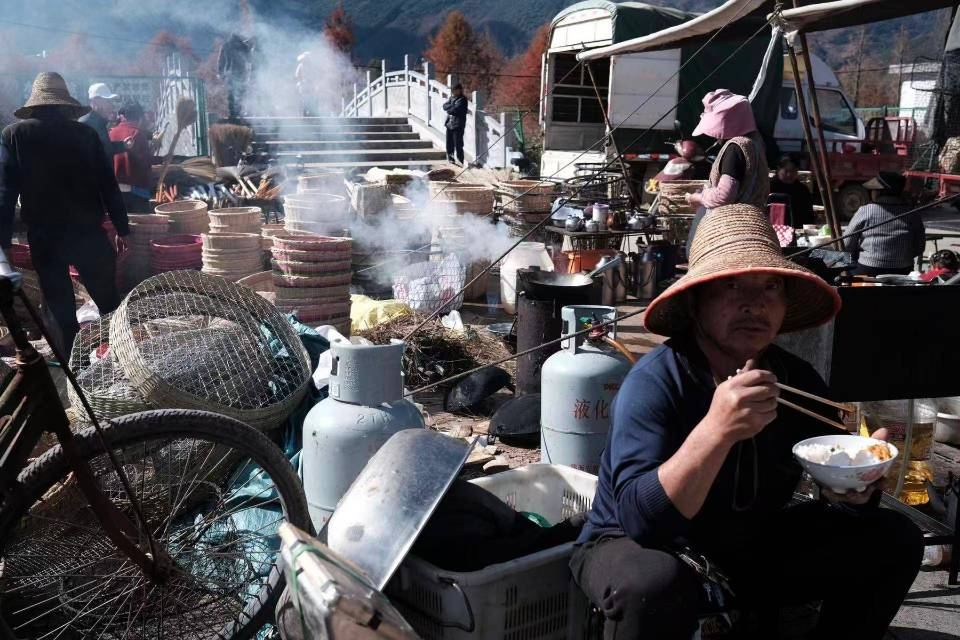
The festivals in Dali are numerous, and the markets are even more so. For travelers, they are lively spectacles — a stroke of luck to chance upon; for the Bai people, they are the rhythm of the entire year: which solar term calls for worshipping the local patron deity, which month calls for visiting which market, and which night calls for lighting the torches. Here, the lunar calendar is not an outdated almanac but the clock of daily life. Stepping into Dali's festivals and markets is the fastest way to understand this city — amid the neighing of horses at the Third Month Fair, the blaze of the Torch Festival, and the incense smoke of the patron deity temples, you will see the Bai people's reverence for the divine, their love of life, and the bustling vitality of Yunnan's many ethnic groups who have gathered on the same street for centuries to trade, sing antiphonally, and do business. Some say the history of Dali is the history of Yunnan; and Dali's festivals and markets are precisely the most vivid footnotes to that history.
At their core, the festivals of the Bai people are a farming calendar. In spring, they worship the local patron deities, praying for favorable weather; in summer, they light torches to drive away pests and offer blessings; before the autumn harvest, they attend song festivals and visit relatives; and once the twelfth lunar month arrives, they bustle about preparing for the New Year and take the children to the market. Festivals and markets alternate, dividing the year into chapters, giving each day something to look forward to. This is also why Dali's festivals are so often linked with the word "street": for the Bai people, honoring the gods and going to market have never been two separate matters — the temple fair is the market, and the market is the temple fair.
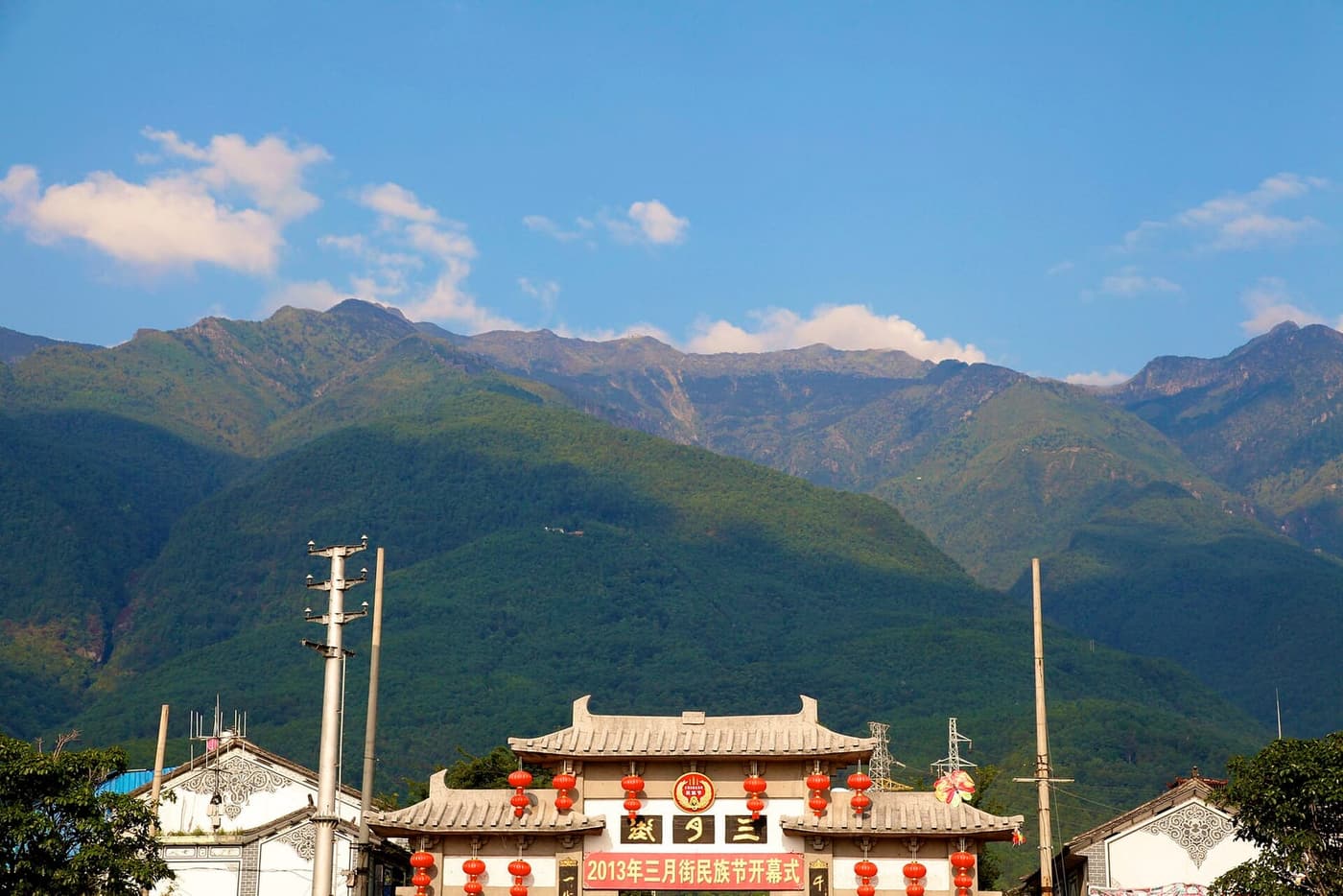
March Street: The “Guanyin Fair” of a Thousand-Year Tradition. From the 15th to the 21st day of the third lunar month, on the main road outside the west gate of Dali Ancient City, market sheds are set up as far as the eye can see—this is March Street, a grand fair that Dali has upheld for over a thousand years. Legend has it that it began with Guanyin preaching the sutras, so it is also called the “Guanyin Fair.”
The March Street marketplace at the foot of Cangshan Mountain. Image: ZhaoScorpio / Wikimedia Commons, CC BY-SA 2.0
As for the origins of March Street, the most widely circulated account is tied to Guanyin, the Bodhisattva of Compassion. According to legend, long ago a rakshasa demon at the foot of Cangshan Mountain that fed on human eyes terrorized the countryside. Guanyin, disguised as a monk from India, used a clever ruse to subdue the demon and seal it beneath the mountain. On the fifteenth day of the third lunar month, Guanyin then preached the Dharma at the mountain's base to teach and enlighten the people. To commemorate this day, people gathered year after year around the fifteenth day of the third lunar month to hold markets and offer worship, and the gathering grew ever larger, gradually becoming what we now know as March Street. Legend aside, according to local gazetteers, March Street had already taken shape by the Tang Dynasty at the latest, stretching over a thousand years to this day — the old saying in western Yunnan, "A thousand years of one market; one market for a thousand years," refers precisely to this. Today, March Street has been inscribed on the national list of intangible cultural heritage, and the people of Dali still affectionately call it the "Guanyin Market."
The Bai people's devotion to Guanyin is the deepest undercurrent hidden in the name of March Street. Another version of the story goes that Guanyin "opened the market" at the foot of Cangshan Mountain back then, teaching the people to barter and exchange goods with one another, and so the marketplace acquired its rules and was called the "Guanyin Market." Whichever version one hears, Guanyin by the shores of Erhai Lake has never been merely a deity confined to temples — in the Bai villages around Dali, there are many nunnery halls dedicated to Guanyin, and the elderly members of the Lianchi Hui (Lotus Pond Society) remain active to this day, going to the nunneries on the first and fifteenth days of each lunar month to chant sutras. March Street carries this faith
Swinging out into the market, worship and trade are two sides of the same coin — this is the wisdom of Bai life.
The historical weight of the March Street fair goes far beyond that of a mere market. From the Song dynasty onward, the Dali horse was one of the finest breeds in the southwest: not particularly tall, but supremely sure-footed on mountain trails and exceptionally hardy. According to historical records, the imperial court established horse-trading markets in the area of Hengshan Village, Yongzhou, Guangxi, specifically to trade horses with Dali and other regions. Dali horses thus traveled far to Guangxi and the Central Plains, becoming a vital source of war horses for the Southern Song dynasty. The horse trade also made March Street the largest mule and horse trading event in western Yunnan. In the era of the caravan mule trains, caravans setting out from Dali carried tea, salt, cloth, and silverware over the mountains along the Ancient Tea Horse Road. When they arrived at March Street, muleteers, merchant bosses, and mountain villagers from every ethnic group all gathered on this great thoroughfare. By day, trade was brisk and spirited: medicinal herbs sold by the basket, tea measured by the mule-load, silverware clinking and jingling, and marble slabs piled up like small hills. By dusk, lights were lit within the market stalls, and performers of da ben qu narrative singing, antiphonal folk singers, and chuichui qiang opera actors took the stage in turn, singing deep into the night.
At March Street, the market stalls stretch for several li at a stretch. By tradition, the fair is roughly divided into several sections: in the mule and horse market, buyers inspect the animals and negotiate prices; in the herbal medicine market, mountain goods are laid out in abundance; in the general goods market, silverware, cloth, needles and thread, and toys are all available; and there is one section devoted entirely to food — rushan cheese, erkuai rice cakes, cold chicken rice noodles, and Dali raw pork — where you can eat your way along and still not reach the end after half a day. During every daytime hour of the fair, the streets are packed wall to wall; and at night, the bustle never stops either.
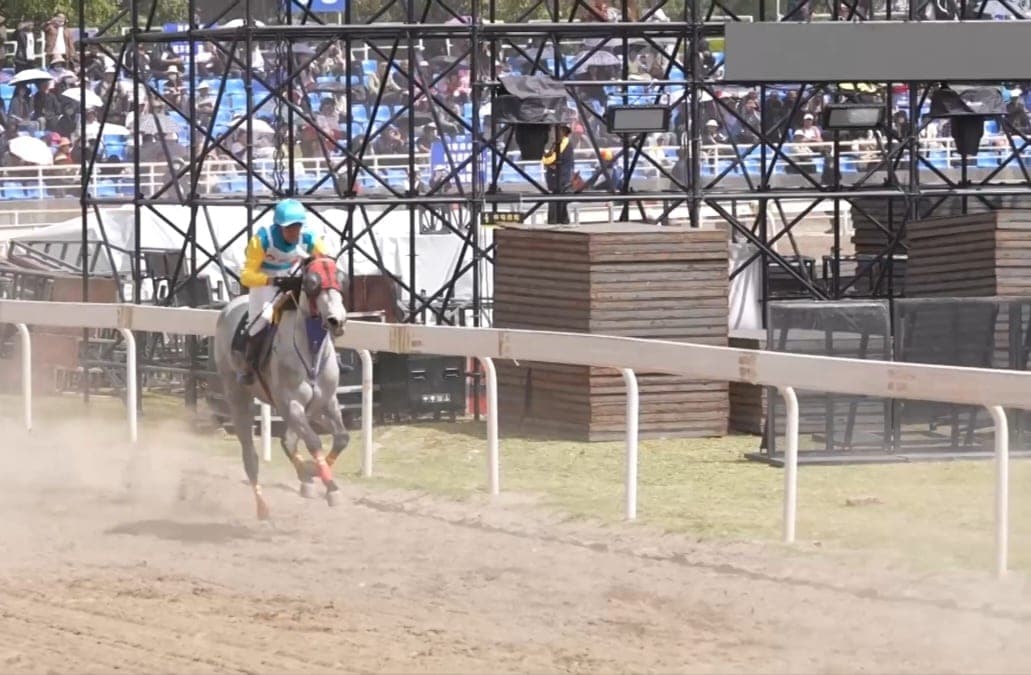
When the crowd disperses, in the brightly lit street stalls, artists performing dabenqu sit cross-legged, pluck the sanxian, and sing the tales of Nanzhao and the Dali Kingdom section by section, until the moon has shifted west and people still refuse to leave. Horse racing is the event the locals most look forward to during March Street. During the festival, at the dedicated racecourse, the riders are mostly from caravan families or are herdsmen—Bai, Yi, and Hui riders all take part; the horses are not large, but they run astonishingly fast, dust flying up at the curves as the stands roar with approval. For the descendants of muleteers, the March Street races are not only about speed, but also about the honor and glory of the caravan era. That Dali can support such a great market is a matter of location. The commercial routes of western Yunnan take Dali as their hub: to the north via Lijiang and Zhongdian into Tibetan areas, to the west through Tengchong toward Myanmar, and to the south by way of Weishan and Jingdong into southern Yunnan—the mule caravans of the Tea-Horse Road, no matter which line they took, all had to stop in Dali to rest, replenish supplies, and trade. In the caravan era, a muleteer would meet his peers at March Street at least once a year: buying and selling mules and horses, settling old debts, and arranging the next shipment of goods. So March Street is not only a festival for the people of Dali, but also the "annual meeting" of the entire western Yunnan region. If you arrive during March Street, you will see Dali at its best: Bai, Yi, Hui, Naxi, Tibetan... people of every ethnic group in their finest clothes packed into the same street, antiphonal folk songs rising one after another; stalls selling rushan, cold chicken, and raw pork skin are thronged with people, and the charcoal stoves of Xizhou baba from...
From early morning to late at night. Over the years, ethnic festivals, performances, and intangible cultural heritage exhibitions have been added to the market period, but the old rules haven't changed—the street is still the same street, the horses are still the same horses, only the people coming to the market have changed from horse drivers to tourists from all over. Locals take this in stride: a street is meant to be thronged, and it only feels like March Street when it's crowded. It is Dali's three-in-one combination of Spring Festival, temple fair, and marketplace, and also a living commercial history of western Yunnan—strolling through March Street once is like experiencing a thousand years of Dali.
Torch Festival: The Night of Flames on the Twenty-Fifth of the Sixth Lunar Month
The twenty-fifth day of the sixth lunar month is the Torch Festival of the Bai ethnic group. According to legend, it is connected to the story of "Burning the Songming Tower" from the Nanzhao period.
The Torch Festival in Xiangyun, Yunnan. Image: Kcx36 / Wikimedia Commons, CC BY-SA 4.0
According to legend, during the Nanzhao period, Piluoge, the chief of the Mengshe Zhao, sought to annex the other five zhao. On the 25th day of the sixth lunar month, he built a tower out of highly flammable pinewood and invited the chiefs of the other five zhao to attend an ancestral sacrifice and banquet. Midway through the drinking, flames erupted on all sides, and the pinewood tower was reduced to ashes, killing all five chiefs. The wife of the chief of Dengtan Zhao, Baijie (also known as Lady Cishan), was exceptionally intelligent. Sensing that something was amiss before her husband departed, she had placed an iron bracelet on his wrist. After the fire, the remains were impossible to distinguish, but she alone recognized her husband's bones by the iron bracelet that had not melted in the flames. Piluoge, coveting her beauty, tried to force her to marry him, but she chose death over submission and ultimately threw herself into the sea in martyrdom. This tragic and stirring tale, recorded in ancient texts such as the *Nanzhao Yeshi* (Unofficial History of Nanzhao), has been passed down to this day. In remembrance of Lady Baijie's chastity and courage, the Bai people hold sacrifices and light torches by the shores of Erhai Lake on the 25th day of the sixth lunar month each year — this is the origin of the Torch Festival.
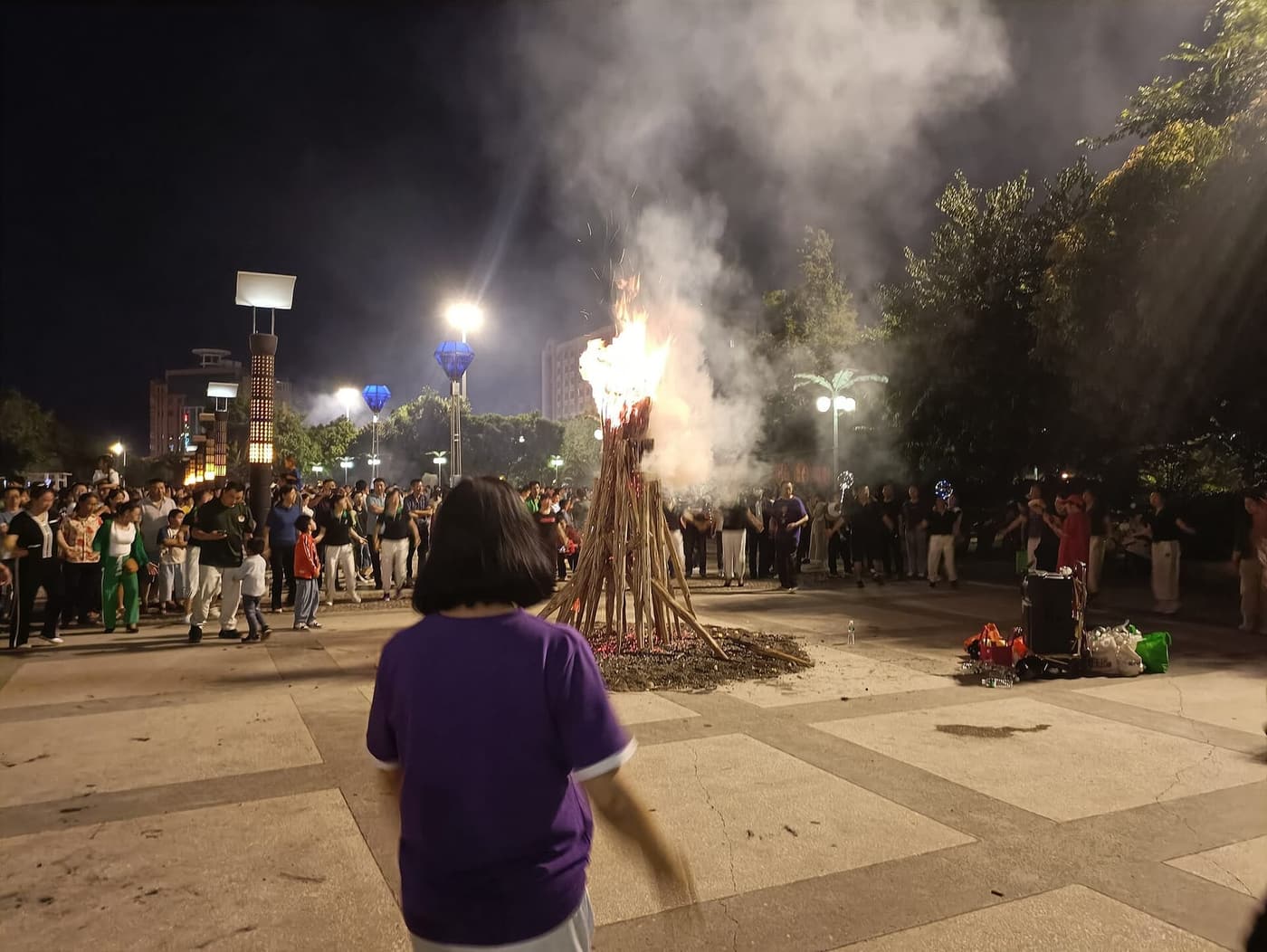
The Bai people have their own way of celebrating the Torch Festival. During the day, a large torch several zhang tall is erected in the village square: a pinewood core bound with colorful flowers and flag banners, with a "shengdou" (a wooden container symbolizing a bountiful harvest of the five grains) hanging at the top. At nightfall, the great torch is lit, its flames leaping into the sky, and the whole village gathers around the fire. Young people run through the fields holding small torches, driving away pests from the crops, praying for the coming year, and commemorating their departed loved ones. Some also toss powdered rosin into the fire, sending sparks
splattering everywhere, children shrieking and dodging, adults doubled over with laughter. That day, the torches must also circle houses and fields, all to "drive out evil and ward off disaster." At night, the torches of the old town and the mountain villages are lit at once, the firelight illuminating the night beneath the Cangshan foothills—one of Dali's most spectacular night scenes of the year, with a long chain of fire visible from miles away along the base of the mountains.
The Torch Festival is also known as the "Xinghui Festival," a name that, according to records, already existed during the Nanzhao period. The 25th day of the sixth lunar month is exactly when rice is heading and insects are at their worst. The Bai people light torches along the field ridges, burning the moths and pests that fly up—this is a festival, but it is also a practical lesson in the year's farming work. So the fire of this day is never merely for show: it burns across the ridges, casts light into the corners of homes, and when the flames die down, the pests in the fields have thinned by one round, and people's hearts are at ease. In the days leading up to the festival, the old town heats up with anticipation: more stalls selling torches and rosin line the streets, and innkeepers remind their guests not to wear clothes that catch fire too easily when watching the flames at night.
The Torch Festival is not exclusive to the Bai people. In Yunnan, the Yi people mostly celebrate it on the 24th day of the sixth lunar month, one day earlier than the Bai. In the Liangshan and Chuxiong areas, it is known for bullfights, wrestling, horse racing, and all-night singing and dancing. The Naxi, Lisu, and Lahu peoples also have their own Torch Festivals, with roughly the same timing and similar customs. It is the same fire, but the Bai burn it in memory of Madame Bojie, while the Yi burn it in worship of fire and prayers for a bountiful harvest—the very same festival—
Each day, different forms grow in the different valleys of Yunnan. Every year during our Torch Festival activities, we take guests to witness this grandest night in Dali.
Rao San Ling: A Three-Day Carnival of Song and Dance
From the 23rd to the 25th of the fourth lunar month, as the rice seedlings just begin to turn green at the foot of Cangshan Mountain, the Bai people hold "Rao San Ling"—a grand singing and dancing procession between the Cangshan Mountains and Erhai Lake.
The scene of preparing for a village festival in Yunnan. Photo: Taco Witte / Wikimedia Commons, CC BY 2.0
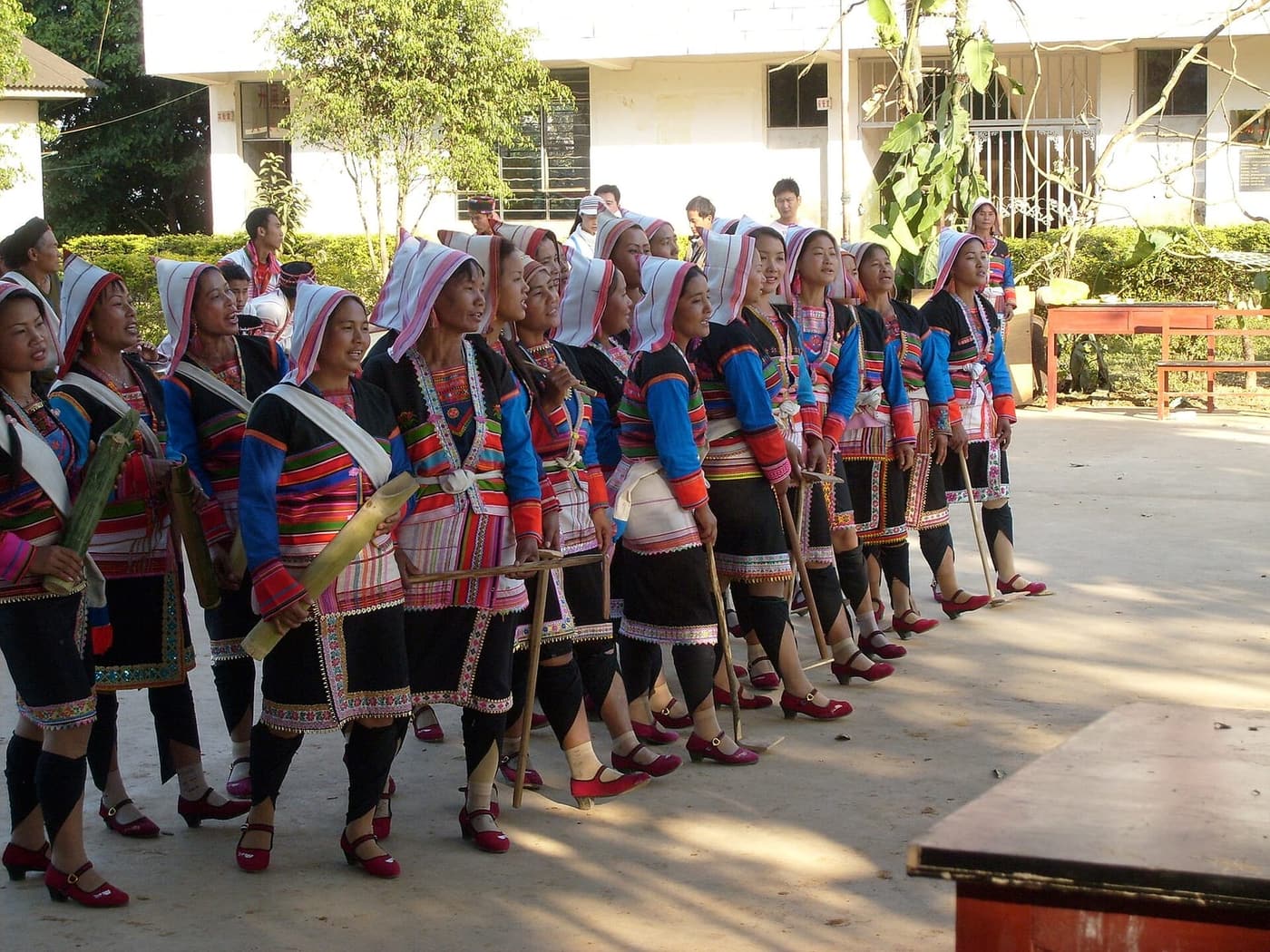
The name "Raosanling" roughly means "winding around the mountains and visiting the three spirits" in the Bai language. According to tradition, the "three spirits" refer to three local temples dedicated to Benzhu (village patron deities) in this area, the most famous of which is in Qingdong Village — the Bai people call that area "Shendu" (the Divine Capital), and the Shengyuan Temple, where the Benzhu is enshrined, is located there. During these three days at the end of April, Bai people from nearby villages put on their most splendid festive attire and gather from all directions: at the front of the procession, respected elders often lead the singing while holding willow branches and fans, while those behind play the bawangbian (king's whip) and beat octagonal drums, singing and dancing as they parade around the Benzhu temples, then dance all the way toward the shores of Erhai Lake. They sing Bai folk tunes and dance Bai steps — for three days and three nights, the singing never stops. The Bai people's festive costumes are at their most complete and elaborate during Raosanling: young women wear embroidered headwraps, silver bracelets, and embroidered aprons; the elders' Bai-style jackets are starched crisp and neat; and scattered through the procession are colorful open parasols, which from a distance make the whole procession look like a river of colors flowing through the basin.
The bawangbian is the most recognizable prop in Bai song-and-dance performances: a bamboo stick wrapped with colorful threads, with copper coins attached to both ends, making a jingling sound as it strikes the shoulders, legs, and hands; when the octagonal drum is struck, its rhythm is crisp and rapid. Along the Raosanling route, elderly men and women whirl the bawangbian with great vigor and flair, young men and women sing antiphonal duets that set their hearts racing and cheeks flushing, and children trail along behind the procession
Others followed suit, and the whole basin began to stir.
According to legend, the earliest origin of Rao San Ling was an ancient Bai rain-praying ritual held in late spring: when drought persisted and rain would not come, people would carry the tablets of their local patron deities around the mountains and waters, singing and dancing to beg the Dragon King for mercy. As time passed, the rain-praying procession became a procession of revelry, and "Rao Shan Lin" (Winding Around the Mountains) became "Rao San Ling" (Winding Around the Three Spirits). Even today, traces of those early days can still be seen in the procession: the elderly hold willow branches—the willow is a plant of the waterside, and what they are praying for is rain; the fans in their hands sway back and forth, and gradually become the beat of the dance steps.
Rao San Ling is both a ritual and a carnival. For the Bai people, it is a ceremony to pray to their patron deities for rain and a bountiful harvest, and it is also the last unrestrained singing and dancing before the busy spring plowing begins; for travelers, it is the easiest moment to "see" Bai song and dance in its original form—there is no stage, no rehearsal; the singing and dancing are life itself. Over three days, the procession finally makes its way to the shore of Erhai Lake. By day they continue singing and dancing, and by night they lodge in the villages along the way. The antiphonal singing around the bonfire can last until dawn. It is said that on those nights, the wind by the Erhai Lake is filled with song. For this reason, Rao San Ling was also included in the first batch of the National Intangible Cultural Heritage List and is known as the Bai people's most exuberant "carnival." If you want to see Bai song and dance in its most natural form, Rao San Ling is the best time to do so.
The Benzhu Festival: Every Village Has Its Own God
If the March Street Festival is the gateway through which the Bai people face the world, then the Benzhu Temple is the entrance into the spiritual world of the Bai people.
"Benzhu" is a folk belief unique to the Bai people, meaning "master of this land" or "lord of the village"—every village has its own protective deity, and in the Bai language, the term roughly translates to "our master." The Benzhu can be a hero from mythology, a real figure from history, or even an ordinary person who did good deeds for the village: some villages enshrine the kings of Nanzhao or the Dali Kingdom, others honor brave warriors who eliminated harm for the people, and still others venerate an elderly woman known for her generosity and kindness. The Bai people do not concern themselves with the "pedigree" of the deity—whoever has done good for the village deserves to sit in the Benzhu Temple and receive the village's incense and offerings. This simple yet sincere local faith is the origin of the saying "every household has its own Benzhu."
Almost every village can tell one or two stories about its Benzhu. One of the most widely circulated is the tale of Duan Chicheng: according to legend, a giant python terrorized the area south of Dali city (some say in Erhai Lake), and the young man Duan Chicheng, with blades bound to his body, fought the python and ultimately perished along with it. People cut open the python's belly to retrieve his remains, gave him a solemn burial on Cangshan Mountain, built a temple to honor him, and revered him as their Benzhu. Legends like this have been passed down from generation to generation in the Benzhu Temples of the Dali plain.
The layout of a Benzhu Temple also resembles a "home": the main hall enshrines the Benzhu, flanked by statues of his wife and children, and some temples even have statues of the Benzhu's mount. For the Bai people,
The Benzhu is not a god high above, but an elder who lives in the village and looks after every household: when a child is born, a wedding takes place, someone travels far, or someone falls ill, villagers go to the temple to inform the Benzhu and ask for guidance and protection.
Each village has its own Benzhu temple and Benzhu Festival, held on different dates: some in the first lunar month, some in the second or third month, and some during the slack farming season. On the day of the Benzhu Festival, the whole village is livelier than at New Year: the Benzhu statue is carried out of the temple in a sedan chair, with an honor guard in front and a band behind, parading around the village; every household slaughters pigs and sheep, sets up large cauldrons in front of the temple, and invites the entire village to a feast; opera troupes are also invited to perform, singing the Bai people's Dabenqu narrative ballads and Chuichuiqiang opera, with performances lasting for days on end. For the Bai people, the Benzhu Festival is not about "watching the excitement," but about sincerely sharing a meal and a few words with the deity who protects them.
The opera performed in front of the temple is the Bai people's own opera. Dabenqu is the Bai narrative art form: a single performer with a sanxian (three-stringed lute) can sing an entire long story for half a day—tales of the Benzhu and the village's history are all in the songs. Chuichuiqiang, also called "Bai opera," features singing, martial choreography, and costumes; as soon as the gongs and drums sound, the audience gathers in an instant. The opera invited for the Benzhu Festival is "opera for the Benzhu to watch," and also opera for the whole village to watch—the stage faces the main gate of the Benzhu temple, so gods and people share the same venue.
Visitors from elsewhere who see the Benzhu Festival for the first time often think it resembles a Han Chinese temple fair: there is a stage, firecrackers, and open-air communal dining. But on closer look, the differences become clear—
Temple fairs worship "gods," but the Benzhu Festival honors "one's own people." When the Bai people invite their Benzhu deities on a procession, it's like inviting an elder of the family to come out and see how the village has changed—whose family built a new house, whose child got into school, all of it must be witnessed by the Benzhu. Walk into any Bai village in the Dali basin and chances are there's a Benzhu temple at the village entrance or in the center: white walls and grey tiles, a painted gate tower, handwritten couplets often pasted by the door, seasonal fruit laid out on the offering table, and incense burning without cease. Step inside, quiet your mind, and take a look—you'll understand what "home" means in the hearts of the Bai people. This faith that treats gods as family is rare even across Yunnan, let alone the whole country, and it is the most essential key to understanding the Bai people.
The "Doll Street" of the fifth day of the Lunar New Year, formerly known as "Yin-Yang Street"
On the fifth day of the first lunar month, there is a special market in the Jianchuan area. Today it is called "Doll Street," but the older generation calls it "Yin-Yang Street." The market sells only handmade dolls and toys: paper-crafted, clay-molded, and cloth-made dolls, along with masks and small wood-carved trinkets. Jianchuan has long been the homeland of Bai woodcarving, and the craftsmen are highly skilled. Wooden toys are especially abundant on this street—little horses, birds, and monkeys, with clean, sharp carving and a coat of clear varnish, ready to last a whole year in children's hands. The making of Bai folk toys is a craft passed down through generations, and this street is their annual market: the fine workmanship accumulated throughout the year, finished in haste during the twelfth lunar month, and put on display on the fifth day of the New Year.
The name "Yin-Yang Street" has been handed down from the older generation. According to legend, on this day the market hosts "invisible marketgoers"—departed relatives also return to the market and give lucky money to children. If their money falls into the water, it floats on the surface rather than sinking—that is how you know the deceased have accepted the offering. So this street naturally divides into two halves: one half is the children's New Year atmosphere, filled with dolls, masks, candy, and lucky money, with the laughter of little ones everywhere; the other half is the living's remembrance of the dead, where the elderly buy one or two small paper offerings, place them by the water, and say a few words to their departed family members.
It should be noted that this street is often mistaken by outside visitors for a Ghost Festival, but in fact it is not: it
It is a true Spring Festival market, held on the fifth day of the first lunar month, in the Jianchuan area, and has nothing to do with the seventh lunar month. On the day of "Po Wu" (the fifth day, when the God of Wealth is welcomed), elsewhere people are praying for wealth and fortune, but the people of Dali save their gentlest imaginings for this doll street—every doll made by the craftsmen carries a wish for "family reunion in the coming year": taking a doll home is like holding the hope of reunion in your hands for the whole family.
Speaking of it, the foundation of Doll Street is still the Bai people's New Year. From the first to the fifth day of the first lunar month, Jianchuan families visit relatives, worship ancestors, and set off firecrackers, celebrating the New Year with proper rituals; on the fifth day, "Po Wu," according to old custom, people send away poverty and welcome the God of Wealth, and the New Year's festivities reach their final wave. Other markets open for business on this day to welcome wealth, but Doll Street makes its first transaction of the market for children and for those who cherish the past—this is probably the most special thing about the whole street: while others welcome the new, it also welcomes the old.
The craftsmanship of Jianchuan artisans is the backbone of this street. There is an old saying in western Yunnan: "Lijiang baba, Heqing wine, Jianchuan carpenters are everywhere." Jianchuan's carpenters and woodcarvers travel all over Yunnan, building houses, carving doors and windows, and sculpting deities; when the year draws to a close, they put down their major projects and carve little horses, little monkeys, and little bells for the children. The clay dolls are adorably chubby, the cloth dolls wear little Bai-style jackets, and with a mask on, they become a play—these dolls have no packaging, no instruction manuals, yet they are the shared childhood of several generations of Bai children.
In the first month, Jianchuan is richer in New Year flavor than the Dali basin:
The ink on the Spring Festival couplets against the white wall is still wet, the firecracker paper in front of the ancestral hall hasn't been swept away yet, and Doll Street has already opened for business. You blend into the crowd, watching a child dash down the street holding a wooden horse he just bought, watching his grandfather squat at the papercraft stall picking through each piece for a long time—and suddenly you understand that this street sells more than just dolls; it sells two generations' New Year. To gain a more complete understanding of this street's origins, the Jiangzhiji Folk Art Center in Xizhou preserves displays and records of Doll Street (Yinyang Street). If you happen to be in Dali around the fifth day of the first lunar month, consider heading to Jianchuan to catch this street—it will give you a deeper understanding of how the Bai people celebrate their New Year than any scenic spot, half of it filled with liveliness, half with longing.
Shibao Mountain Song Festival: The Romance of Meeting Through Song
From late lunar July to early lunar August, Jianchuan's Shibao Mountain hosts the annual song festival—where Bai ethnic young men and women meet friends and express love through song, making it one of the most romantic folk festivals in western Yunnan.
Yunnan's March Street ethnic horse racing event. Photo: China News Service / Wikimedia Commons, CC BY 4.0
Shibao Mountain lies southwest of Jianchuan County town. On the mountain are grottoes carved during the Nanzhao and Dali Kingdom periods, exquisitely crafted and hailed as "treasures of the southern sky"; the song festival is held among these mountains. During the festival, Bai people from dozens of li around—especially young men and women—dress in their finest and head up the mountain in groups to "attend the song gathering." In the pine groves, before the grottoes, and on grassy slopes along the roads, people pair off everywhere to sing antiphonally: they sing Bai melodies, trading question and answer, improvising the words, singing about whatever they see—mountains, rivers, and the people before them. Young women and men sing to each other across the woods; if the songs strike a chord, they draw closer and keep singing; if they don't mesh, they smile and part ways—communicating feeling through song, subtle yet fervent.
The antiphonal singing at the festival is a give-and-take: you sing a line, I answer with one; the words must connect, the tune must hold its own. Whoever can't keep up concedes with a laugh, and another pair takes over. Some sing old tunes, telling the stories of their ancestors, passage by passage; some sing new lyrics, weaving the life of the present day into song. The Bai melodies are few in number, but the words are forever fresh—the mountains are old, the people are new, and so the songs stay alive.
The songs at the festival are not all love songs. Some sing of family histories, some of farming, some turn news from beyond the mountains into song to share with those living here; the old teach the children to sing, and the children follow the adults' tunes, line by line. In
In the Bai people's view, being able to sing is an honorable thing—the song festival is their most grand classroom and stage.
It is said that at the festival's peak, people going up the mountain numbered in the tens of thousands, which is where the phrase "ten thousand people singing in duet" comes from. Bai tunes emphasize improvisation and quick wit; singers with good voices and sharp minds can sing on a single mountaintop for an entire day without repeating a single line. For travelers, the song festival might be the most "understandable" celebration in the Dali region—you don't need to know the Bai language; just listening to the rising and falling songs and the laughter filling the mountains tells you how much these people love to sing. The festival being held at Shibaoshan is no coincidence either: a people carve their most solemn beliefs into the stone grottoes, and scatter their most joyful songs across the forested mountains—put these two things together, and you have the spiritual world of the Bai people. The Shibaoshan Song Festival is now a national-level intangible cultural heritage. The mountain is still the same mountain, the songs are still those songs, only the singers have changed generation after generation.
Going to Market: The "Calendar" of Dali Life
Besides the big festivals, Dali has countless market days. Yunnan people call going to market "ganjie," and the Bai language has a similar expression—the meaning is the same: head to the market streets. The markets of the Dali basin rotate according to the lunar calendar, and hardly a single day passes without one: Yinqiao is the closest local market to the old city, just a ten-minute bike ride away; Wanqiao, Xizhou, Shangguan, and Fengyu each have their own market days. Locals carry a calendar in their heads—which street to go to, what to buy—no need to check their phones.
Going to market isn't just about buying things; it's the social hub of rural life. At first light, vendors hurry in from the surrounding villages to claim their stalls: vegetable sellers, butchers, sellers of rushan and erkuai, peddlers of needles and thread, and those who've come down from the mountains with mushrooms and herbs. The elderly come for tea and sit for an entire morning, catching up on all the village news; young people come to meet friends and pick up daily necessities on the side; children are happiest of all, clutching a few yuan and hovering around the snack stalls. The liveliest spot at any market is always the food stalls: rushan sizzling on the griddle, cold rice noodles doused with chili oil, and the charcoal ovens of Xizhou baba burning from morning till night. Market days have another advantage: the flow of information. Which guesthouse is hiring, which mountain has a bounty of mushrooms, which village is hosting its Benzhu festival—all of it spreads across half the basin over a few bowls of tea at the tea stalls. Going to market means chasing the news too.
The markets of the Dali basin form a web spread out between the Cangshan Mountains and Erhai Lake: Yinqiao is near, Fengyu is far, and Xizhou is bustling.
Now, Shangguan is peaceful and quiet, with each street having its own character. Xizhou is the hometown of the Bai merchant guilds, with clusters of old mansions and large courtyards, and its markets carry an air of refinement; Fengyu, located in Eryuan, is a renowned town of letters and culture, where old residences and academies hide in its deep alleys; Shangguan sits at the northern tip of Erhai Lake, not far from Butterfly Spring, and the "Shangguan Flower" in Dali's famed "wind, flowers, snow, moon" refers to this very area. Locals attend the markets by the calendar days, while outsiders go for the lively bustle—but either way, you've come at the right time.
For your first market visit, no guidebook is needed: just follow the locals carrying bamboo baskets on their backs, taste something you've never seen before, and squat by the stall of an old herb-selling grandmother to listen to her chat for a bit—that is the most authentic way to experience Dali. Don't rush to bargain; prices at the markets are already low to begin with. A smile, and the deal is done. The very word "jiezi" sounds warm and familiar—it's not called a "market" or a "shopping mall," but simply "street": come on, let's go to the street, where everything can be found and anything can happen.
Going to the markets is also a key to understanding the history of western Yunnan. During the Tea Horse Road era, Dali was the distribution center for goods in western Yunnan, with horse caravans carrying cargo from one market to the next—the markets were the nodes of the ancient route. Sideng Street in Shaxi, Jianchuan, still preserves the ancient stage and Xingjiao Temple from the horse caravan era. Standing there, you can still imagine the sound of horse bells and the flow of merchants and travelers from those days. If you want to quickly "blend into" Dali's daily life, the best way is: check the market days, blend into the crowd, and take a stroll.
(For the specific market calendar, see our other guide "Going to the Market: A Glimpse of Local Life.")
Practical reminders for you
- During festivals, accommodation is tight and the old town is crowded, so it's best to plan ahead; on the Torch Festival and March Street Festival days, pay attention to fire safety and personal safety.
- Market days follow the lunar calendar, so confirm the date before you set out; many markets are liveliest in the early morning, with stalls gradually closing by noon.
- When taking part in folk activities such as the Benzhu Festival, Torch Festival, and Raosanling (Three Spirits Pilgrimage), show respect: ask permission before taking photos, do not touch ritual offerings, and remove your hat when entering a Benzhu temple—and don't point at things.
- The exact dates of events such as the Shibaoshan Mountain Song Festival and Raosanling are calculated by the lunar calendar each year, so it's best to double-check with locals or your guesthouse before you go.
The festivals and markets of Dali are a living local history. They aren't written on museum labels, but in the light of torches, the shadows of river lanterns, and the cries of vendors on market days. You don't need to remember every name or date—you only need to walk into them once. The bustle will fade and daily life will go on, but the flames and the smiling faces you've witnessed will let you understand half of Dali from then on.
References and Notes
· March Fair (Guanyin Market): According to legend, it originated from the story of Guanyin preaching the sutras (subduing the Rakshasa). Local gazetteers record that the March Fair has a long history. "A thousand years of one fair, one fair for a thousand years" is an old saying passed down in western Yunnan. For the Dali horse trade and the Song dynasty horse market, see the local gazetteer *Dali March Fair* and related Song historical materials (concerning the horse market established at Hengshan Fort in Yongzhou, Guangxi). The Dali March Fair has been included in the National Intangible Cultural Heritage List.
· Torch Festival and "Burning the Pine Tower": The Bai Torch Festival falls on the twenty-fifth day of the sixth lunar month. The account of the Pine Tower and Lady Baijie (Lady Cishi) identifying her husband by the iron bracelet is found in ancient records such as *Nanzhao Yeshi* and in Bai folk legends; specific details vary slightly from place to place.
· Rao Sanling: A Bai song-and-dance procession held in the fourth lunar month; in 2006 it was included in the first batch of the National Intangible Cultural Heritage List. The "Three Spirits" refer to Benzhu temples such as those around Qingdong Shengyuan Temple; the exact referents vary slightly from place to place.
· Benzhu belief: A protective village deity belief unique to the Bai people; see folklore studies such as *The Benzhu Worship of the Bai People*. Duan Chicheng's slaying of the python is one of the Benzhu legends.
· Shibao Mountain Song Fair: A song-duel gathering at Shibao Mountain in Jianchuan from the end of the seventh lunar month to the beginning of the eighth lunar month; it has been listed in the National Intangible Cultural Heritage List. The Shibao Mountain Grottoes are relics from the Nanzhao and Dali Kingdom periods.
· Jianchuan's "Wawajie" (Dolls' Street) on the fifth day of the first lunar month: a folk market custom in the Jianchuan area during the Spring Festival's fifth day (local oral account), details...
The dates may vary slightly depending on the festival or the locality.
· Calendar of market days for each town: see our practical guide "Going to the Market, A Glimpse of Local Life" (dali-guide-markets).
Keep exploring Dali
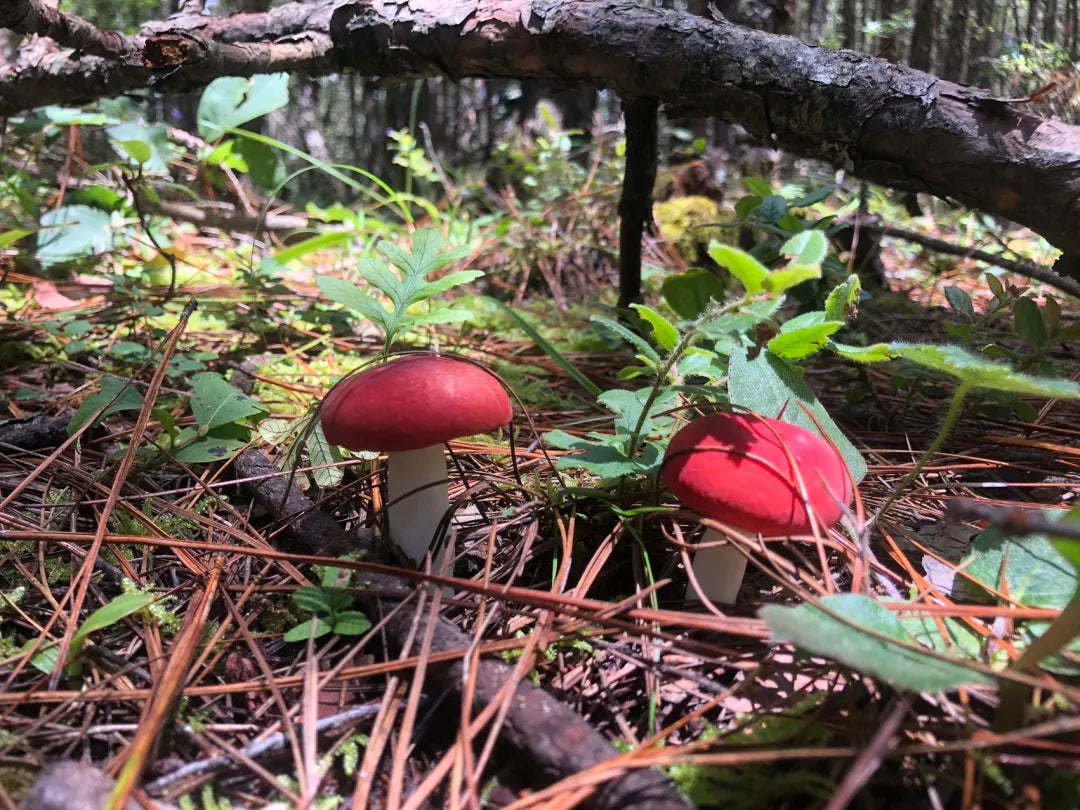 Dali Wild Mushrooms: Mushroom Season, Table Recipes, and Two Thousand Years of Mushroom-Eating HistoryEvery June, when the rainy season arrives in Yunnan, mushrooms start to pop up. Yunnan has 2,753 known wild mushroom species, accounting for more than half of China's total. This article covers the dried beef mushroom (ganba jun), termite mushroom (jizong), green-headed mushroom (qingtou jun), matsutake, and jianshouqing on Dali people's tables, how locals stir-fry them and preserve them in oil until next year, and also records from Zhuangzi, Bencao Gangmu, and Xu Xiake of Yunnan people eating mushrooms for over two thousand years—as well as the safety bottom line that must be upheld when foraging and eating mushrooms.→
 Scripts, Songs, and Wine in the Valleys: The Spread of Christianity in Yunnan's BorderlandsFrom James O. Fraser's early encounters with the Lisu people in Tengchong, explore the scripts, songs, churches, and wine of Yunnan's borderlands.→
 The Hump Route and the Burma Road: Two Lifelines of the War of Resistance Through YunnanOne leads through the mountains west of Xiaguan to Myanmar, the other flies over the mountains from Yunnanyi in Xiangyun. How did the Burma Road and the Hump Route maintain China's connection with the world during the most difficult phase of the War of Resistance? Why did Dali become an important node on both lifelines simultaneously?→
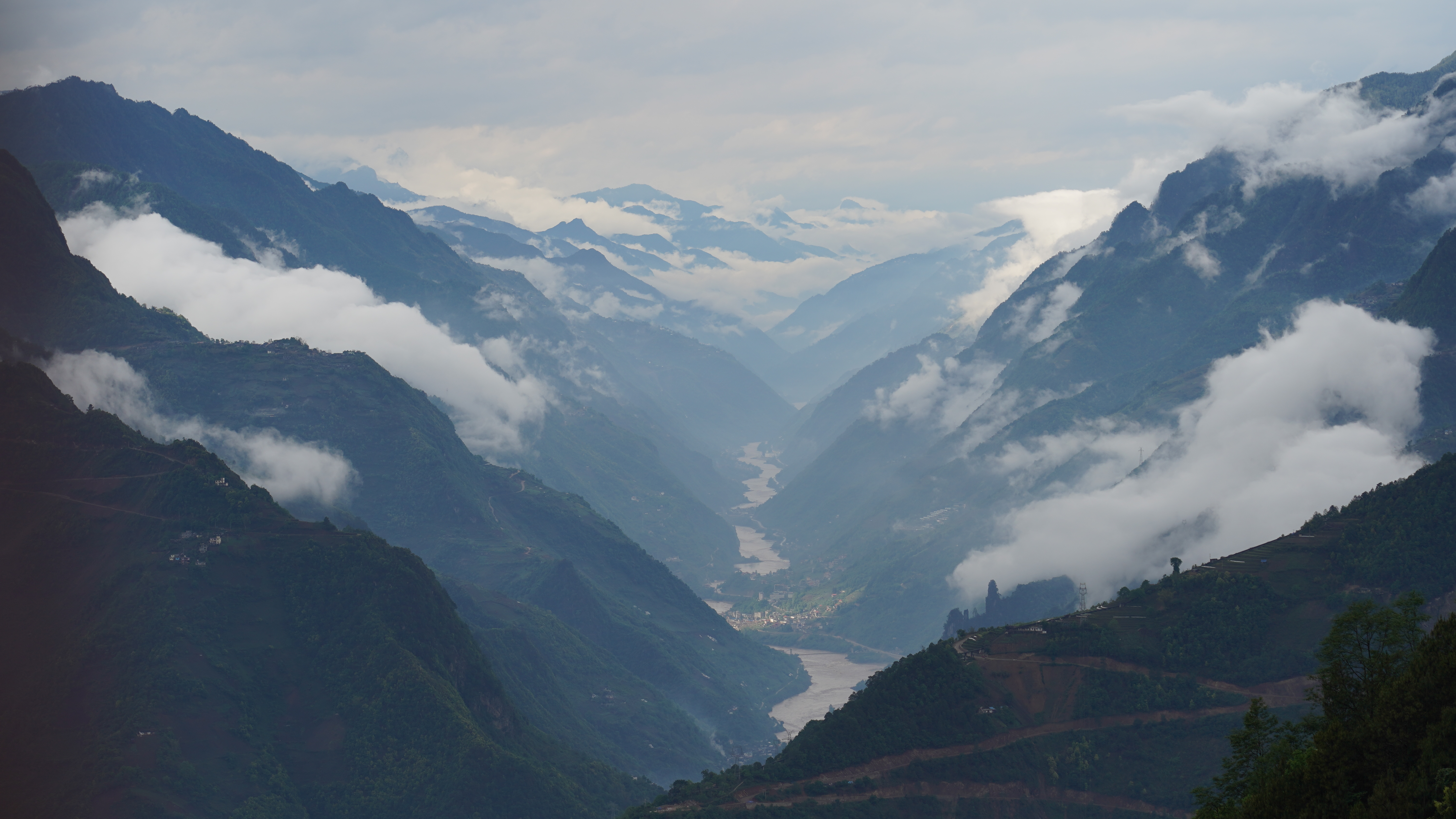
 The Nujiang, Lancang, and Jinsha Rivers: the unique nature and culture of the Three Parallel RiversStarting from Dali and heading north, crossing over the Cangshan Mountains, you will enter a massive fold split open by three great rivers. The Nujiang (Salween), Lancang (Mekong), and Jinsha (Yangtze) rivers—three great rivers originating from the Qinghai-Tibet Plateau—cut through the land of northwestern Yunnan from north to south like three parallel knives. They run so close together—at their nearest point, the straight-line distance is less than seventy kilometers; and they flow side by side for over one hundred seventy kilometers before each turns and heads toward a different destination. This is the "Three Parallel Rivers," inscribed as a UNESCO World Natural Heritage site in 2003, and it is also a key to understanding Yunnan. Many people think the beauty of Yunnan is simply the wind, flowers, snow, and moon by Erhai Lake→
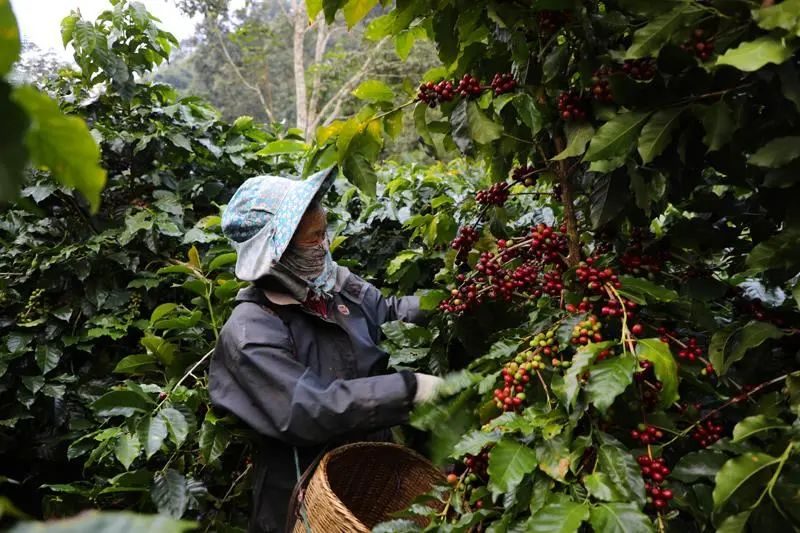 The history of Yunnan coffee: from Zhukula (a village in Yunnan) to a cup at the foot of Cangshan (a mountain in Yunnan)If you walk into the ancient town of Dali today, sit down at any café, and order a latte made with Yunnan beans, chances are you won't find it anything special. Coffee is far too common here—on Renmin Road there's one every few steps, the aroma of roasting drifts from the courtyards on Yeyu Road, and the terraces of the Chuangdancang Art District are full of people with their laptops. You might not realize that this ordinary cup of coffee is actually the end of a history spanning more than a century: its source lies in the mountains not far from the ancient town of Dali; its story begins with a French missionary and a small village almost completely cut off from the world. The story of Yunnan coffee is almost→
Comments
Comments
…