Life in Dali
New Migrants and Dali: From Foreigner Street to Counter-Urbanization
Aug 15, 2026
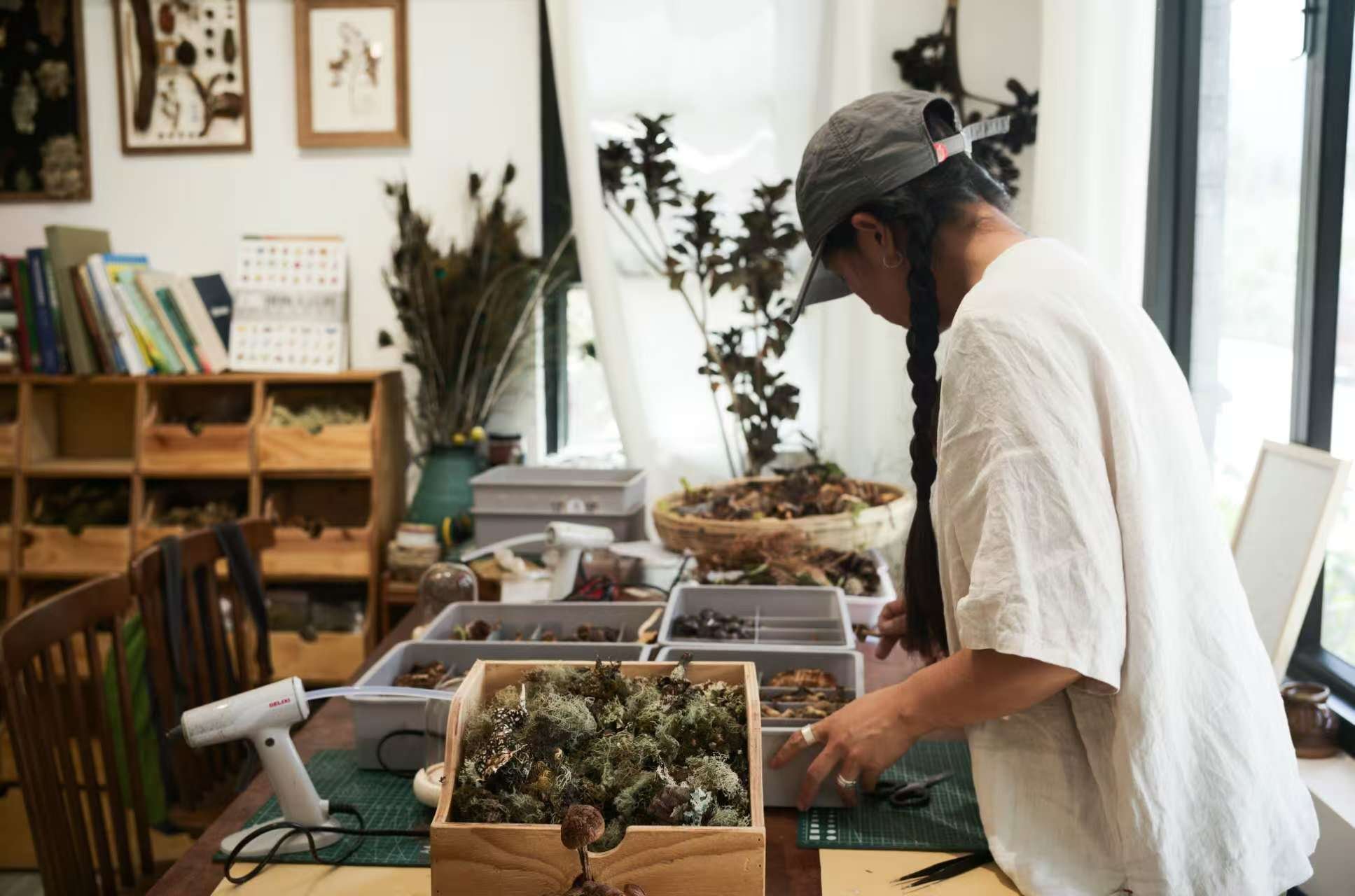
If you stay in Dali for a while, you will soon notice a phenomenon: there may be more outsiders around you than locals. Walking in the ancient town, you hear a variety of accents—Mandarin, Cantonese, Jiangsu-Zhejiang, Northeastern, as well as English, Korean, and French. They are baristas, painters, programmers, guesthouse owners, yoga teachers, mothers with children, carrying the fatigue or savings accumulated in big cities, coming here to start over. Local friends will smile and say that nowadays there are two groups of people in Dali: one group called "Dali people," and the other called "New Dali people"—the latter's number is catching up with the former day by day. No one can say exactly how many new migrants there are in Dali, but walking in the ancient town and surrounding villages, you will feel the density of this group, more intuitive than any statistic.
This is actually nothing new. Dali's history as a "magnet" goes far beyond forty years. If you zoom out, you will see a clear thread: every twenty or thirty years, a new batch of outsiders is attracted to this city; each time, they change Dali and are changed by Dali. Some say, "The history of Dali is the history of Yunnan"—this saying is not only about the rise and fall of dynasties but also about these rounds of encounters. To truly understand today's Dali, you need to zoom out a bit first.
A Century of Outsiders: From Plant Hunters and Missionaries to Exiled Teachers and Students
The first to put Dali on the world map were Western plant hunters in the late 19th and early 20th centuries. At that time, European botanical gardens were frantically collecting rhododendrons, camellias, and primroses from around the world, and western Yunnan—especially the Cangshan Mountains—was one of the most concentrated producing areas for these flowers and trees. The nineteen peaks of Cangshan have a complete vegetation spectrum from subtropical to alpine frigid zones from the foot to the summit, and are regarded by botanists as a "natural alpine botanical garden." The British plant collector George Forrest (also translated as Fu Lishi) used Tengyue (now Tengchong) as his main base and also collected in Dali, Cangshan, and many places in northwest Yunnan. Many rhododendrons, primroses, and camellias in European gardens today are related to his collections in Yunnan.
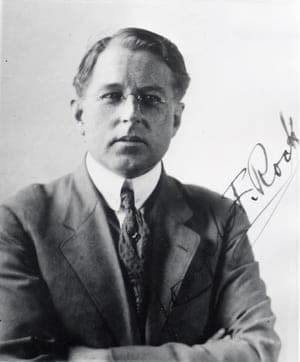
Joseph Rock, who conducted long-term investigations in northwest Yunnan. Image: Author unknown / Wikimedia Commons, public domain
Next were missionaries. In the late Qing and early Republic, Western missionaries entered the Dali area along the Tea Horse Road and the western Yunnan post roads, building churches, schools, and clinics. The Catholic and Protestant churches still visible in Dali Ancient Town today are traces of that era—interestingly, these churches often have the flavor of Bai folk houses, with flying eaves and upturned corners juxtaposed with crosses on the same building, much like the way this land digests foreign things.
Then came the War of Resistance. In 1938, two hundred thousand people of all ethnic groups in Yunnan built the Burma Road in less than a year almost by hand—this road winding past the foot of Cangshan became one of the most important international channels during China's War of Resistance, known as the "lifeline of the anti-Japanese war"; overseas Chinese mechanics returned to China and drove trucks day and night on this road. Afterwards, the Expeditionary Force, the Hump Route, and exiled government organs and schools all connected with this road and this city. In 1939, Huazhong University in Wuhan moved west as a whole and ran classes in Xizhou Town, Dali, for several years; teachers and students spent the war years between Cangshan and Erhai. Xizhou still retains the school buildings of that time, and local elderly people can still tell stories of "Huazhong University students."
After 1949, cross-border travel and international exchanges decreased significantly for a time, and Dali's visibility as an international travel destination also declined. After the reform and opening up, foreign backpackers and domestic travelers gradually increased, and the story entered a new stage.
These people seem to have nothing to do with today's new migrants, but there is a thread connecting them: Dali has never been a closed city; it is located on the transportation routes of western Yunnan and has been accustomed to dealing with passers-by for thousands of years. The Bai people's composure toward outsiders has been practiced over generations.
1980s: Foreigner Street and the First Backpackers
In the 1980s, China had just opened its doors. In the travel books of foreign backpackers, Yunnan was a legendary stop: take a train to Kunming, then head west along the Burma Road; some also entered Yunnan from Chengdu via the Chengdu-Kunming Railway—this railway opened in 1970 and connected the southwestern border region to the national railway network. In Dali, they stopped. At that time, the ancient town still retained complete city walls and bluestone roads, wooden old houses opened onto the street, there were no neon lights, no music bars, and it was so quiet you could hear horse hooves—but soon, it would change. In 1982, Dali was listed as one of the first national historical and cultural cities, and the value of the ancient town began to be re-examined: it belongs not only to the locals but also to all those who will come.
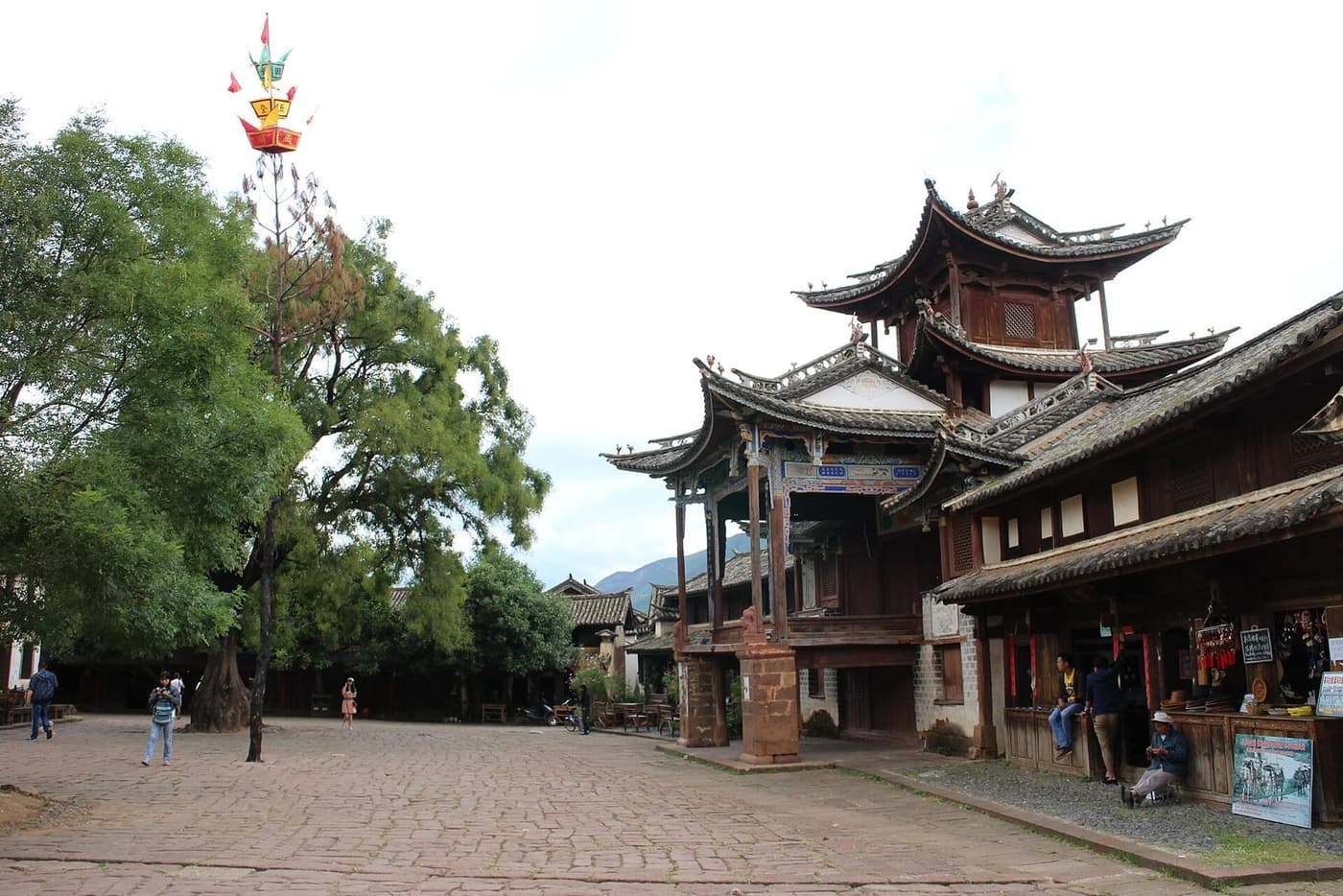
Streets and alleys of an ancient town in western Yunnan. Image: Xin / Wikimedia Commons, CC BY-SA 4.0
The place where they stopped was Huguo Road in the ancient town. This east-west bluestone old street is named in memory of the National Protection Movement in the early Republic: in 1915, Yunnan took the lead in raising the banner of opposing Yuan Shikai's proclamation as emperor, hence the name Huguo Road. Who could have imagined that decades later, this street named to commemorate war would become one of China's earliest streets for foreign tourists—bars, restaurants, and inns opened one after another, English signs hung at the doors, and locals simply called it "Foreigner Street."
Tibet Cafe, opened on Foreigner Street, has been operating from then until today and is a living fossil of this history. The owner, Nima Dorje, is Tibetan. It is said that around 1984, he first walked into Dali Ancient Town and never left; his story with Dali was featured in a media article in 2009 titled "Tibet Cafe's 20 Years of Changes." Today, if you walk into this old shop, order a coffee and sit by the window, you can still faintly feel the air of forty years ago.
Old photos of Foreigner Street from those years often show scenes like this: blond, blue-eyed backpackers squatting by the roadside picking silverware, Bai women holding tie-dyed cloth and bargaining in halting English; someone ordering a coffee in a corner restaurant and sitting for an entire afternoon; others renting a wing of a Bai house and staying for months. During the day, they cycled around Erhai, climbed Cangshan, and visited old houses in Xizhou; at night, the lights of Foreigner Street came on, and small bars were crowded with travelers from various countries, exchanging stories brought from Myanmar and Tibet. At that time, the foreign exchange certificates in tourists' hands were real income for the small businesses in the ancient town, but more importantly, these visitors from afar brought a way of life: basking in the sun between Cangshan and Erhai, strolling slowly, learning Chinese slowly.
The shops on Foreigner Street were the first "international" businesses in the ancient town: inn signs in both Chinese and English, restaurant menus with coffee, toast, and fried eggs, bicycle shops renting bikes, bookstores with foreign magazines. This street became one of China's earliest backpacker hubs and a window for foreign travelers to know Yunnan. Many later new migrants said that the first time they heard of Dali was from the words "Foreigner Street" from their parents or friends.
Dali's reputation for "slowness" also began to ferment from that time—decades earlier than later terms like "Buddhist-style" and "lying flat." Those foreigners who had stayed in Dali for several months returned to Europe and wrote this small town into travelogues and word-of-mouth: Cangshan, Erhai, cheap living, friendly locals. Word spread, and Dali gained a name in backpacker circles. In the 1990s, Foreigner Street became even livelier and became a recognized landmark in the national backpacker circle, and the guesthouse industry in the ancient town also rose.
The reaction of the local Bai people was also interesting: the tie-dye-selling women learned to quote prices in English, families renting rooms learned to make Western breakfasts, and some foreigners learned the Bai language in Dali. From then on, the ancient town formed a tacit understanding—when you come, we do business and make friends; when you leave, we wish you a safe journey.
1990s to 2000s: The First Batch of Artists
In the mid-to-late 1990s, a new batch of outsiders appeared, this time artists. Painters, musicians, craftsmen, writers, "literary youth"—they came from Beijing, Shanghai, Guangzhou, and Chengdu for similar reasons: rent was so cheap that people from cities were astonished, sunshine was so abundant that people were reluctant to leave, and it was far enough from the center of power that no one came to tell you what to paint or think in your courtyard.
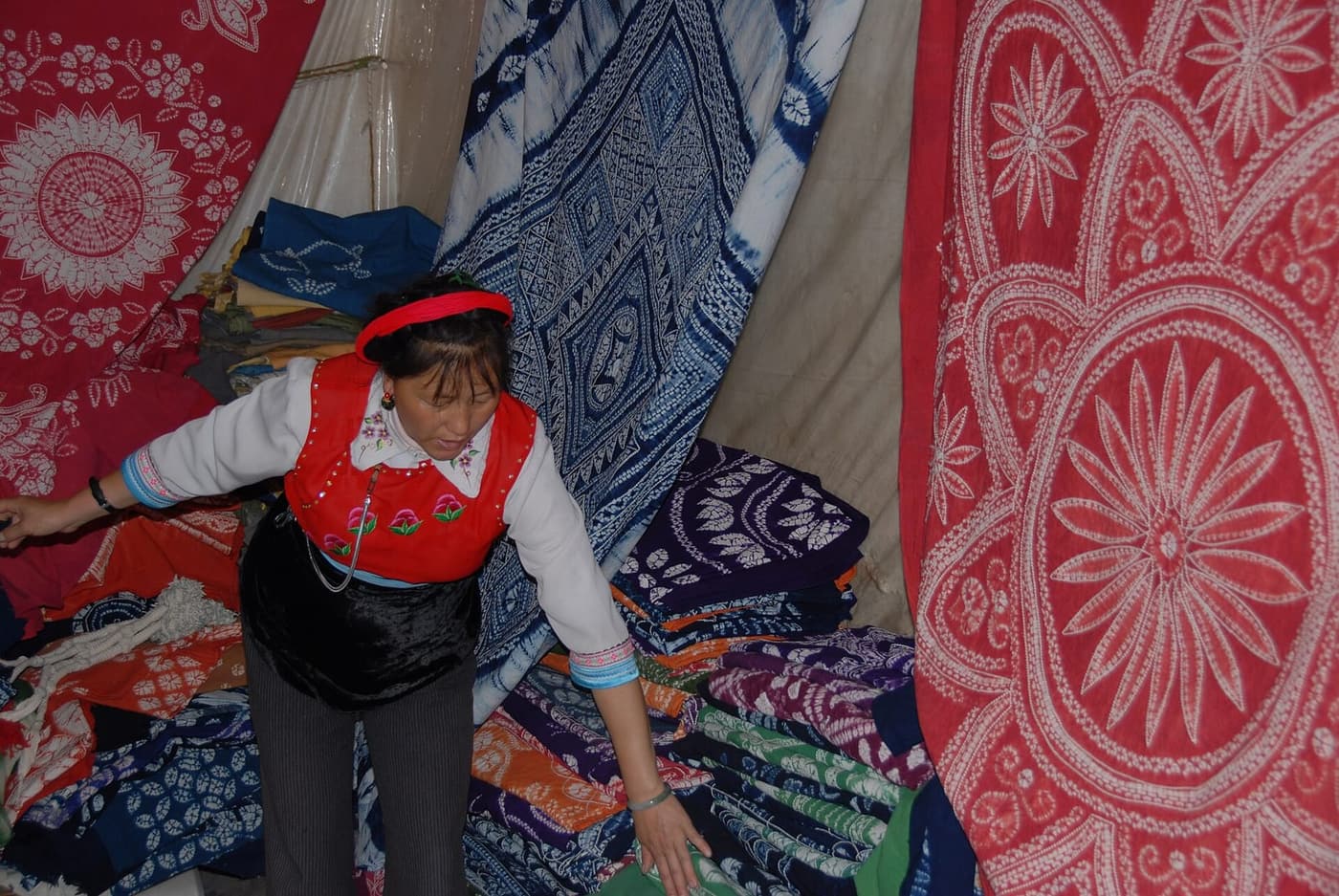
Traditional tie-dye and contemporary shops in Dali. Image: Jo Schmaltz / Wikimedia Commons, CC BY-SA 2.0
They rented old houses with courtyards in the ancient town, painted, made pottery, worked silver, did woodwork, and opened small shops; some went to tie-dye villages like Zhoucheng to learn dyeing from old artisans and brought traditional blue-and-white patterns back to the city. During the day, they worked in the courtyards with sunlight falling from the eaves; at night, guitar sounds began in the bars on Renmin Road, some sang, some drank, some talked about paintings just finished. Dali's folk music and underground music grew slowly during these years.
At that time, Dali formed an interesting contrast with neighboring Lijiang: after Lijiang Ancient Town was inscribed on the World Heritage List in 1997, tourists flocked in and commercialization advanced rapidly; Dali was relatively quiet and became an alternative for those who did not want to join the crowd. This stillness and movement gave Dali an additional halo of "not yet over-disturbed" in the "literary youth" circle.
There are also many interesting details in how the artists got along with the local Bai people: the landlady did not understand painting but would praise "it's really lively"; silversmiths passed their craft to outside apprentices; artists held exhibitions and invited village neighbors to tea. Dali's literary and artistic culture has never been behind closed doors—it has always grown in the soil of local life.
The alleys between Renmin Road and Yeyu Road slowly changed from quiet residential areas to places dense with studios and small shops; Renmin Road itself also grew from an ordinary old street into what people later often called the "small shop culture" block—handmade, second-hand, fortune-telling, singing, everything. Most of the shop owners are young people from outside, and rent is low enough to "support play with play": selling one handmade item is enough for a month's living; the rest of the time is all for creation.
The most representative material legacy of this period is the Sheet Factory Art District. It was an old sheet factory that had been closed for many years, with red brick walls, old chimneys, and empty workshops. The factory buildings were transformed by batches of artists and craftsmen into studios: painting studios, woodworking workshops, and designer studios one after another, under the tin roof is the skeleton of old industry, and new paintings hang on the walls. Exhibitions, markets, and live music events have been held here; the afterglow of old artists remains, and new creators keep moving in. To this day, it is still a quiet literary and artistic stronghold on the edge of the ancient town.
This generation established an imagination: "Dali = a place for free creation." This imagination is so powerful that all later narratives about "escaping Beijing, Shanghai, and Guangzhou" and "digital nomads" are merely variations of it. Starting in 2009, Dali also began to hold an international photography festival; the photography exhibitions were held year after year and became a cultural calling card of the city—during the festival, photos hang all over the streets and alleys of the ancient town, and photographers and artists from home and abroad pour into this small town. A former border town was thus written into the literary and artistic map time and again.
After the 2010s: Counter-Urbanization New Migrants
In the past decade or so, Dali has welcomed its largest batch of new migrants. They are somewhat different from the earlier artists: not all are in the arts, but internet workers, entrepreneurs, freelancers, and parents with children—tired of commuting, housing prices, and "involution" in first-tier cities, holding the possibility of remote work and another expectation for education, they moved with their families to the foot of Cangshan.
The earlier groundwork was that around the 2010s, batches of young people "escaping Beijing, Shanghai, and Guangzhou" came to Dali to test the waters—opening guesthouses, cafes, and farms. Some failed and left, some stayed and became the seeds of the later new migrant community. What truly turned "migration" into a wave were two things: remote work became possible, and in 2018 the high-speed train reached Dali—it takes only two or three hours from Kunming, and express delivery, food delivery, and mobile payment also brought the convenience of the small town to a level similar to the city. When a programmer can write code remotely in a courtyard at the foot of Cangshan, when a designer can work with a computer in a residential area in the mountains, the premise that "one must live in a big city" was deconstructed for the first time. After 2020, remote work became further normalized, pushing a second wave of people in.
The daily life of new migrants is a picture many have imagined: send children to school in the morning, work remotely in the courtyard or a cafe in the morning, run by Erhai in the afternoon, and attend a reading club or sharing session in the evening. The courtyards at the foot of Cangshan often have flowers and dogs, with grape trellises and sunlit lounge chairs. Most of these courtyards are rented from Bai families, and landlords and tenants often become friends, visiting each other during festivals like family.
Later people gave this group a name—"digital nomads." Dali is probably one of the earliest cities in China to gather digital nomads: some write code, do design, write articles, and make videos here, connecting to work all over the world through the internet. After 2020, remote work became the norm in a wider range, and Dali welcomed another wave of migrants; someone joked that half of Dali's cafes are office desks.
Parents with children have pushed Dali's most special page—innovative education. Several unconventional community schools and kindergartens have appeared in Dali, and the most reported is Maomao Guoer: a school with no grades and no rankings, where children have classes in nature, and one exam was even made into a documentary "Maomao Guo Exam Notes" by director Zhang Yang. Educational experiments are not only this one: there are families homeschooling, small classes formed by parents, and courses centered on nature and crafts. Every year parents come attracted by fame, and every year families leave with mixed feelings—the account of education is never a simple one. Educational choice has become one of the most tangled and most talked-about topics for "New Dali people."
Media observations of this group are two-sided. In 2021, Yicai's series "The Middle Class Who Migrated to Dali" recorded their stories: some truly found life here—courtyard, sunshine, slow pace, children running in the mountains; others found that "migration" does not automatically solve anxiety—housing prices are rising, children's education has gains and losses, livelihood still has to be found, and some moved in and then moved out. The report also wrote that Dali's social circle is tighter than in big cities but also smaller—an acquaintance society has its warmth and its boundaries; some moved to more remote villages thinking they could be quieter, only to find that anxiety does not automatically disappear by changing places. The report used "continuing involution and anxiety in counter-urbanization" to describe this complex situation, and this judgment is still accurate today.
But regardless, they have indeed changed Dali: cafes, bakeries, bookstores, community activities, innovative schools, farm markets... A small town that originally lived on tourism has gained another face as a "new migrant community." Many place names in Dali today—Yinqiao, Wanqiao, Fengyangyi—have another community map belonging to new migrants beyond the tourist map.
Today's Renmin Road, Sheet Factory, and Fengyangyi
To intuitively feel Dali's "new migrant ecology," going to Renmin Road and the Sheet Factory Art District is enough. Renmin Road grew out of the Foreigner Street culture of those years and is now the intersection of old and new migrant life: during the day, cafes, bakeries, and handmade shops open in century-old houses, and the baristas and shop owners are mostly outsiders, with the aroma of freshly baked bread wafting from the shops; at night, stalls light up, guitar sounds, African drums, and hawking mix together, and fortune-tellers, old-item sellers, and sketch artists all find their place on this street. Tourists hold up phones to take pictures, locals walk by with vegetable baskets, new migrants roast beans in the shops—the same street lives three kinds of time.
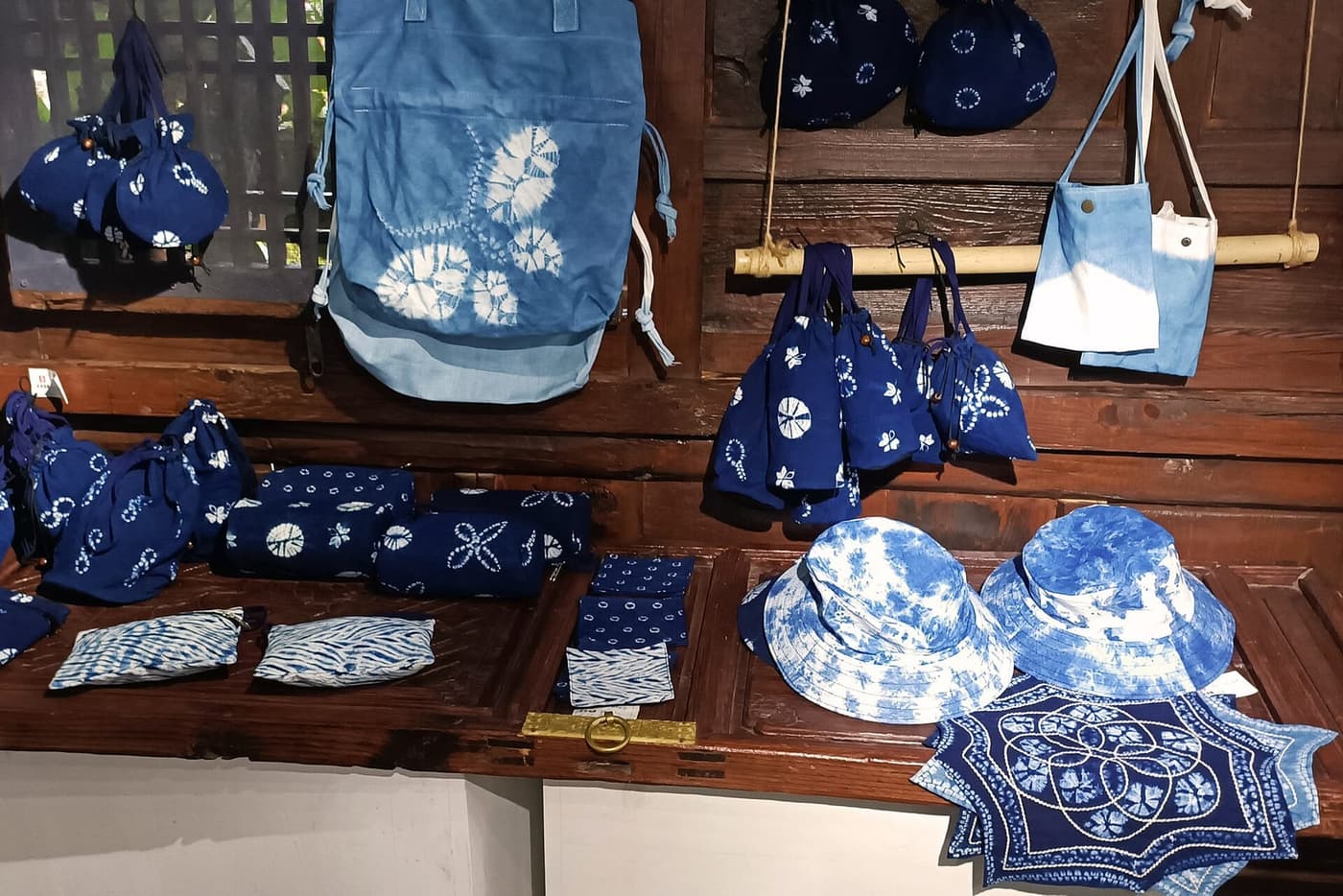
Tie-dye handicrafts in Xizhou, Dali. Image: Kcx36 / Wikimedia Commons, CC BY-SA 4.0
North of Renmin Road is the North Gate Vegetable Market, another observation point: in the early morning, local vegetable farmers bring in freshly picked vegetables, new migrants carry cloth bags to buy mushrooms and flowers, and vendors smile at everyone. There is no tourist noise here; it is the most everyday side of Dali.
In the old factory buildings of the Sheet Factory Art District, painting studios, woodworking workshops, and designer studios are lined up one after another, with occasional exhibitions and weekend markets—the afterglow of old artists and the replacement of new creators are most clearly seen here. Walking in, the red brick walls of the old workshops and the canvases of new works stand side by side, separated by exactly Dali's literary and artistic history of more than twenty years. During events, there are occasionally live music and screenings in the old factory buildings, and songs drift out from under the tin roof, a continuation of this small town's literary and artistic bloodline.
A few kilometers from the ancient town, Fengyangyi is the most vivid new place in recent years. This Tea Horse Road village at the foot of Cangshan has stone walls, earthen storehouses, and bluestone roads, and the ancient road passes through the village—hundreds of years ago, horse caravans carried tea to Tibet along this road. In early 2023, the TV series "Meet Yourself" was filmed here, and the "Windy Courtyard" in the drama was built in Fengyangyi; as soon as the drama aired, this quiet small village became a check-in spot overnight, and cafes, guesthouses, and studios opened one after another, and new people moved into old courtyards. Today that "Windy Courtyard" has also become a check-in point; if you go during the day, you can still see traces left by the crew and a continuous stream of tourists; if you go in the evening, after the tourists disperse, the bluestone road of the ancient Tea Horse Road will give you back a quiet time. The old residents of the village run their ancestral courtyards while learning to get along with new neighbors; many of the newly opened small shops are old houses rented and renovated by outsiders, living next to local rushan stalls and silver shops.
Sitting down in these places and chatting with shop owners, you will hear many stories of "why come to Dali." The bakery owner may be a programmer who quit; the cafe barista may have worked in advertising in Beijing; the guesthouse owner may have been in finance—you have to sit down and listen to these stories yourself. Some do it for their children, hoping they grow up in nature; some for health, escaping smog and late nights; some are just tired of the lights of office buildings and quit to open a bakery. Reasons vary, but almost everyone mentions the same word: life.
Why Dali Retains People
The same answer links generations of newcomers: the nature of Cangshan and Erhai, the spring-like climate all year round, and the possibility of "living at your own pace." Dali has sunshine in winter and cool breeze in summer, with an average annual temperature of around 15 degrees; the nineteen peaks of Cangshan stretch across the west, with clouds and mist lingering around the mountainside all year, and Erhai spreads out in the east, its water like a mirror in the early morning. Locals can point out each of the "wind, flowers, snow, and moon" to you: the wind of Xiaguan, the flowers of Shangguan, the snow of Cangshan, the moon of Erhai. More importantly, this city allows you to slow down—no one urges you, and no one stares at you.
There are also two free things in Dali's way of life: climbing Cangshan and going around Erhai. The Yudai Road winds along the mountainside of Cangshan, looming in the clouds and mist; the ecological corridor by Erhai can be cycled for a whole day, accompanied by sea breeze, reeds, and water birds. These are gifts Dali gives to everyone, whether you have lived here all your life or are only here for a week.
Dali's community culture is also special. The local Bai people have a long tradition of hospitality: on the Tea Horse Road, they have dealt with horse caravans and merchants for generations and are used to strangers coming and going; the Bai people's Benzhu worship gives each village its own guardian deity and also shapes that relaxed sense of "each living their own way, not disturbing each other." Among new migrants, there is a tacit understanding of mutual help—carpool groups, second-hand groups, mutual aid associations; if something happens in a family, someone in the group always responds; if someone bakes bread or picks fruit, they share it in the group. Many new migrants say making friends in Dali is much easier than in big cities; this city rarely makes it easy for strangers to integrate.
Bai festivals are also an entry point for new migrants to know the city: in the third lunar month, the thousand-year-old Dali March Street opens, and people of all ethnic groups come from all directions for horse racing, antiphonal singing, and market fairs; at the Torch Festival in summer, villages erect large torches, and new migrants are pulled by neighbors to dance together; in the rainy season, mushrooms from under Cangshan come to market, and jianshouqing and porcini appear more on the table, and new migrants learn for the first time that "you must be careful when eating mushrooms."
Of course, integration has a cost. In peak season, the ancient town is crowded, taxis queue, restaurants have waiting lines, rent and housing prices rise year by year, locals complain that the old street has changed its flavor, new migrants complain that there are too many tourists; the tug-of-war between tradition and commerce happens every day—some worry that Dali will become "another Lijiang," others think this is the fate any small town that is seen cannot escape. Some ask, why Dali? The answer may be: other places are also beautiful, but Dali puts "beauty" and "life" together—you can work, raise children, and make friends in a place where you can see Cangshan. This is a concrete happiness, not a slogan. Knowing these, when you come to Dali again, you will see more clearly: which are scenery, which are life, and which are stories happening in this city.
You Can Experience It This Way
· Renmin Road, Huguo Road (Foreigner Street): the intersection of old and new migrant life, cafes during the day, stalls and music at night; passing by Tibet Cafe, go in and sit, order a coffee, and imagine the backpackers of forty years ago.
· Sheet Factory Art District: studios and exhibitions in old factory buildings, the afterglow of old artists and the replacement of new creators.
· Villages such as Yinqiao, Wanqiao, and Fengyangyi: new migrant courtyards at the foot of the mountain and in the villages, also the most intuitive scene of Dali's "counter-urbanization"; in Fengyangyi, you can walk a section of the bluestone road of the Tea Horse Road.
· Go to the North Gate Vegetable Market in the early morning: local vegetable farmers, new migrants, and tourists crowd together, mushrooms, flowers, rushan, erkuai—this is the most everyday and vivid side of Dali.
· Chat with locals: guesthouse owners, baristas, street vendors, Bai women basking in the sun at the village entrance—every "person who comes to Dali" has their own story.
· Join a local market or community event: if you catch the third lunar month, don't miss the thousand-year-old Dali March Street; at other times, weekend markets, sharing sessions, and screenings organized by some farms and communities can be found on posters and in communities in the ancient town—that is the fastest way to know the new migrant community.
Dali's story has never been singular. The Nanzhao, the Dali Kingdom, the missionaries, the artists, the new migrants—generations of "those who came" and generations of "those who stayed" wrote it together. The city you walk into today is in the latest chapter of this story; and you, too, will become part of this story.
References and Notes
· Foreigner Street and Tibet Cafe: see China Daily "Nima Dorje: Dali Tibet Cafe's 20 Years of Changes" (2009), "Foreigner Street in Dali City" (China Place Names, No. 6, 2000), and Douban "Dali Literary History丨Nima Dorje: The Following Story Begins in Dali Ancient Town in 1984" and other public materials.
· Plant hunter Forrest, the Burma Road, and the wartime westward migration: public historical materials and reports on the botanical history of Forrest collecting plant specimens in Cangshan with Dali as a base, the history of the Burma Road, the South China Sea overseas Chinese mechanics, and the westward migration of Huazhong University to Xizhou, Dali (from 1939) (Huazhong Normal University, Yunnan Daily, etc.).
· Dali as a historical and cultural city and comparison with Lijiang: Dali was listed as one of the first national historical and cultural cities in 1982; Lijiang Ancient Town was inscribed on the World Heritage List in 1997, both are public official information.
· Sheet Factory Art District: see Yunnan Net, Dali Daily "Industrial Heritage Renewal, Dali Sheet Factory Art District Reshapes the New Cultural Ecology of the Ancient Town" (2025) and other reports.
· Fengyangyi and "Meet Yourself": public reports that the TV series aired in early 2023 and was filmed in Fengyangyi and made the village popular, such as China News Service "Hit TV Series Attracts Tourists to Embark on Dali's 'Windy Journey'" (2023).
· Counter-urbanization new migrants: see Yicai "The Middle Class Who Migrated to Dali: Continuing Involution and Anxiety in Counter-Urbanization" (2021) and "What Kind of Life Have the Middle Class Who Migrated to Dali Experienced?" and other series reports; observations on housing prices, education, and livelihood refer to interviewees' accounts in these reports.
· Innovative education in Dali: see Southern Weekly "In Dali, They Sent Their Children to a School Without Grades and Rankings" (2018) and reports by The Paper and other media on the Maomao Guoer community school; director Zhang Yang's documentary "Maomao Guo Exam Notes" can be viewed as an extension.
· Dali International Photography Festival: the first was held in 2009, see Yunnan Daily "Looking Back at Ten Dali International Photography Festivals" (2023) and other reports.
· The inclusiveness and community culture of the Bai people in Dali: synthesized from Yunnan ethnic research and local historical materials, and also from our observations of living in Dali for many years.
Keep exploring Dali
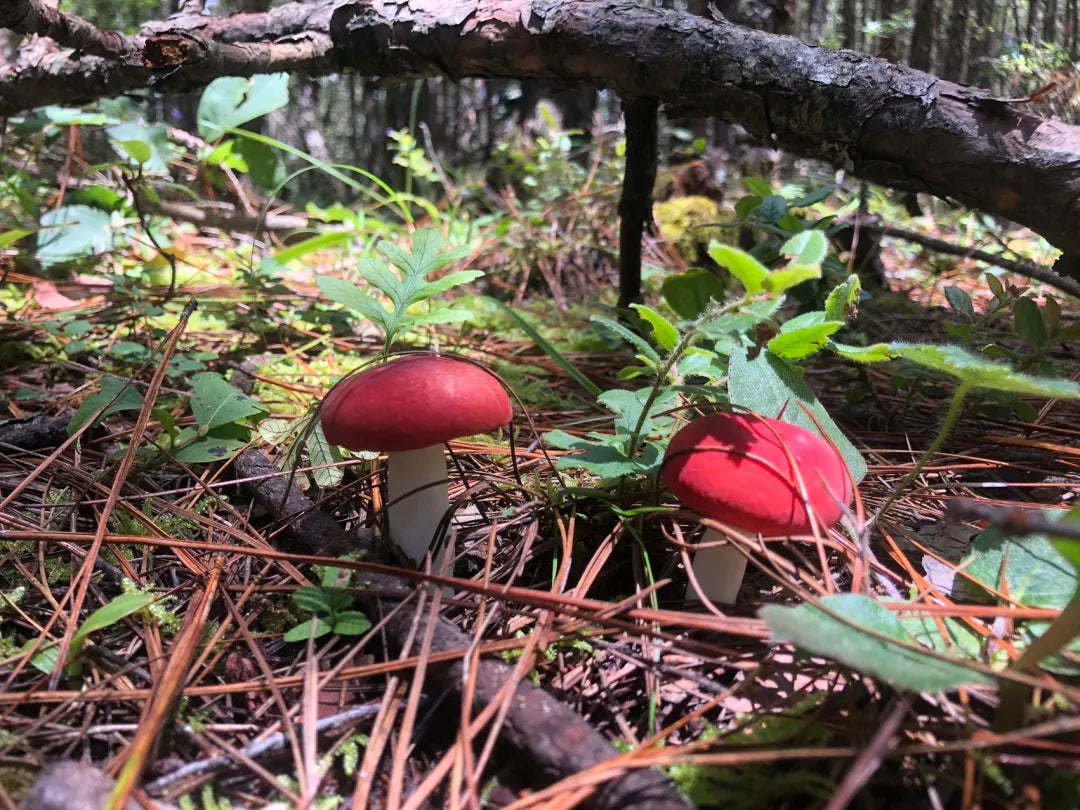 Dali Wild Mushrooms: Mushroom Season, Table Recipes, and Two Thousand Years of Mushroom-Eating HistoryEvery June, when the rainy season arrives in Yunnan, mushrooms start to pop up. Yunnan has 2,753 known wild mushroom species, accounting for more than half of China's total. This article covers the dried beef mushroom (ganba jun), termite mushroom (jizong), green-headed mushroom (qingtou jun), matsutake, and jianshouqing on Dali people's tables, how locals stir-fry them and preserve them in oil until next year, and also records from Zhuangzi, Bencao Gangmu, and Xu Xiake of Yunnan people eating mushrooms for over two thousand years—as well as the safety bottom line that must be upheld when foraging and eating mushrooms.→
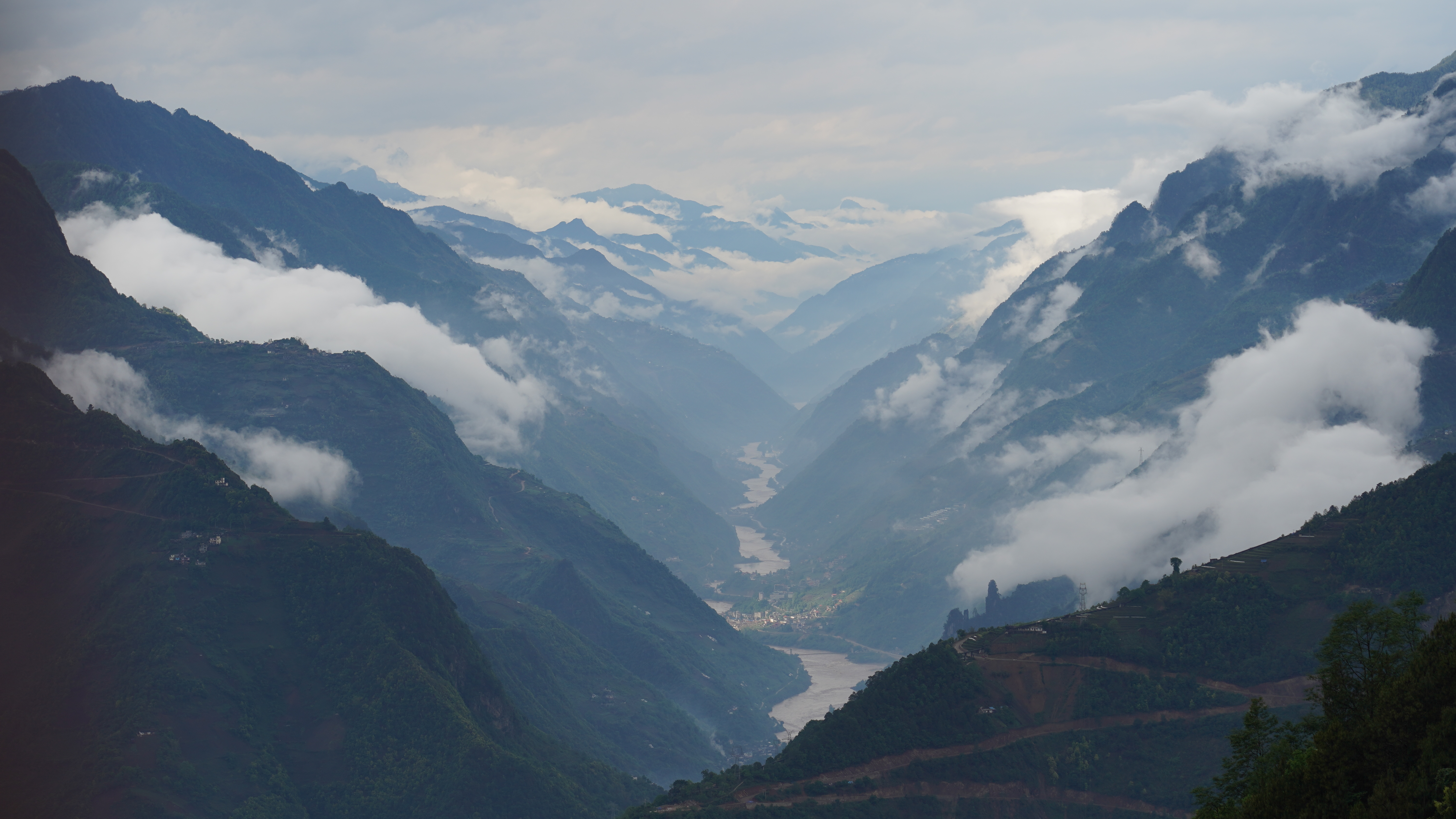 Scripts, Songs, and Wine in the Valleys: The Spread of Christianity in Yunnan's BorderlandsFrom James O. Fraser's early encounters with the Lisu people in Tengchong, explore the scripts, songs, churches, and wine of Yunnan's borderlands.→
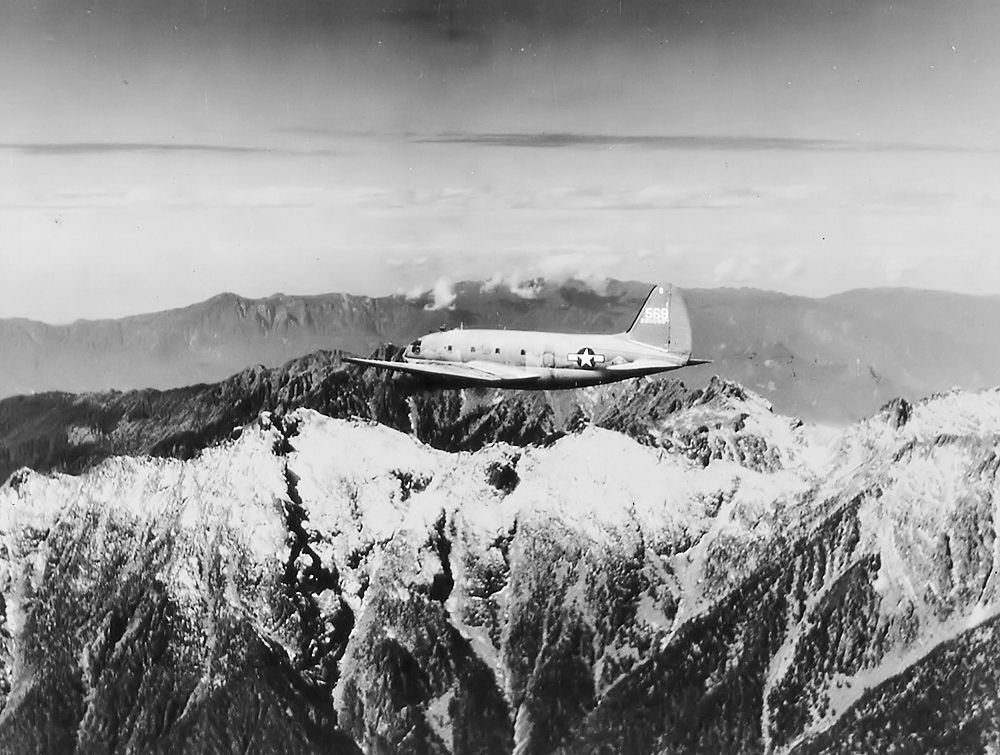 The Hump Route and the Burma Road: Two Lifelines of the War of Resistance Through YunnanOne leads through the mountains west of Xiaguan to Myanmar, the other flies over the mountains from Yunnanyi in Xiangyun. How did the Burma Road and the Hump Route maintain China's connection with the world during the most difficult phase of the War of Resistance? Why did Dali become an important node on both lifelines simultaneously?→
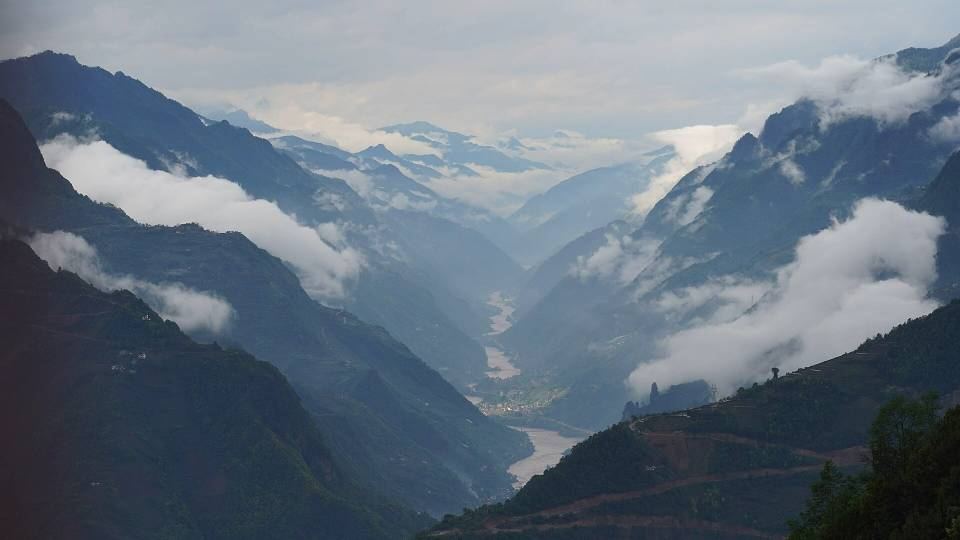 The Nujiang, Lancang, and Jinsha Rivers: the unique nature and culture of the Three Parallel RiversStarting from Dali and heading north, crossing over the Cangshan Mountains, you will enter a massive fold split open by three great rivers. The Nujiang (Salween), Lancang (Mekong), and Jinsha (Yangtze) rivers—three great rivers originating from the Qinghai-Tibet Plateau—cut through the land of northwestern Yunnan from north to south like three parallel knives. They run so close together—at their nearest point, the straight-line distance is less than seventy kilometers; and they flow side by side for over one hundred seventy kilometers before each turns and heads toward a different destination. This is the "Three Parallel Rivers," inscribed as a UNESCO World Natural Heritage site in 2003, and it is also a key to understanding Yunnan. Many people think the beauty of Yunnan is simply the wind, flowers, snow, and moon by Erhai Lake→
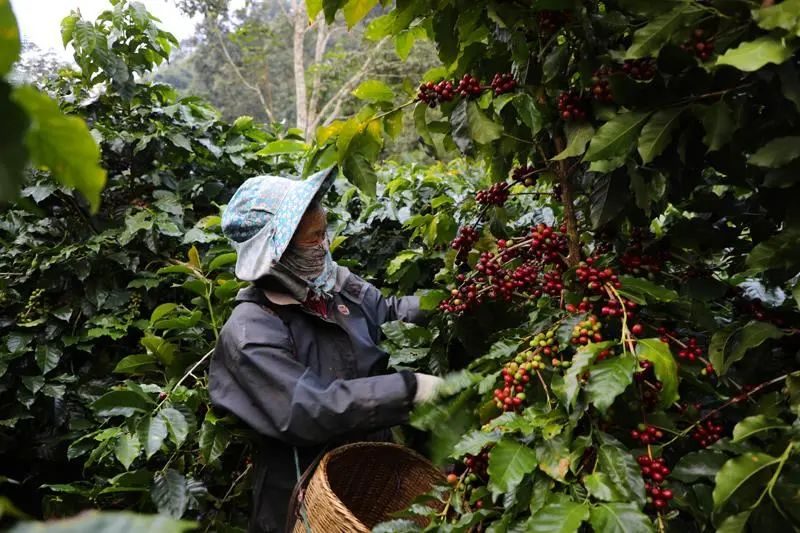 The history of Yunnan coffee: from Zhukula (a village in Yunnan) to a cup at the foot of Cangshan (a mountain in Yunnan)If you walk into the ancient town of Dali today, sit down at any café, and order a latte made with Yunnan beans, chances are you won't find it anything special. Coffee is far too common here—on Renmin Road there's one every few steps, the aroma of roasting drifts from the courtyards on Yeyu Road, and the terraces of the Chuangdancang Art District are full of people with their laptops. You might not realize that this ordinary cup of coffee is actually the end of a history spanning more than a century: its source lies in the mountains not far from the ancient town of Dali; its story begins with a French missionary and a small village almost completely cut off from the world. The story of Yunnan coffee is almost→
Comments
Comments
…