Life in Dali
People Who Came to Dali: Explorers, Missionaries, and National Southwestern Associated University (Xinan Lianda)
Aug 15, 2026
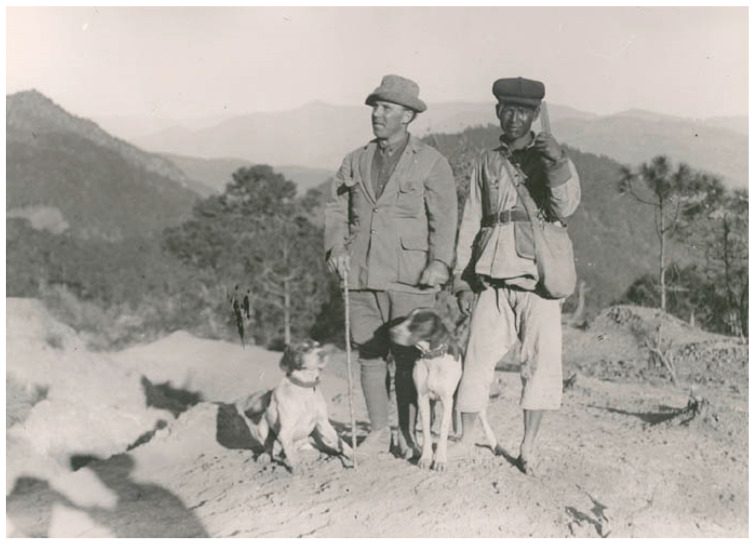
Dali has never belonged only to the people of Dali. This statement can be taken a step further: the history of Dali is almost a microcosm of Yunnan's history. For over a century, Yunnan has been a destination for outsiders—some came for a single flower, some for a church, some to preserve a desk for learning amid the flames of war. They came on horseback, on foot, by boat, by train, along the Tea Horse Road (Cha Ma Gu Dao), through the gorges of the Lancang River and the Nu River, from Myanmar, from Vietnam, from Beiping, from Shanghai, all heading toward the same place. And Dali happened to be a core stop on this road of "coming to Yunnan": geographically it connects western Yunnan with northwestern Yunnan, and culturally it is the crossroads where the Bai people, the Han people, and outsiders meet.
If you were to draw a map of this century and more, you would find several clear routes: missionaries traveling north along trade routes from Myanmar and Vietnam, plant hunters sailing from Europe across the seas, university teachers and students relocating westward from Beiping, Shanghai, and Wuchang, and caravans traveling north and south along the Tea Horse Road. They met among the Cangshan Mountains and Erhai Lake, and each left their mark—churches, specimens, the sound of reading, grand residences. And the starting point of all this must be pushed back another three hundred years, beginning with the footprints of a Chinese traveler.
What these visitors left behind was often more than what they took away. Forrest took away rhododendron seeds, yet he made Cangshan known to the world; missionaries built churches in the style familiar to the Bai people; exiled teachers and students continued teaching in the temples of Xizhou; today, young people from all over the country sit in the cafés of the old town, treating Dali as the next stop in their lives. The most direct way to understand Dali is not to look at the scenery but to look at the people—to look at those "who came," to see why they came and why they stayed.
Why Dali, of all places? Opening the earlier history, the answer is written at the foot of the Cangshan Mountains: the Nanzhao and Dali kingdoms once had their capitals here, and for hundreds of years this ancient city was the political and cultural center of western Yunnan; the Three Pagodas, the old town, and the temples are all foundations left from that era. In modern times, the post roads and horse caravans made it a transportation hub of western Yunnan. Thus, almost everyone "coming to Yunnan" would stop in Dali—it was both a destination and a transit point. Understand this, and you will understand the origin of Dali's character: it has seen people come and go for so long that it is composed.
Xu Xiake: The Traveler Who Systematically Recorded Yunnan
In 1638, Xu Xiake, already over fifty, entered Yunnan from Guizhou. For nearly two years afterward, his footprints covered eastern, western, and northwestern Yunnan, and he wrote the longest and most brilliant part of The Travels of Xu Xiake (Xu Xiake Youji): the "Diary of Travels in Yunnan" (Dianyou Riji). His "Diary of Travels in Yunnan" is considered one of the earliest travel and investigative records to systematically introduce Yunnan's history, geography, and culture: mountains and rivers, roads, towns, temples, products, and customs, all recorded stroke by stroke, like leaving later generations a "user's manual" of Ming-dynasty Yunnan. In an age when the only means of transport were horses and legs, such record-keeping meant staking one's life on the road—he encountered miasma, bandits, and running out of food, but his travelogue rarely complains; it is filled more with the delight of "another mountain seen, another scene gained." Some say that later explorers entering Yunnan often carried Xu Xiake's records with them—first reading the travelogue, then deciding which road to take. He was the earliest guide on this road.
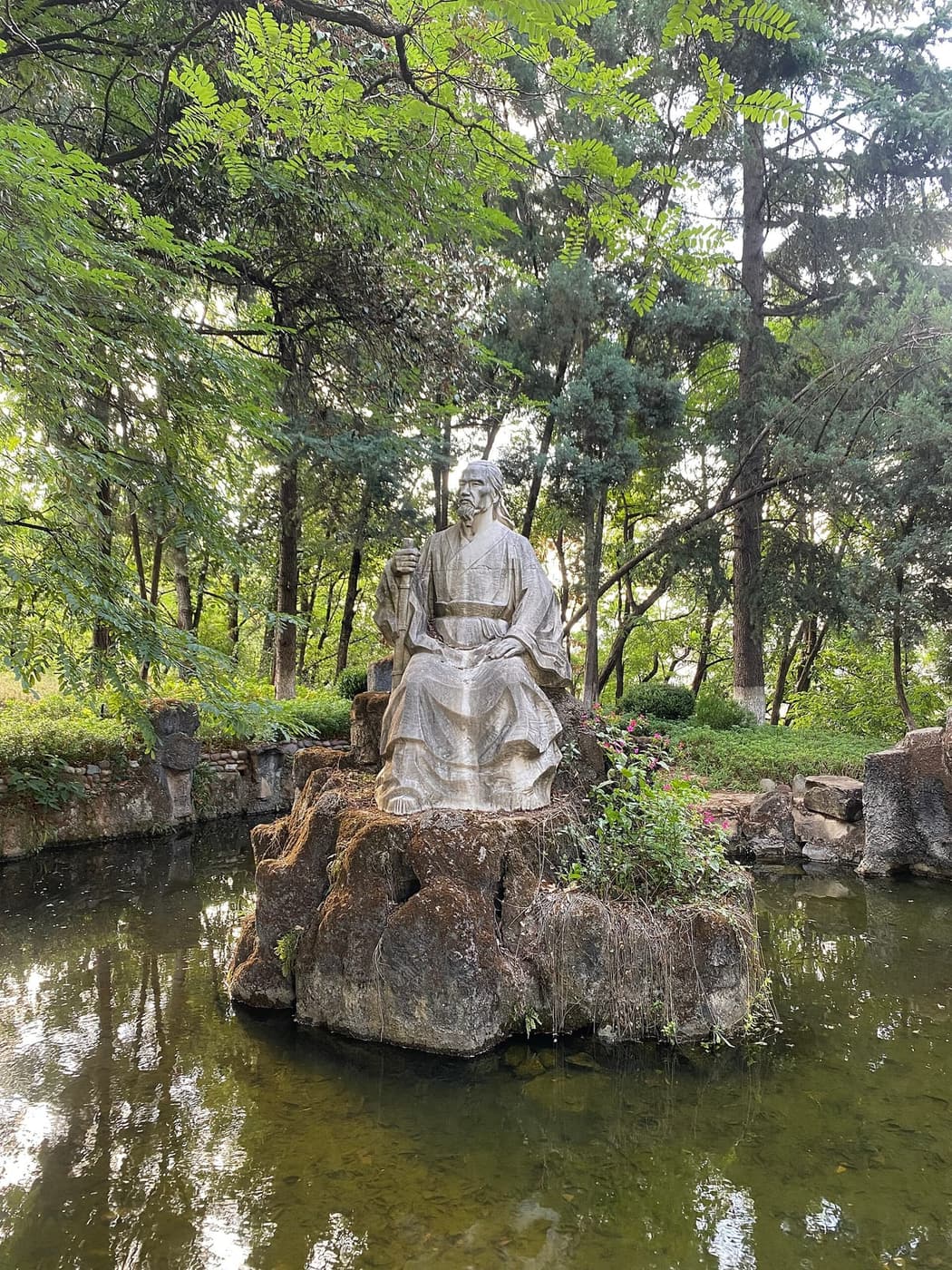
Portrait of Xu Xiake. Image: Ruilijiang de Heshui / Wikimedia Commons, CC BY-SA 4.0
He was especially attentive to Dali. He visited Gantong Temple and recorded the tea and flowers there; he went to see the Three Pagodas of Chongsheng Temple and described the appearance of this famous monastery in his travelogue; he also made a special trip to see Butterfly Spring, recording the scene of butterflies fluttering by the spring. Cangshan, Erhai Lake, and the villages along Erhai's shores all left their likeness in his writings. In the Ming dynasty, Dali was already a famous ancient city known throughout the land—the Three Pagodas, the Buddhist temples, the farmland between Cangshan and Erhai—Xu Xiake came drawn by its fame, and Dali did not disappoint him.
The place he could never let go of was Jizu Mountain—this great mountain in Binchuan, famous as a Buddhist holy site, which he visited twice. Legend has it that this is where Mahakasyapa, a disciple of Shakyamuni, entered meditative concentration, so pilgrims come in an endless stream. On his second ascent, Xu Xiake stayed on the mountain for several months, said to have been organizing his travelogue while carefully recording the monasteries, springs, rocks, flowers, and trees on the mountain. Traveling with him was a monk named Jingwen. Jingwen had vowed to deliver a blood-written copy of the Lotus Sutra to Jizu Mountain as an offering, but fell ill and died along the way. According to records, Xu Xiake carried his remains onward westward and finally buried him on Jizu Mountain. This journey thus took on a solemnity bordering on the tragic.
Xu Xiake himself later could not let go of this mountain either—legend has it that before his death he left a wish to be buried on Jizu Mountain. He ultimately rests in his hometown of Jiangyin, but his grave is said to face southwest, toward Jizu Mountain. His final journey in Yunnan was also legendary: after falling ill in western Yunnan, records say the Mu chieftain of Lijiang sent men to escort him all the way back to his home in Jiangnan. A man at the end of his life left his heart on a mountain he had visited only twice; a mountain received his companion and also received his wish—this is perhaps the most solemn affirmation that "this place is worth coming to."
Today, if you go to Jizu Mountain again, you can still walk up along the path he took. The monasteries on the mountain have risen and fallen several times, but Cangshan, Erhai Lake, and the mountains of western Yunnan still look as they did when he saw them. For a hiker, Xu Xiake is the most approachable elder—he walked in an era without trail markers, relying entirely on his feet and eyes, walking the road first for those who came after.
Plant Hunters: Crossing Entire Mountains for a Single Flower
From the late nineteenth to the early twentieth century, Yunnan was a land of longing for botanists worldwide. At that time, European gardens were in the grip of an "alpine flower craze," and the Hengduan Mountain region of southwestern China was considered one of the most botanically rich places on Earth. Britain's George Forrest made seven collecting expeditions to Yunnan starting in 1904, spanning nearly thirty years, and brought back tens of thousands of plant specimens, among which rhododendrons were his claim to fame—many of the alpine rhododendrons you see in European gardens today trace their ancestry to western Yunnan. Besides rhododendrons, camellias were another of his harvests: the Dali area has a long history of cultivating camellias, and Bai families love to grow a camellia in their courtyards; Forrest also brought Yunnan camellias to Europe.
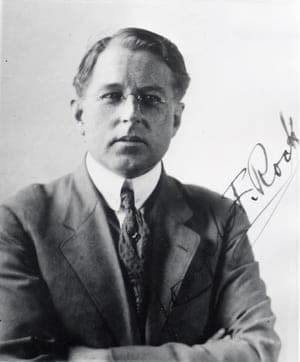
Portrait of Joseph Rock. Image: Unknown author / Wikimedia Commons, public domain
Forrest's collecting life was far from romantic. He lived in Tengchong, using this small city in western Yunnan as his base, riding or walking into the mountains time and again, following horse caravans over ridges and through valleys in the rainy season. Muddy horse trails, malaria, and landslides were everyday occurrences; leeches crawling into his trouser legs, heavy snow closing mountain passes, months away from home at a stretch. The collecting methods were primitive: flowers had to be pressed into specimens, dried, labeled; seeds wrapped in oil paper, carried back to town load by load, then shipped across the seas to Britain. But a single flower never seen before was enough to make him go again. He and his contemporary collectors also quietly competed: whoever discovered a new species first would have his name written into the botanical records alongside the flower. In today's botanical nomenclature, species names with the suffixes forrestii, wardii, and rockii are the signatures they left in science. In 1932, Forrest died in Tengchong and is said to be buried there—in the end, he did not return to Britain.
Behind Forrest's collecting was the entire British garden industry: the Royal Botanic Garden Edinburgh received specimens, wealthy merchants provided funding, and aristocratic gardens competed to order seeds—rhododendrons in Britain once became a symbol of status and taste. When we say "plant hunter" today, it sounds like a romantic adventure, but it was in fact a business with patrons, markets, and competition. Only, beyond the business, they truly loved these flowers.
Slightly later than Forrest, botanist Frank Kingdon-Ward made multiple deep expeditions into western Yunnan and southeastern Tibet. His expeditions often coincided with the rainy season, because alpine flowers bloom only in the brief summer. He followed horse caravans through the gorges where the Nu, Lancang, and Jinsha rivers run in parallel, recording the rhododendrons, blue poppies, and primulas of the region one by one—blue poppies bloom on scree slopes at altitudes of three to four thousand meters, blue to the point of unreality. In The Land of the Blue Poppy, he wrote of his experiences on the Yunnan-Tibet border, and from then on this flower entered the Western imagination. When people speak today of the botanical treasure house of the "Three Parallel Rivers" region, Kingdon-Ward was one of the first to tell the world about it. The terrain here is like a natural staircase: from subtropical gorge bottoms to temperate forests on the slopes to alpine meadows at the summits, several thousand meters of elevation difference harbor plants from several climate zones—for collectors, this is the most fascinating place in the world.
And the Austrian-American scholar Joseph Rock stayed in northwestern Yunnan for more than twenty years. Although he was mainly active around Lijiang, he surveyed and mapped, took photographs, recorded Naxi culture and Dongba scriptures, and wrote article after article for National Geographic magazine, letting the world see northwestern Yunnan—including Dali—systematically for the first time. He lived for many years in a small village at the foot of Yulong Snow Mountain in Lijiang, and it is said that his former residence is still preserved there. Rock was not a typical "plant hunter"—he collected specimens, but even more, he collected culture; yet it was precisely this group of "people who came to Yunnan" who turned this land from a blank space on the map into a place the whole world yearns for.
Many of their "collecting sites" can still be visited today. The nineteen peaks and eighteen streams of Cangshan in Dali represent the botanical diversity of this region and are now a national nature reserve and a world geopark. Take the cable car up, or hike into alpine meadows like Huadianba; in early summer, rhododendrons and primulas are still blooming in the same old places—the same flowers that Forrest and the others saw over a hundred years ago. Huadianba is an alpine meadow on Cangshan, covered with wildflowers in June and July, reachable only on foot or on horseback—the "sea of flowers" in the eyes of the collectors referred to places like this. The park's stone monument stands at the foot of Cangshan, reminding you that this is not just scenery but a living botanical archive. The flower seeds taken away back then have now returned in another form: European nurseries have cultivated alpine rhododendrons for a hundred years and bred new varieties; while the wild rhododendrons on Cangshan remain as they originally were. What the Cangshan reserve protects today is precisely what the collectors of that era treasured most—mountains upon mountains of living flowers, more enduring than specimens.
Missionaries: Building Churches in the Bai Style
At almost the same time, another group of visitors entered western Yunnan along the caravan trade routes. In the late nineteenth century, Catholic orders such as the Paris Foreign Missions Society, as well as Protestant missionaries from Britain and elsewhere, set out from Myanmar and Vietnam, traveled north along trade routes, and passed through Tengchong and Dali all the way to Kunming. Interestingly, this missionary route did not come in from the eastern interior but from the southern border—the roads they took were the same ones used by the caravans of the Tea Horse Road. For the missionaries of that time, Yunnan was "the end of the world" and also "the nearest heaven": enclosed terrain, numerous ethnic groups, and government authority that could not reach far—these very things made it a place where they were willing to invest deeply.
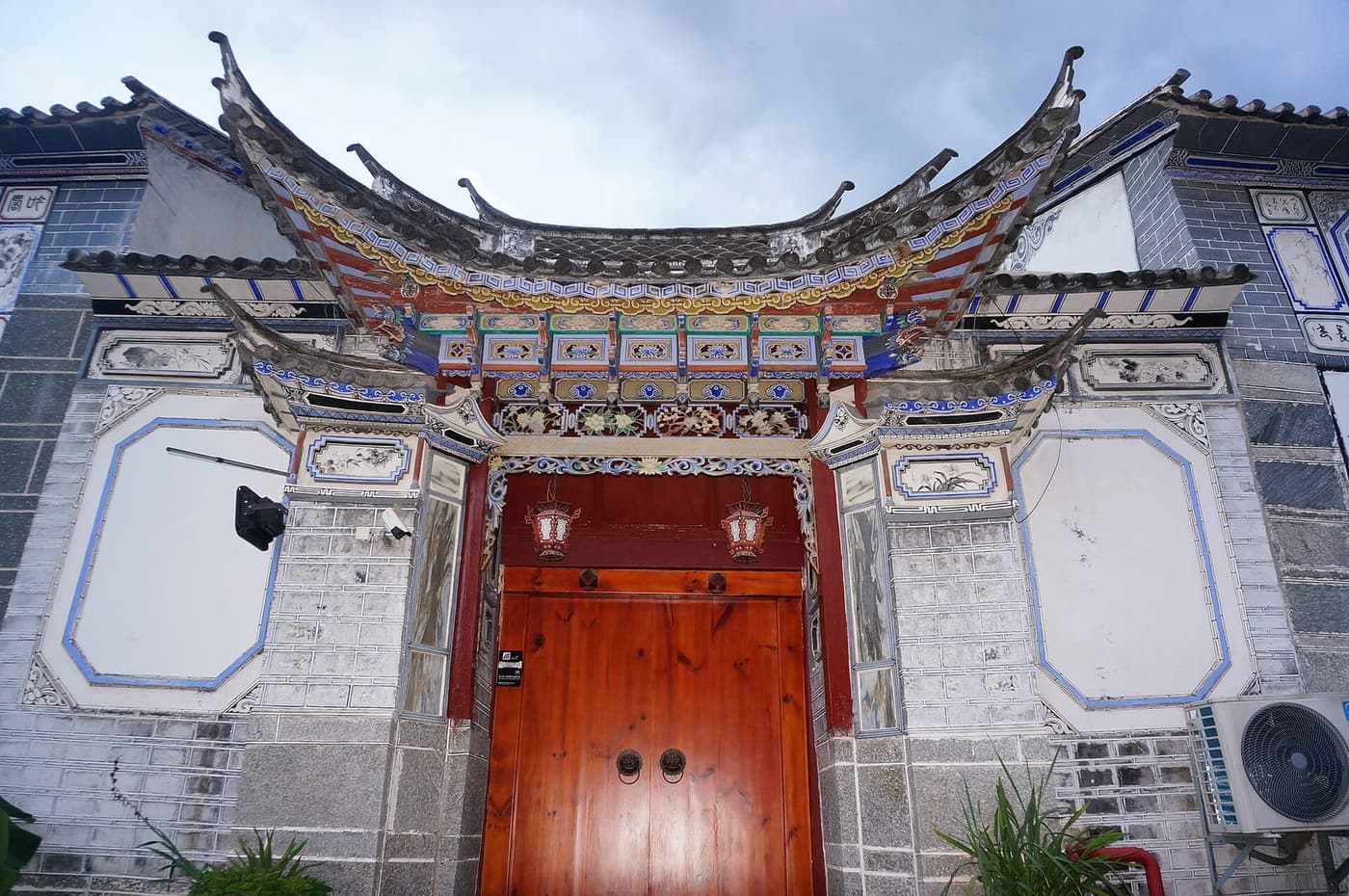
Dali Catholic Church. Image: Maomao de Rijiben / Wikimedia Commons, CC BY-SA 4.0
What the missionaries brought was not only churches. They founded hospitals and schools, left behind orphanages and the first Western-perspective records of western Yunnan; their letters, travelogues, and survey reports were important windows through which the outside world learned about Yunnan in that era. They also brought grapevines—in Cizhong by the Lancang River in northwestern Yunnan, grapes planted by the missionaries back then still grow in the church courtyard, and the villagers still use them to make wine. Many of Yunnan's winemaking stories begin with these missionary grapevines. The missionaries also did something with far-reaching influence: to spread their faith, they used the Latin alphabet to create writing systems for some ethnic groups in western Yunnan that had none; the Lisu script is said to have originated this way, and to this day some Lisu believers in certain places still use it to read scriptures. Of course, the missionary road was not always peaceful—some also died on Yunnan's mountain roads and never returned to their homelands. Like Forrest, they left their lives here.
The influence of mission schools and hospitals was more enduring than that of the churches themselves. It is said that many of the first local students to come out of mission schools later became among the earliest modern intellectuals of western Yunnan—doctors, teachers, translators. What outsiders brought thus slowly grew into something local.
But the most vivid material evidence is the churches themselves. The missionaries did not insist on building churches in the European style; instead, they asked Bai craftsmen to build them in the form most familiar to the Bai people—the Catholic Church in Dali Old Town is entirely in traditional Bai architectural style: upturned eaves and dougong brackets, carved wooden doors and windows, white walls and gray tiles. Inside, the painted beams and carved flowers on the doors and windows are all Bai craftsmanship; only the cross at the top reminds you that this is a church. This is the most intuitive answer to "how foreign culture blends with the local": not one conquering the other, but each borrowing the other's language. It is generally believed that this church was built in the 1920s or 1930s—a hundred years have passed, and it is still in its original place, still functioning as a church. Today in Dali Old Town, the Catholic Church and the Protestant Church are not far apart, both sites of faith left from that era.
Among these missionaries, some learned to speak Bai, wore local clothing, and tried to truly enter the lives of local people; others clashed with locals, leaving behind a complex history. Many of the congregants were local Bai people—it is said that those attending services in the church and those next door celebrating the Benzhu Festival at the temple were often the same people. Today, standing before that Bai-style church, you will see two cultures quietly coexisting within one building for a hundred years: a cross standing above Chinese-style upturned eaves, the sound of worship bells and the bustle of the market audible across the wall. It is said that even today, people still attend services in the church, and there are still locals among the believers—faith may change form, faces may change, but the way this city embraces them has never changed.
Southwest Associated University and Huachung University: Desks Between Cangshan and Erhai
In 1938, as the War of Resistance Against Japan entered its second year, Peking University, Tsinghua University, and Nankai University moved south to Kunming and formed the National Southwest Associated University (Lianda). During the eight years of "building thatched huts and never ceasing to sing," Yunnan became the cultural rear of wartime China. Lianda's motto was "Fortitude and Perseverance" (Gangyi Jianzhuo)—these four characters describe exactly those days. Classrooms had tin roofs that clattered in the rain; dormitories had thatched roofs open to the wind on all sides; Japanese planes flew over Kunming from time to time, and teachers and students would grab their lecture notes and run to the outskirts at the sound of air-raid alarms. But the masters' lecterns were never empty—Wen Yiduo lectured on the Songs of Chu, Feng Youlan lectured on philosophy and wrote his Six Books of the Zhenyuan Era in Kunming; Hua Luogeng did calculations by oil lamp, and it is said that he and Wen Yiduo shared a room at one point, separated by a cloth curtain—archaeology on one side, mathematics on the other. Hua Luogeng's On the Additive Prime Number Theory, which later shook the academic world, was written under such a roof.
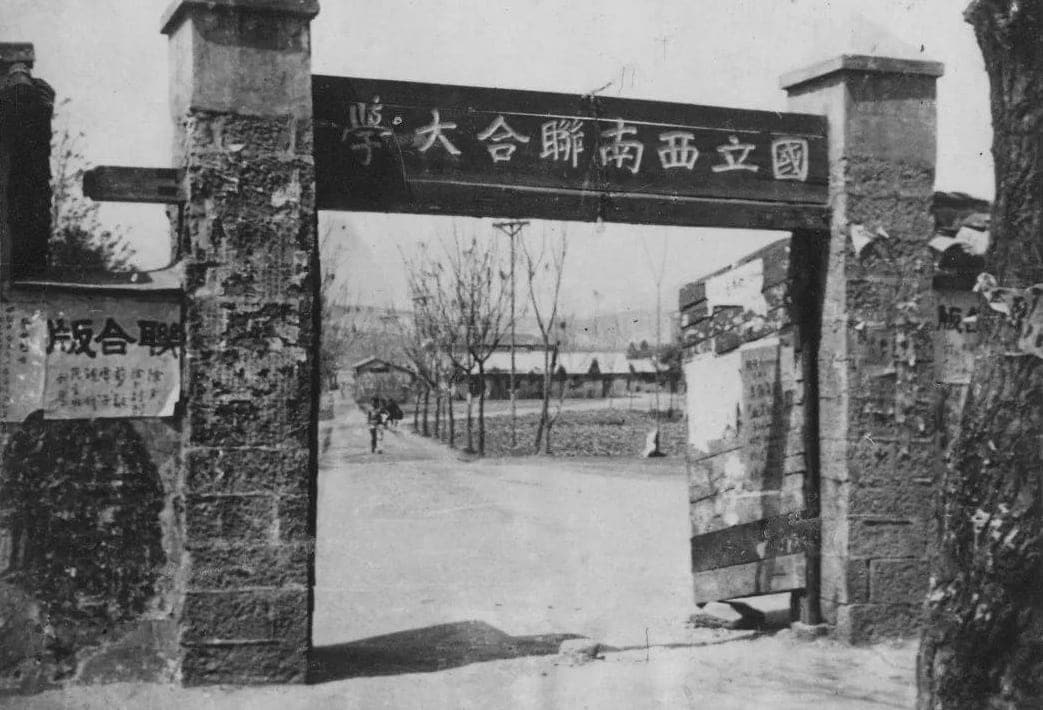
The gate of National Southwest Associated University in 1938. Image: National Southwest Associated University / Wikimedia Commons, public domain
Even more moving is the way they arrived. In the spring of 1938, some Lianda teachers and students did not take vehicles but set out on foot from Changsha, walking through western Hunan and Guizhou all the way to Kunming, covering more than three thousand li. Wen Yiduo was among this walking group—it is said he swore not to shave his beard until he reached Kunming. When this dusty, travel-worn group finally walked into Yunnan, Yunnan's relationship with this great national migration could never be separated again.
And Dali was part of it too. In 1939, Wuchang's Huachung University moved south amid the war, eventually arriving in Xizhou, Dali, where it ran for nearly eight years. Huachung University was originally a mission university; its president, Wei Zhuomin, was himself a philosophy scholar, and he led teachers and students in persevering with the school in Xizhou. The Bai merchant guild of Xizhou received this group of scholars from afar, giving up grand residences and temples as school buildings—Daci Temple and the Confucian Temple both once echoed with the sound of lectures. For a time the ancient town was filled with the sound of reading, and it is said that the silversmiths and carpenters of Xizhou thus came into contact with these "scholars from afar": repairing desks and chairs, making teaching aids, chatting casually—a window was quietly opened in the life of the small town. In their spare time, teachers and students also climbed Cangshan and toured Erhai, treating this landscape as a temporary homeland. It is said they lived in Bai-style houses, learned to speak some Bai, and even attended the Benzhu Festival—a group of scholars from Jiangnan and a small Bai town thus accepted each other. After the victory of the War of Resistance, Huachung University moved back to Wuchang and later became one of the predecessors of today's Central China Normal University.
Today, walking through the alleys of Xizhou, you can still feel the cultural depth that those "songs of learning amid the flames of war" left in this small town. A desk traveled a thousand li through war and finally came to rest at the foot of Cangshan—this fact itself is the best footnote to Dali's tolerant character.
Looking back, these eight years were a period of mutual achievement between Yunnan and outsiders: Yunnan took in the relocated schools, and the schools left the seeds of modern scholarship in this land. Lianda's teachers and students conducted extensive frontier surveys and scientific investigations in Yunnan, bringing the mountains and rivers of western Yunnan into the view of modern scholarship for the first time; and small towns like Xizhou, because of the arrival of a university, tasted "culture" ahead of time. When we say today that Xizhou "has a literary air," the roots lie in those years.
The Xizhou Merchant Guild: The Story of Dali People Going Out Themselves
Having told so many stories of "outsiders coming in," it is time to talk about "Dali people going out." Dali has never been merely a place to be seen; it has also actively reached out to the world—through horse caravans and merchant guilds.
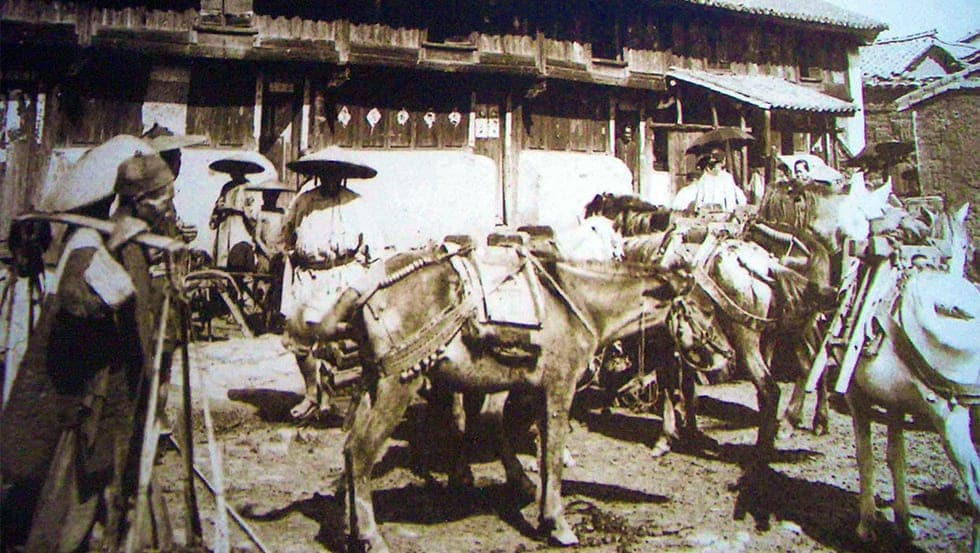
A mule caravan in western Yunnan, circa 1905. Image: Wikimedia Commons, public domain
Xiaguan, located at a strategic point, was an important distribution center on the Tea Horse Road. Tea departing from Pu'er and Xiaguan was carried all the way to Lhasa via Lijiang and Zhongdian, then exchanged onward to India and Nepal; another route went west through Tengchong into Myanmar. Caravan bells rang through the gorges, covering dozens of li a day, camping at roadside inns, undeterred by wind and rain. The leader of the caravan was called the "guotou"; when encountering deep valleys and great rivers, people and packs sometimes had to slide across on zip lines. The Bai people's "horse-driving songs" (ganma diao) sing of the worries and hardships of these travelers. What they carried out was tea; what they carried back was silver and worldly knowledge. Today, many sections of the Tea Horse Road can no longer be traveled by horse caravans, but they have become favorite routes for hikers—the sound of bells has been replaced by footsteps, but the direction is still the same.
Xizhou was the star of this road. Among Xizhou's Bai merchants, the most famous was Yan Zizhen. Legend has it that he came from a poor family and in his youth followed horse caravans to "zou yifang"—the Bai term for going to the Myanmar region to make a living and do business; the journey involved miasma, bandits, and language barriers, and some never returned, while others came back with their first pot of gold. Yan Zizhen belonged to the latter. It is generally believed that in 1903 he and partners founded the trading firm Yongchangxiang, expanding business from Xiaguan all the way to Kunming, Chengdu, and even Myanmar and India; at its peak, branch offices were spread across the Southwest. Yongchangxiang's most famous product was Xiaguan tuocha—loose tea pressed into a bowl shape for easy transport by pack animal, said to be named for its resemblance to a steelyard weight. Tuocha was pressed tightly, durable for transport and storage, perfectly suited to long journeys: people in Tibetan areas cannot do without tea for butter tea, and Sichuan people also favor this taste; tuocha traveled farther and farther along the caravan routes and later became one of the signature teas of Yunnan. It is said that tuocha was pressed specifically in Xiaguan precisely because Xiaguan's strong winds helped dry the tea; others say this was a craft born from the footsteps of the caravans—Xiaguan was already a distribution center, and tea pressed into tuocha here was ready to continue on its way. A local saying goes that Xizhou's trading firms comprised "four great houses, eight middle houses, and twelve small houses," each more prosperous than the last.
This silver returned to Xizhou and became the grand residences you see today. Among Xizhou's Bai courtyards, the Yan Family Compound and the Dong Family Compound are the most imposing, with carved beams and painted rafters, courtyard after courtyard—all the accumulation of the merchant guilds of that era. Xizhou is thus called "a museum of Bai residential architecture." Bai houses follow the principle of "three workshops and one screen wall, four courtyards and five skylights," and the Yan Family Compound is a prime example—those carved beams and painted rafters are not a display of wealth but the dignity a family accumulated over generations of going to the Myanmar region. But the merchant guilds' money did not only build houses—it is said that Xizhou merchants placed great importance on education, donating funds to establish schools, and modern schools were set up in the town. It is generally believed that it was precisely this emphasis on education that led the Xizhou merchant guild to later strongly invite Huachung University to relocate there: making room in their houses and providing funding for the incoming scholars, because they themselves had walked this road and knew the weight of knowledge. It is said that in his later years Yan Zizhen was devoted to his hometown, building bridges, repairing roads, and helping the poor, and the people of Xizhou still remember his kindness. A merchant who returned from the Myanmar region spent his final energies on his hometown's bridges and schools—this is the most human page in the merchant guild story.
Thus you will find an interesting mirror image: what the Tea Horse Road carried out was tea, and what it carried back was silver; a hundred years later, the same ancient road carried in plant hunters, missionaries, and university teachers and students. The hardships and rewards of the Xizhou merchant guild's "zou yifang" and the stories of outsiders are two sides of the same coin—the reason Dali became a crossroads is precisely because this ancient road made both those who went out and those who came in regard it as an essential stop.
Why There Are Always People Willing to Stay
From plant hunters and missionaries to exiled university teachers and students, and now the new migrants in cafés—the reasons Dali attracts outsiders have not changed in hundreds of years.
First is the scenery. The nineteen peaks of Cangshan and the single expanse of Erhai Lake, the "wind, flowers, snow, and moon" that locals mention casually—Xiaguan's wind, Shangguan's flowers, Cangshan's snow, Erhai's moon—are the underlying colors of this city. Then there is the climate: not hot in summer, not cold in winter, flowers blooming in all four seasons—for people from the north, it is an almost overwhelming gentleness. Then there is freedom: far from the centers of power, lightly regulated, slow-paced—a person here can live life their own way. Finally there is community: Dali's tradition has a kind of ease—you come and settle down, and you are a neighbor. The inclusiveness of the Bai people, plus the circles that generations of outsiders have formed themselves, means newcomers do not need long to find their own kind.
Today's "people who come" to Dali are somewhat different from those of a hundred years ago: they no longer come for flowers, for churches, for desks, but for a way of life. Actually, the starting point of this road is earlier than one might imagine—in the 1980s and 1990s, a group of foreign backpackers already lived in Dali Old Town, and the area around Huguo Road was called "Foreigner Street"; cafés, youth hostels, and craft shops took root from that time. Later, the cafés on Renmin Road in the old town filled with young people from all over the country—guesthouses, craft studios, long-term residents, remote workers... Dali became a testing ground for many young Chinese to "try a different way of living." Some come and then leave, but Dali never lacks people who come—every generation brings new faces.
What is this life like? In the morning, go to the North Gate Market to buy a bunch of freshly picked vegetables; during the day, work and stroll in the old town or the villages; in the afternoon, go to the shore of Erhai to watch the clouds; in the evening, climb a stretch of Cangshan to watch the sunset. Dali's "slowness" is not laziness but an ability to take life back into one's own hands.
We at Cangshan Hiking House (Cangshan Tubu zhi Jia) are ourselves a product of this: a group of people from different places who came together because of living in Dali. Every day we take people up Cangshan, and many of the paths we walk are the very ones the collectors, missionaries, and horse caravans walked back then. Going into the mountains for a hike on the weekend and having a cup of coffee in the old town afterward is the daily routine of many "new Dali people." Underfoot is the same land; the people who come change generation after generation, but Cangshan is still Cangshan. This is also where Dali is most enchanting: it does not rush to change anyone; whoever comes can live in their own way.
If You Want to See This History
· Dali Old Town Catholic Church and Protestant Church: sites of faith left from the missionary era. The Catholic Church's Bai style is worth a close look—upturned eaves and dougong brackets, carved wooden doors and windows, with only the cross at the top indicating that it is a church.
· Xizhou Ancient Town: the site of Huachung University's wartime relocation, with old school buildings such as Daci Temple and the Confucian Temple hidden deep in the town; along the way, see the grand Bai residences and the old streets and alleys of Sifang Street.
· Yan Family Compound: the grand residence of the Xizhou merchant guild, where the stories of Yongchangxiang and Xiaguan tuocha are told; worth hiring a guide and listening slowly.
· Dali City Museum: for learning about Dali's local history and modern figures.
· Cangshan Geopark: the collecting grounds of the plant hunters. Take the cable car up, or hike into the alpine meadows; in early summer, rhododendrons and primulas are still blooming in the old places.
· Chongsheng Temple Three Pagodas and Gantong Temple: places Xu Xiake visited back then, now must-see sights in Dali. The Three Pagodas have stood for over a thousand years, and Gantong Temple's tea is still there.
· Jizu Mountain: where Xu Xiake climbed Jizu Mountain twice. Climb to the Golden Summit at over three thousand meters; on a clear day, it is said you can see Cangshan and Erhai.
· If time permits, Shaxi Ancient Town in Jianchuan is also worth a visit: Sideng Street still retains the look of an ancient market town on the Tea Horse Road.
· If you go to Kunming, the site and museum of Southwest Associated University on the campus of Yunnan Normal University are worth a special visit.
Each generation of newcomers to Dali leaves a little something in this ancient city, and then is remembered by it. Xu Xiake left words, the plant hunters left specimens, the missionaries left churches, the teachers and students left the sound of reading, the merchant guilds left grand residences. Your arrival today is merely the latest chapter in this long story. The wind of Cangshan will blow for many more years, the moon over Erhai will shine for many more years—and the people who come will still come.
References and Notes
· Xu Xiake's travels in Yunnan 1638–1640, his two ascents of Jizu Mountain, visits to Gantong Temple and Chongsheng Temple, records of Butterfly Spring, the matter of Jingwen, and the account of the Mu chieftain's escort: see The Travels of Xu Xiake, "Diary of Travels in Yunnan," and related collation and research; the account of his "wish to be buried on Jizu Mountain" appears in related biographies and local documents and is a traditional legend.
· George Forrest's seven collecting expeditions to Yunnan (1904–1932): see the Forrest collecting records held at the Royal Botanic Garden Edinburgh and related research in A History of Plant Collecting in Yunnan; his death in Tengchong and burial there are found in related biographies.
· Frank Kingdon-Ward's expeditions in western Yunnan: see the book Natural History Exploration, Environment and Culture: Frank Kingdon-Ward's Scientific Expeditions in Southwest China and Adjacent Areas; his collecting experiences can be read in The Land of the Blue Poppy.
· Joseph Rock: see his The Ancient Nakhi Kingdom of Southwest China and related research; his area of activity was mainly in the Lijiang and Diqing region, mentioned here as background for "people who came to Yunnan"; the Rock former residence in Yuhu Village is found in Lijiang local materials.
· Dali Catholic Church and Protestant Church: see Dali cultural relic protection materials and public sources such as "Dali Old Town Protestant Church" (Wikipedia).
· Missionary activities of the Paris Foreign Missions Society and other groups in western Yunnan, and the origin of the grapes and wine at Cizhong Church: see related church historical materials, research on the history of missions in western Yunnan, and field reports from Cizhong Village.
· Southwest Associated University (1938–1946): see The History of Southwest Associated University and materials from the Southwest Associated University Museum at Yunnan Normal University; "building thatched huts and never ceasing to sing" was a common phrase of the Lianda period; the motto "Fortitude and Perseverance," the Xiang-Qian-Dian travel group's walk into Yunnan, and the completion of Hua Luogeng's On the Additive Prime Number Theory are found in related Lianda historical materials.
· Huachung University's relocation to Xizhou (from 1939): see In Pursuit of the Footsteps of Huachung University's Wartime Relocation (related historical materials from Central China Normal University) and Xizhou local historical and cultural materials; Huachung University is one of the predecessors of today's Central China Normal University.
· The Xizhou merchant guild, Yan Zizhen and Yongchangxiang, and Xiaguan tuocha: see related research on The Xizhou Merchant Guild, Dali City historical and cultural materials, and historical materials on Xiaguan tuocha; "four great houses, eight middle houses, and twelve small houses" is a locally circulated saying.
· Cangshan World Geopark and Cangshan's plant diversity: see the UNESCO World Geopark list and public materials from the Cangshan reserve.
· Jizu Mountain as a Buddhist holy site and the legend of Mahakasyapa's meditation: see related local gazetteers and Buddhist texts on Jizu Mountain; Shaxi Sideng Street as an ancient market town on the Tea Horse Road: see related conservation materials on Shaxi Ancient Town.
Keep exploring Dali
 Dali Wild Mushrooms: Mushroom Season, Table Recipes, and Two Thousand Years of Mushroom-Eating HistoryEvery June, when the rainy season arrives in Yunnan, mushrooms start to pop up. Yunnan has 2,753 known wild mushroom species, accounting for more than half of China's total. This article covers the dried beef mushroom (ganba jun), termite mushroom (jizong), green-headed mushroom (qingtou jun), matsutake, and jianshouqing on Dali people's tables, how locals stir-fry them and preserve them in oil until next year, and also records from Zhuangzi, Bencao Gangmu, and Xu Xiake of Yunnan people eating mushrooms for over two thousand years—as well as the safety bottom line that must be upheld when foraging and eating mushrooms.→
 Scripts, Songs, and Wine in the Valleys: The Spread of Christianity in Yunnan's BorderlandsFrom James O. Fraser's early encounters with the Lisu people in Tengchong, explore the scripts, songs, churches, and wine of Yunnan's borderlands.→
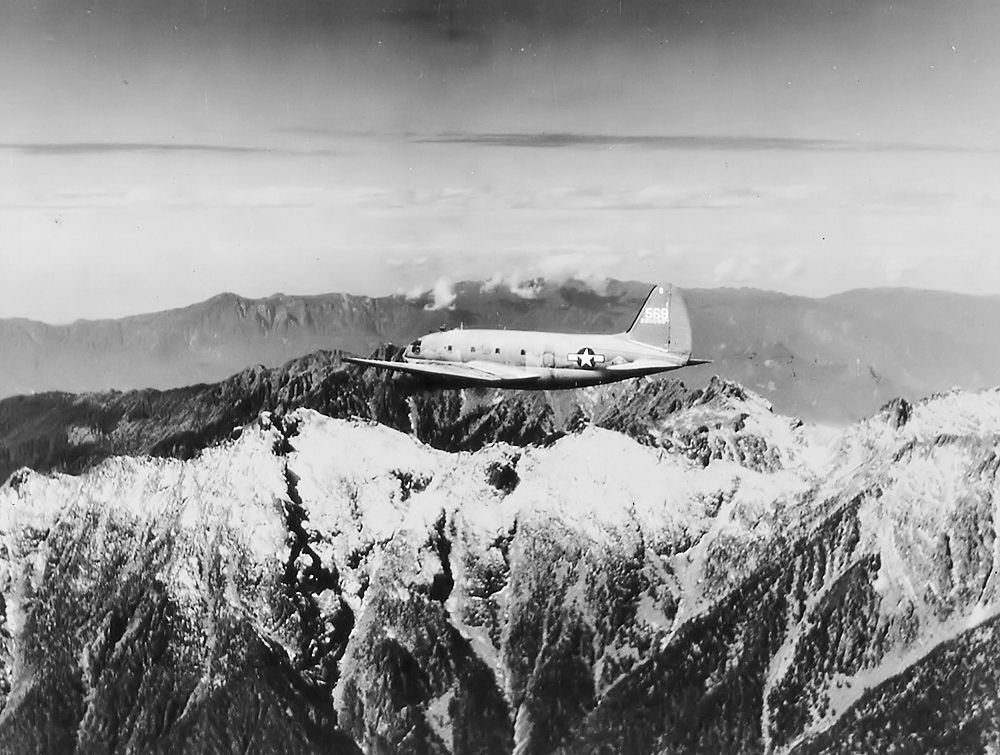 The Hump Route and the Burma Road: Two Lifelines of the War of Resistance Through YunnanOne leads through the mountains west of Xiaguan to Myanmar, the other flies over the mountains from Yunnanyi in Xiangyun. How did the Burma Road and the Hump Route maintain China's connection with the world during the most difficult phase of the War of Resistance? Why did Dali become an important node on both lifelines simultaneously?→
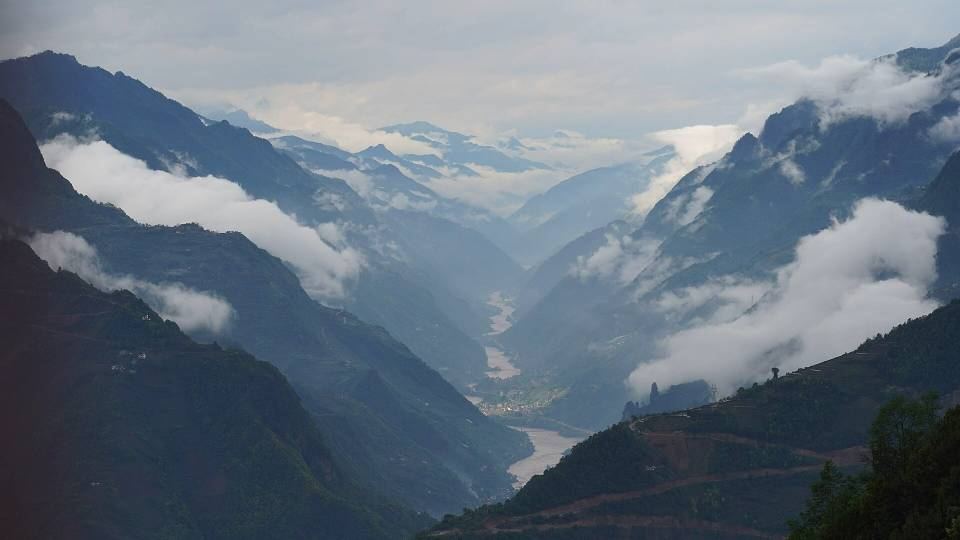 The Nujiang, Lancang, and Jinsha Rivers: the unique nature and culture of the Three Parallel RiversStarting from Dali and heading north, crossing over the Cangshan Mountains, you will enter a massive fold split open by three great rivers. The Nujiang (Salween), Lancang (Mekong), and Jinsha (Yangtze) rivers—three great rivers originating from the Qinghai-Tibet Plateau—cut through the land of northwestern Yunnan from north to south like three parallel knives. They run so close together—at their nearest point, the straight-line distance is less than seventy kilometers; and they flow side by side for over one hundred seventy kilometers before each turns and heads toward a different destination. This is the "Three Parallel Rivers," inscribed as a UNESCO World Natural Heritage site in 2003, and it is also a key to understanding Yunnan. Many people think the beauty of Yunnan is simply the wind, flowers, snow, and moon by Erhai Lake→
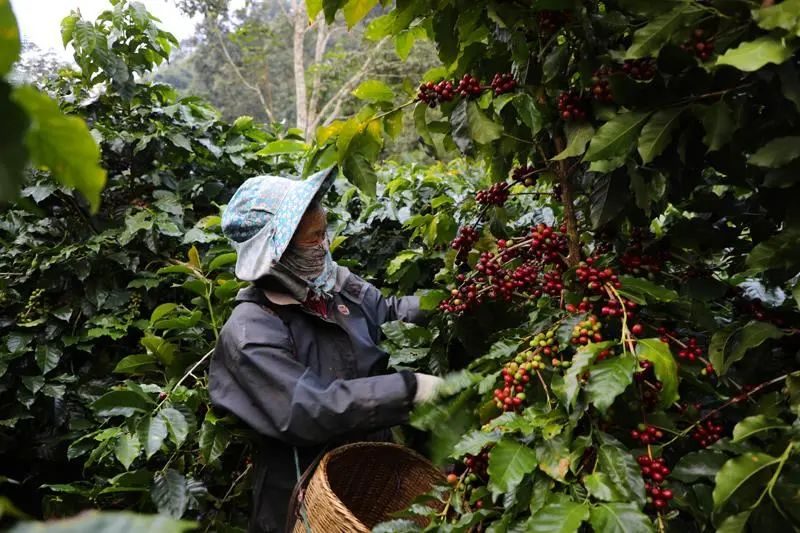 The history of Yunnan coffee: from Zhukula (a village in Yunnan) to a cup at the foot of Cangshan (a mountain in Yunnan)If you walk into the ancient town of Dali today, sit down at any café, and order a latte made with Yunnan beans, chances are you won't find it anything special. Coffee is far too common here—on Renmin Road there's one every few steps, the aroma of roasting drifts from the courtyards on Yeyu Road, and the terraces of the Chuangdancang Art District are full of people with their laptops. You might not realize that this ordinary cup of coffee is actually the end of a history spanning more than a century: its source lies in the mountains not far from the ancient town of Dali; its story begins with a French missionary and a small village almost completely cut off from the world. The story of Yunnan coffee is almost→
Comments
Comments
…