Life in Dali
Dali Wild Mushrooms: Mushroom Season, Table Recipes, and Two Thousand Years of Mushroom-Eating History
Sep 14, 2026
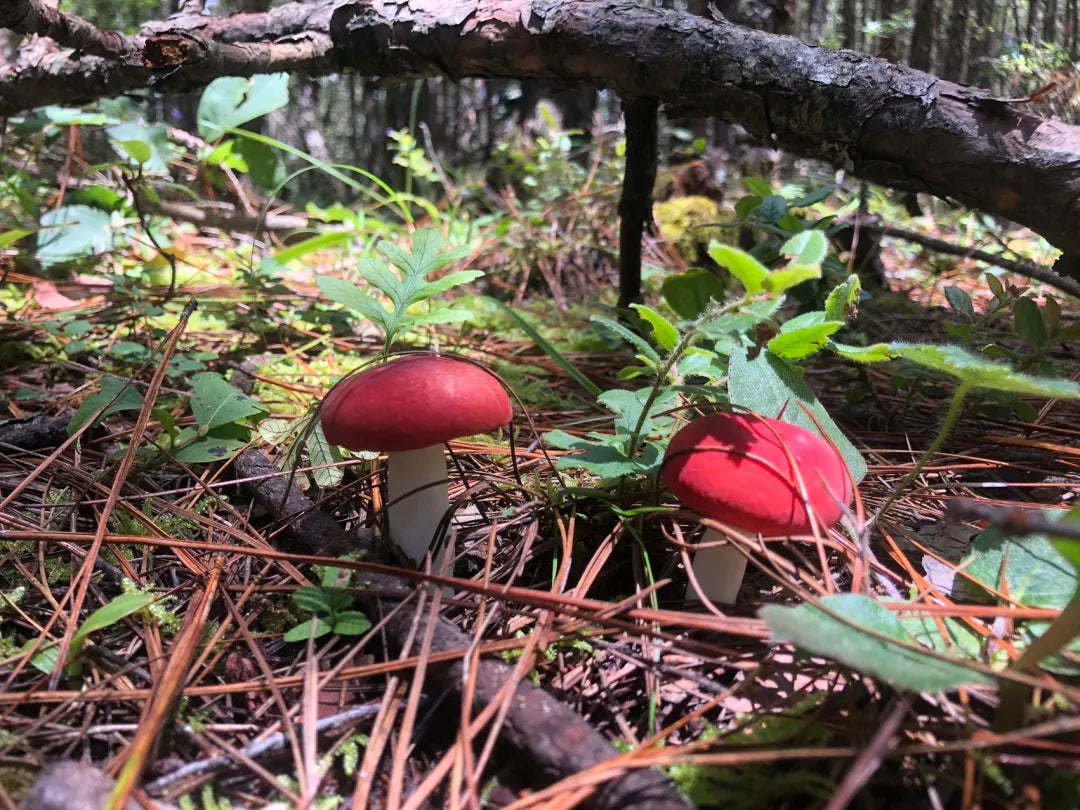
Every June, when the rainy season arrives in Yunnan, things in the mountains and forests start to pop up. First a few scattered ones, then patches. Bamboo baskets with pine needles and soil appear in the markets, vendors divide the mushrooms into small piles by type, and prices change daily. Yunnan people call this "mushroom season," and they call mushrooms affectionately: "jun'er" (pronounced jier).
For locals, this is not a "specialty food," but an annual seasonal event that must be caught. Miss this rainy season, and you have to wait another year.
Why Yunnan is China's "Fungal Kingdom"
First, a set of numbers will make clear Yunnan's position in wild mushrooms:
Yunnan has 2,753 known wild mushroom species (including varieties and forms), accounting for 57.4% of the national total of known macrofungi; among them, 882 species are wild edible mushrooms, accounting for over 90% of the national edible mushroom species. In 2024, Yunnan's total edible mushroom production was 1.1941 million tons, with a total output value of 47.249 billion yuan.
Why Yunnan? Because it simultaneously possesses several conditions: low latitude, high altitude, huge vertical drop, and multiple forest types from tropical to cold temperate. On the same mountain, the foot is broadleaf forest, higher up becomes mixed forest, and further up is coniferous forest and meadow. Different mushroom species grow with different trees, so "one mountain can grow a whole field guide."
The rainy season is key. After rainwater soaks the soil and humus layer, the mycelium has the strength to push the fruiting bodies above ground. So Yunnan's mushrooms are not "available all year round," but concentrated after a rain—this also determines the rhythm of mushroom season: waiting for rain.
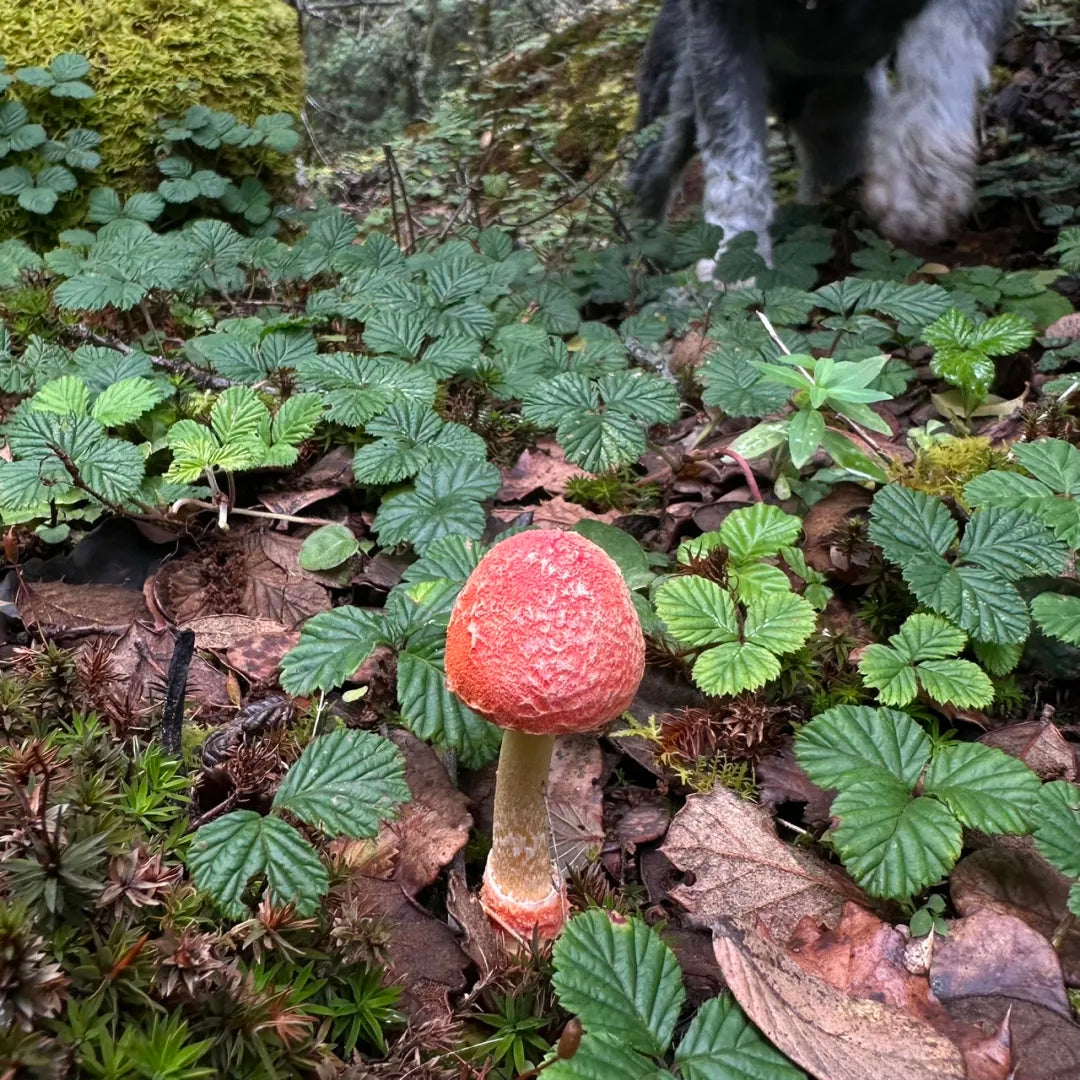
Photo: Cangshan Hiking House · Mushroom foraging activity actual shot
Mushrooms on Dali people's tables
Dali is at the foot of Cangshan, with good altitude and forest conditions. Locals eat many mushrooms, among which several are most representative.
Ganba jun (dried beef mushroom), called "black gold" under the pine needles. It has no cap or gills, shaped like a cow's tooth, with a layer of fine fuzz on the surface, yellowish-brown when fresh, black and shiny when dried, smelling like cured beef jerky, growing under Yunnan pine and Chinese white pine forests at altitudes of 1800–2600 meters. The most classic local way to eat it is ganba jun stir-fried with wrinkled green peppers—using Dali's local wrinkled chili, spicy with freshness, complementing its mellow richness; Bai families also like to stir-fry it with ham, steam it in a clay pot, and serve it at festive banquets.
Jizong (termite mushroom), called "prince of mushrooms," is special because it symbiotically grows with termites—termite nests are built in loose sandy soil, and jizong grows from the side of the nest. The stem is thick, the flesh is fibrous, and the taste is sweet with a hint of crispness. Dali people often stew it with local free-range chicken, adding a little ham to enhance flavor; and oil jizong is a recipe passed down through generations: slowly fried in rapeseed oil, with Sichuan pepper and dried chili, sealed in earthenware jars, mixed with rice noodles, it lets you taste the rainy season all year round.
Qingtou jun (green-headed mushroom), is the "fresh and light" one on the table. The cap is greenish-blue with natural patterns, the flesh is white and tender, slowly oxidizing and changing color after cutting, with a crisp texture and a slightly sour aftertaste with sweetness. Stir-frying with ham is classic, but Bai families' qingtou jun tofu soup is more popular—slow-cooked with local gypsum tofu, the soup is milky white, finally sprinkled with chopped scallions, a summer soup to cut greasiness.
Matsutake grows in higher, colder places, such as the fir forests of Yunlong and the alpine coniferous forest belts of Eryuan. The cap is brown with fibrous scales, the stem is white and thick, and the aroma is strong. It emphasizes freshness: from emergence to consumption, best within 48 hours. Dali people's way of eating it is restrained—grilled over local pine charcoal until the surface is slightly charred, brushed with a little honey; or as sashimi with local plum vinegar; Bai families also steam it with glutinous rice to make matsutake glutinous rice, served to distinguished guests.
Jianshouqing is the one among mushrooms that most requires reverence. The cap has colors like purplish-red, brownish-red, and turmeric yellow, and the most distinctive feature is: the flesh, when touched or cut, turns blue-green in a short time—hence its name. It has a strong aroma and rich umami, but some varieties contain toxins and must be thoroughly cooked before eating. The common method is stir-frying with dried chili: slice and put into the wok with cut dried red chilies, stir-fry quickly over high heat; it can also be stir-fried with ham or eggs.
In addition, Dali also has many other species such as milk-cap boletes, copper-green mushrooms, milk mushrooms, and coral mushrooms, each with its own season and temperament. Local foragers rely on decades of experience and eye, not picture comparison.
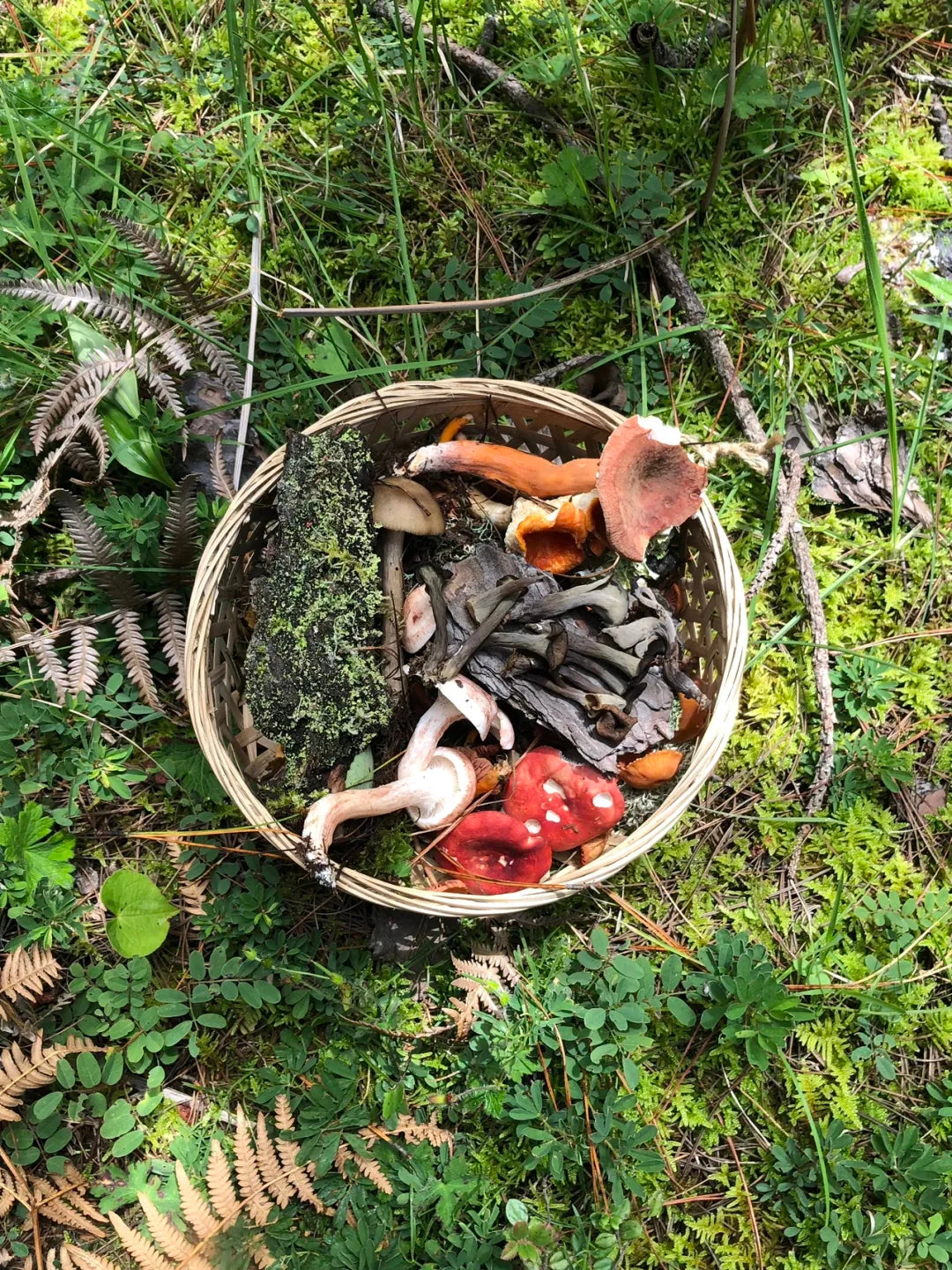
Photo: Cangshan Hiking House · Mushroom foraging activity actual shot
How Yunnan people prepare mushrooms: preserving the rainy season
Yunnan people prepare mushrooms with the most important principle: "don't overpower the flavor." So the ingredients are often simple: a little ham for salty umami, a few dried chilies for aroma, a handful of local wrinkled chili or green Sichuan pepper, plus garlic. The methods are roughly these categories:
Stir-fry. The best way to taste the mushroom's own crispness and aroma. Dried chili jianshouqing, ganba jun stir-fried with wrinkled green peppers, qingtou jun stir-fried with ham all belong to this category. The heat must be high, and the time sufficient—especially for jianshouqing, better to stir-fry a little longer.
Soup. Jizong stewed with free-range chicken, qingtou jun tofu soup, the soup is clear or milky white, the umami comes from the mushrooms themselves, no more seasoning needed.
Oil preservation. This is Yunnan people's way of dealing with "the season is too short." The Qing Dynasty "Diannan Zazhi" recorded: "The locals salt and dry them, they can be eaten after a year; if boiled into oil, replacing soy sauce, the taste is excellent, rich and delicious, overflowing between the throat and tongue, a fine product of Yunnan."—this exactly describes making mushrooms into oil jizong, jarred and sealed, so you can taste the rainy season all year round. This wisdom existed hundreds of years ago.
Grilling and raw eating. Charcoal-grilled matsutake, matsutake sashimi, are methods for the most particular mushrooms, handling them as little as possible.
One more thing to remember: do not drink alcohol when eating wild mushrooms. Alcohol accelerates the absorption of certain toxins, a point local doctors repeatedly emphasize.
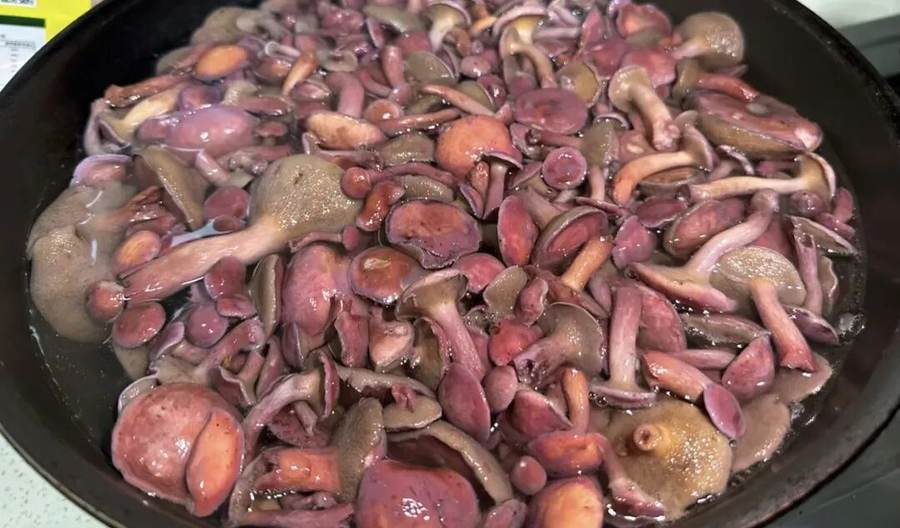
Photo: Mushroom Elf · Shot in Cangshan (originally published in this site's "Weed Scenery" column)
Yunnan people have been eating mushrooms for over two thousand years
Yunnan people eating mushrooms is not a recent "internet-famous way of eating"; records in literature can be traced far back.
More than two thousand years ago, Zhuangzi had a line: "The morning mushroom knows not the waxing and waning of the moon," and ancient commentators believed it involved Yunnan's edible jizong. By the Ming Dynasty, Li Shizhen clearly described jizong in Bencao Gangmu:
"Chicken mushroom, southerners call it jizong, all say its taste resembles it. Jizong comes from Yunnan, grows in sandy soil, a type of ding mushroom. High stalk umbrella head, the locals pick and dry them and send them far away, to serve as local products. Suitable for tea and cooking meat, the smell is like fragrant mushroom."
"The locals pick and dry them and send them far away, to serve as local products"—in these dozen or so characters hides an already formed industry: locals pick, dry, and send them far away, as local products and gifts. In the same period, Pan Zhiheng also recorded the flavor of jizong in "Guang Jun Pu."
The great Ming traveler Xu Xiake traveled through Yunnan and wrote several times in "Dian You Ri Ji" of "Xu Xiake's Travels" about eating jizong, for example, eating "smoked jizong" outside the east gate of Luoping, Qujing. The top scholar Yang Shengan, exiled to Baoshan, Yunnan, after eating jizong wrote a poem: "At sea the heavenly wind blows the jade mushroom, the woodcutter boy sleeps soundly and knows not. The immortal old man lives near Huayang Cave, sharing a branch or two of jade blossoms."
By the Qing Dynasty, Cao Shuqiao recorded oil jizong in "Diannan Zazhi"; Zhao Yi, upon first eating jizong in Yunnan, wrote: "The old gourmet marvels at what he has never had, strange indeed, what clan is this chicken?" More interestingly, a record in A Ying's "Lü Dian Wen Jian Lu" of the late Qing: Emperor Xizong only let the eunuch Wei Zhongxian taste jizong, even Empress Zhang could not taste it—because jizong was hard to obtain, and had to be relayed station by station to the capital.
That is to say, "Yunnan mushrooms are good" was already known to the court and literati hundreds of years ago.
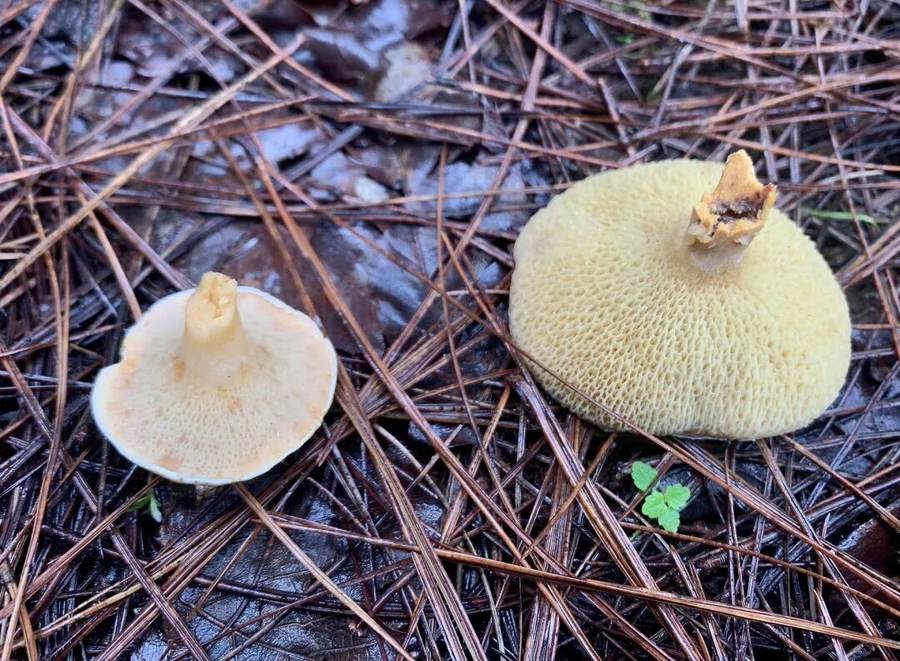
Photo: Mushroom Elf · Shot in Cangshan (originally published in this site's "Weed Scenery" column)
Yunnan people during mushroom season
Mushroom season is not just about eating. It is a whole chain: people who go up the mountain before dawn, people who find mushrooms under trees by experience, people who carry mushrooms down the mountain, people who sort them into piles at the market, vendors who start collecting mushrooms at dawn to send out of town, and chefs in restaurants who must use up the mushrooms the same day.
In Yunnan, foraging requires "knowing the way"—not just knowing the mountain paths, but also recognizing trees, slope aspects, and soil. Jizong depends on termite nests, ganba jun hides under pine needles, qingtou jun likes oak forests. The same mushroom may be in this forest this year and somewhere else next year. This knowledge is not written in books; it is carried down generation by generation.
Among Dali's foragers, there are Bai sisters who have foraged for decades, and guides who take guests into the mountains. They can tell you as they walk: what mushroom this is, why it grows here, whether it is edible, and how to prepare it. For travelers, this is the most precious part of mushroom season—not eating, but understanding.
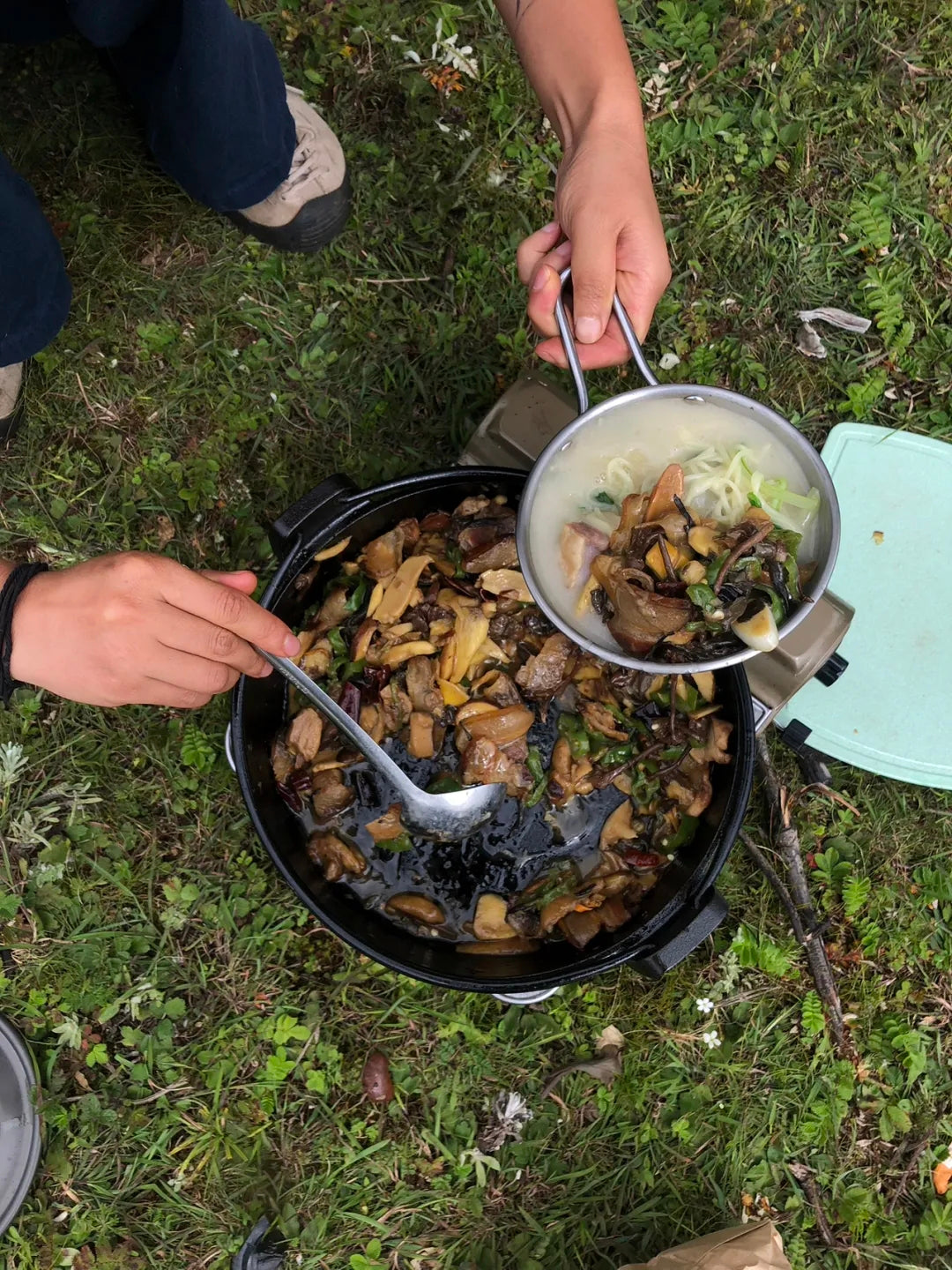
Photo: Cangshan Hiking House · Mushroom foraging activity actual shot
But please remember: wild mushrooms are not something to try casually
This part is more important than everything above. Wild mushrooms carry risks, and the risks are real. The Dali Prefecture Forestry and Grassland Bureau issued a "Scientific Mushroom Eating Guide" to locals, with several points worth remembering:
The "Four Nos" principle: do not pick or buy unfamiliar mushrooms; do not eat wild mushrooms raw or as cold dishes; do not stir-fry multiple kinds of mushrooms together, to avoid cross-contamination; do not drink alcohol with mushrooms.
Simple mushroom identification tips: check whether the cap is intact, without mucus, and natural in color; smell whether there is a clear woody or nutty aroma, avoid sour, rotten, or moldy smells; break the stem to see whether the cut surface changes color normally and whether there is abnormal juice; only pick in familiar woodlands, away from roadsides, sewage ditches, and garbage dumps; when encountering unfamiliar species, take photos from multiple angles, record the location, and keep a sample.
There are also some beautiful but extremely dangerous mushrooms, such as the all-white death cap, the bright red with white spots fly agaric, and the yellow with white spots panther cap—they do not look at all like "edible" mushrooms, but are precisely the most lethal.
If accidental ingestion causes discomfort: conscious persons should immediately induce vomiting, bring the remaining mushroom sample, and go to the nearest hospital immediately, and call 120.
In addition, foraging must be legal and moderate: it is forbidden to pick "baby mushrooms" less than 3 cm in diameter, forbidden to cut down mushroom-root trees or destroy termite nests, and forbidden to pick in the core areas of nature reserves. Behind these regulations is to ensure there are mushrooms to pick next rainy season.
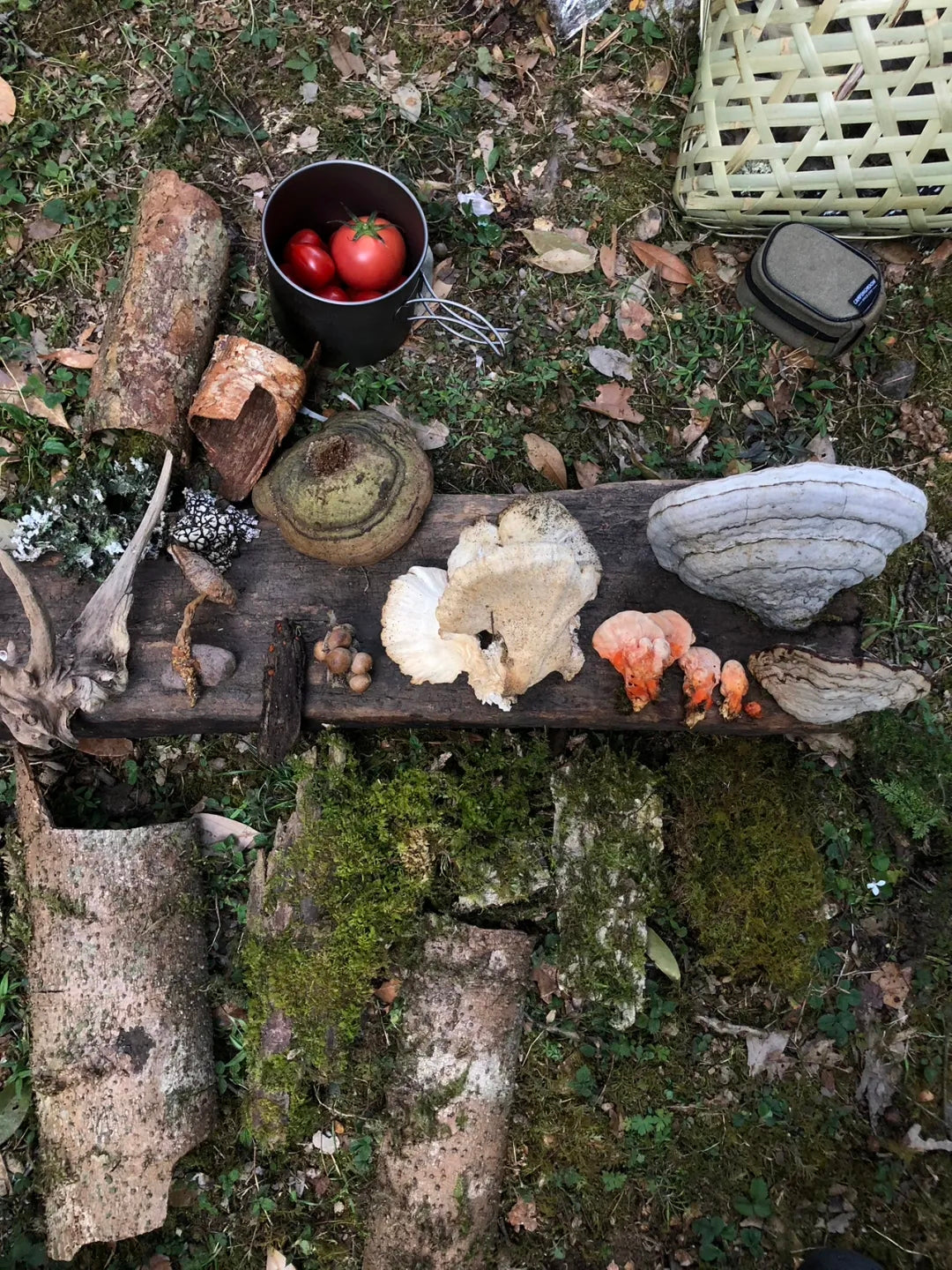
Photo: Cangshan Hiking House · Mushroom foraging activity actual shot
Finally
Yunnan's mushrooms are special not only because of the many species and good taste, but also because they connect "mountain, rain, tree, people" into a line: rain determines when they grow, trees determine where they grow, and people determine how to pick, how to prepare, and how to keep them until next year.
If you come to Dali during the rainy season, you can follow someone familiar with the mountains for a trip, see where mushrooms grow, how locals identify them, and how they prepare them. But please put "safety" first—only eat mushrooms confirmed safe, and only go up the mountain with people who know.
If you want to experience this, you can check out our Go Mushroom Foraging in the Mountains | Eat a Mushroom Meal at a Farmhouse: led by guides from the local foraging team into the mountains to identify mushrooms, then enjoy a traditional mushroom meal at a village farmhouse. You can also see Advanced | Forage Mushrooms in the Deep Mountains with Weed Scenery, to go farther and deeper.
Image credits: The cover image and the photos of mushroom foraging and mushroom meals in Cangshan in the text are all actual shots from Cangshan Hiking House's mushroom foraging activities; the two photos of boletes (which turn pork-liver red after stir-frying) were taken by Mushroom Elf in Cangshan, originally published in this site's "Weed Scenery" column.
Places mentioned · Chinese names
Keep exploring Dali
 Scripts, Songs, and Wine in the Valleys: The Spread of Christianity in Yunnan's BorderlandsFrom James O. Fraser's early encounters with the Lisu people in Tengchong, explore the scripts, songs, churches, and wine of Yunnan's borderlands.→
 The Hump Route and the Burma Road: Two Lifelines of the War of Resistance Through YunnanOne leads through the mountains west of Xiaguan to Myanmar, the other flies over the mountains from Yunnanyi in Xiangyun. How did the Burma Road and the Hump Route maintain China's connection with the world during the most difficult phase of the War of Resistance? Why did Dali become an important node on both lifelines simultaneously?→
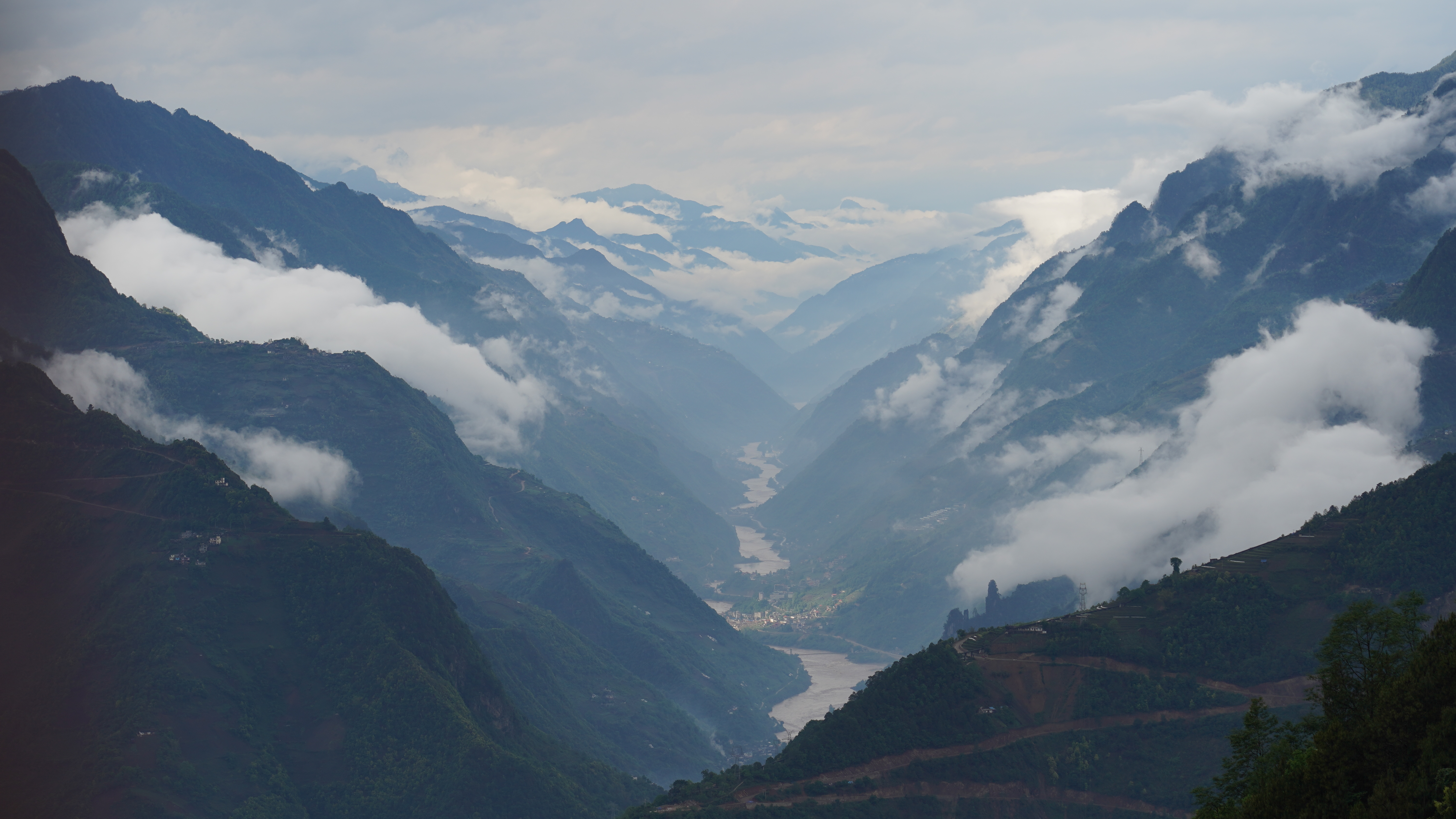
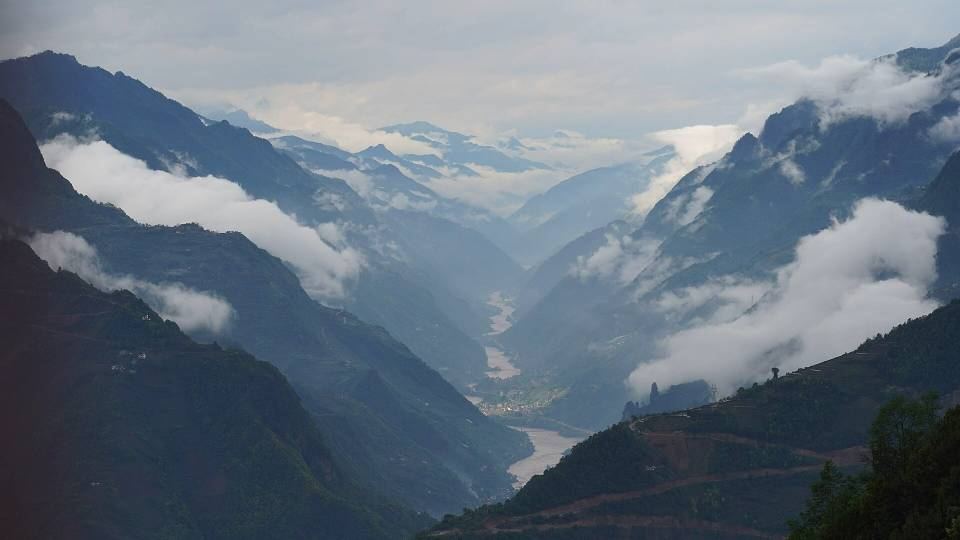 The Nujiang, Lancang, and Jinsha Rivers: the unique nature and culture of the Three Parallel RiversStarting from Dali and heading north, crossing over the Cangshan Mountains, you will enter a massive fold split open by three great rivers. The Nujiang (Salween), Lancang (Mekong), and Jinsha (Yangtze) rivers—three great rivers originating from the Qinghai-Tibet Plateau—cut through the land of northwestern Yunnan from north to south like three parallel knives. They run so close together—at their nearest point, the straight-line distance is less than seventy kilometers; and they flow side by side for over one hundred seventy kilometers before each turns and heads toward a different destination. This is the "Three Parallel Rivers," inscribed as a UNESCO World Natural Heritage site in 2003, and it is also a key to understanding Yunnan. Many people think the beauty of Yunnan is simply the wind, flowers, snow, and moon by Erhai Lake→
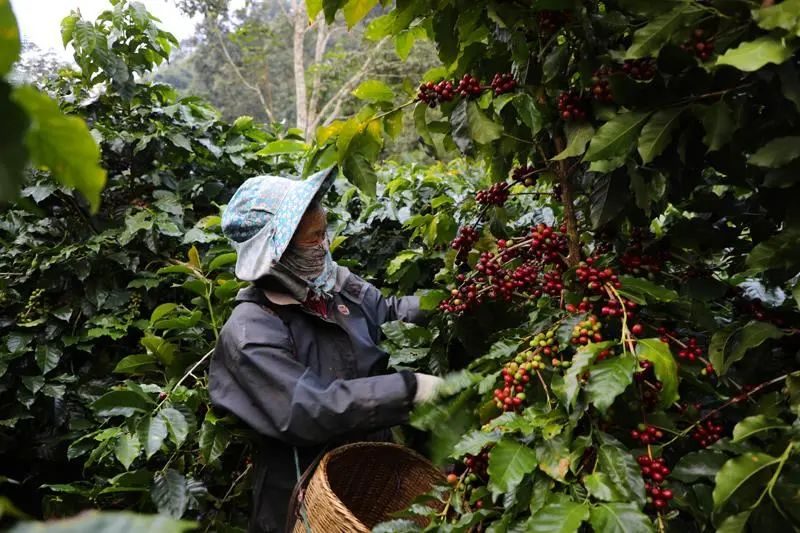 The history of Yunnan coffee: from Zhukula (a village in Yunnan) to a cup at the foot of Cangshan (a mountain in Yunnan)If you walk into the ancient town of Dali today, sit down at any café, and order a latte made with Yunnan beans, chances are you won't find it anything special. Coffee is far too common here—on Renmin Road there's one every few steps, the aroma of roasting drifts from the courtyards on Yeyu Road, and the terraces of the Chuangdancang Art District are full of people with their laptops. You might not realize that this ordinary cup of coffee is actually the end of a history spanning more than a century: its source lies in the mountains not far from the ancient town of Dali; its story begins with a French missionary and a small village almost completely cut off from the world. The story of Yunnan coffee is almost→
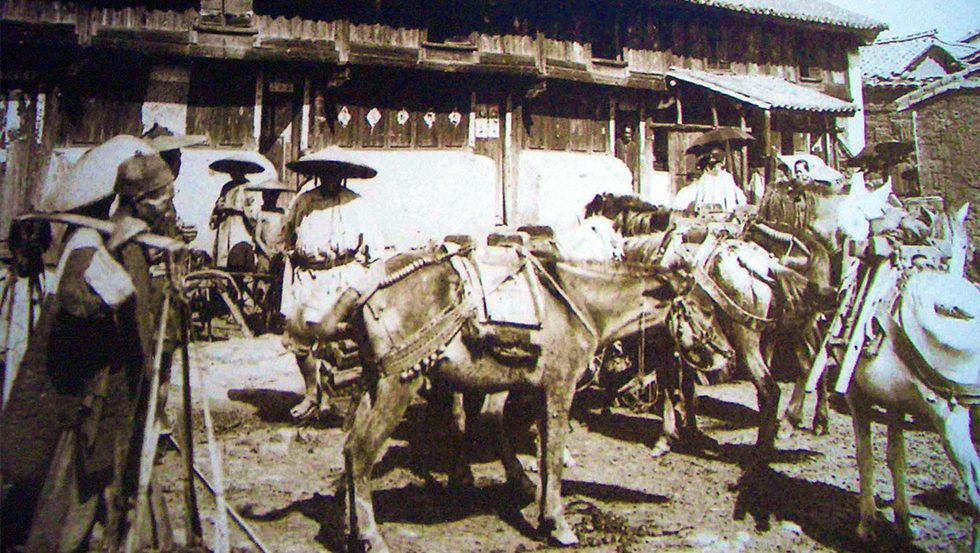 Dali, Yunnan and the Ancient Tea Horse Road (Chama Gudao): A Thousand Years of One RoadIf you had to describe the Tea Horse Ancient Road (Chama Gudao) in just one word, many people would blurt out "road." But those who have truly walked this route will tell you: it was never a single road. It is a network—a web spread across the folds of the Hengduan Mountains (Hengduan Shannmai), linking the basins of Yunnan, the Sichuan Basin (Sichuan Pendi), the highlands of the Tibetan region, and the river valleys of Myanmar. For centuries, horse caravans (mabang) carried tea, salt, medicinal herbs, cloth, and silver back and forth across this web, with the sound of bells ringing all the way from Dali to Lhasa, and from Xiaguan all the way to Bhamo in Myanmar. The Tea Horse Ancient Road is different from the Silk Road. The Silk Road had clear starting and ending points, with caravans flowing like water along fixed→
Related activities
Related activities
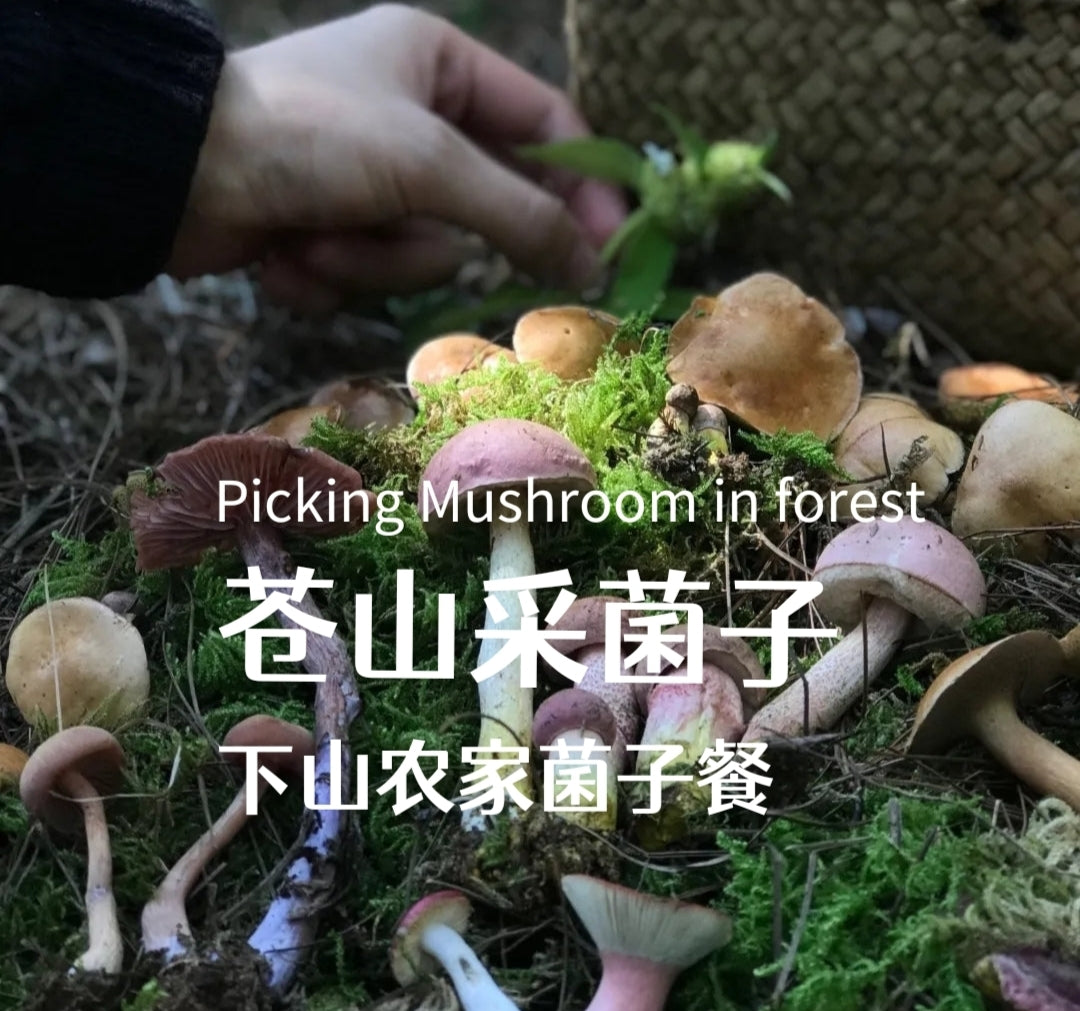
Mushroom Foraging in the Mountains | Farmhouse Mushroom Meal
The village at the foot of the mountain is about 7 km from the old town. Depart in the morning to go into the mountains to observe mushrooms, take a tea break along the way, and then enjoy a mushroom meal prepared by local sisters at a farmhouse. Suitable for those aged 5 and above who want to experience the rainy season forest.
Advanced | Foraging for Mushrooms in Deep Mountain Areas with Weeds Scenic Area (June-October)
Meet near the old town; about 2 hours' drive each way to a deep mountain mushroom spot. A small group enters selected mountain forests to forage; the route is not fixed, offering a stronger wild experience. Suitable for people aged 18-50 who love nature and don't get anxious.
Comments
Comments
…