Life in Dali
The history of Yunnan coffee: from Zhukula (a village in Yunnan) to a cup at the foot of Cangshan (a mountain in Yunnan)
Aug 15, 2026
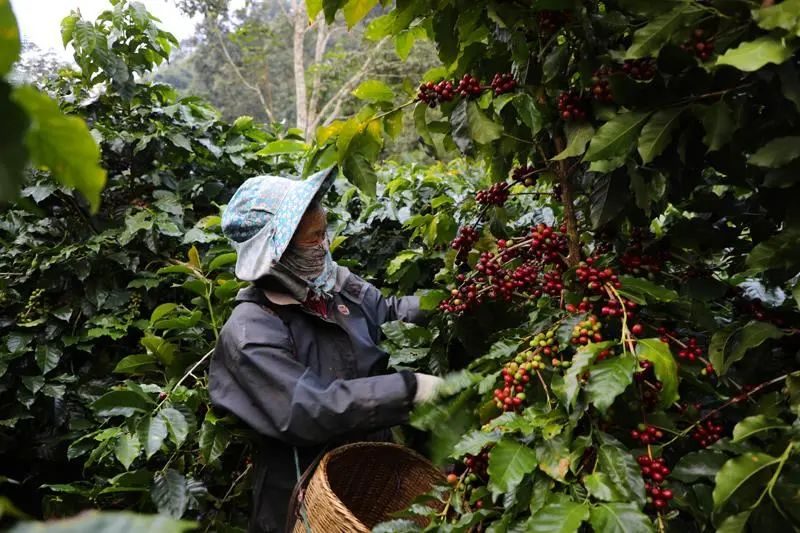
If you walk into Dali Old Town today, sit down at any café, and order a latte made with Yunnan beans, chances are you won't think it's anything special. Coffee is everywhere here—on Renmin Road there's a café every few steps, the courtyards on Yeyu Road carry the aroma of roasting, and the terraces of the Chuangdanyuan Art District are full of people with their laptops. You might not realize that this ordinary cup of coffee is actually the end of a history spanning more than a century: its source lies in the mountains not far from Dali Old Town; its story begins with a French missionary and a village almost completely cut off from the world.
The story of Yunnan coffee is almost a microcosm of Yunnan's modern history. The horse caravans on the Tea Horse Road carrying tea over mountains and ridges are Yunnan's ancient story; coffee—a foreign crop originally from Africa—took root, grew, and expanded in Yunnan, eventually becoming a new calling card for this land. Today, 98 percent of China's coffee output comes from Yunnan, making Yunnan the true heart of Chinese coffee. And the starting point of it all is Dali.
The history of Dali is the history of Yunnan, and in Yunnan's modern story, coffee is a bold and vivid stroke. This sentence can also be read in reverse: to understand Yunnan coffee, you have to start from Dali.
This history can be divided into five stages: the first coffee tree planted by missionaries, the first cup of imported coffee brought by the railway, the first large-scale planting by state farms, the industrial takeoff after Nestlé's arrival, and the specialty transformation now underway. Over a hundred years, five stages, one clear path.
On this path, Dali's position is somewhat special: it is both the starting point—Yunnan's first coffee tree was planted in Binchuan County within Dali Prefecture—and today's center—the café density in Dali Old Town ranks among the highest of any old town in China. Over a hundred years ago, coffee set out from the mountains of Dali; over a hundred years later, it has returned to people's daily life in Dali's old town.
Why Yunnan: A Land Born for Coffee
Before telling the history, let's start with a geographical coincidence. Coffee originated in Ethiopia in Africa, a highland region at low latitude with large day-night temperature differences and distinct dry and wet seasons—what coffee trees love most is this climate of "sun by day, cool down at night." And China's Yunnan happens to have almost identical conditions: the Tropic of Cancer passes through southern Yunnan, most of the province has high elevation, abundant sunshine, and marked temperature differences, with clear boundaries between the dry and rainy seasons each year.
Even more rare is the elevation. Most Yunnan coffee is grown on slopes between 800 and 1,600 meters above sea level, which counts as high altitude among global coffee-producing regions. High altitude means a slower ripening period, denser beans, and more complex flavors—the qualities most valued in the specialty coffee world. The world's famous coffee origins—Ethiopia, Colombia, Costa Rica—are almost all in low-latitude, high-altitude zones, and Yunnan is China's member of that same "golden coffee belt."
Locals often joke that in Yunnan, "anything you plant will grow." Indeed, the combination of low latitude, high altitude, and distinct dry and wet seasons makes Yunnan the most suitable place in China for growing coffee—which is also the fundamental reason coffee could later take root here, expand, and ultimately account for 98 percent of national output. History's choice was first of all the land's choice.
There's another detail worth noting: Yunnan coffee beans ripen slowly. High-altitude regions have large day-night temperature differences, so the coffee cherries hang on the branch longer and flavor compounds accumulate fully—this is the gift elevation gives Yunnan beans, and the foundation for the later claim of "Yunnan flavor."
Zhukula: The First Coffee Tree Planted by a French Missionary
Heading east from Dali, over the many mountains in the direction of Mount Jizu, in the deep mountains of Pingchuan Town in Binchuan County, there is a small village called Zhukula. It hides in a valley of a tributary of the Jinsha River, with high mountains and deep gorges; the road into the village winds around the mountain, loop after loop. It's said that the three characters "Zhukula" come from a local ethnic minority language, roughly meaning "winding mountain road"—just the place name tells you how hard it is to get into the village. Even today, the road to Zhukula is not easy: the mountain road twists between cliffs and terraced fields, and the car has to drive a long time before the quiet village appears in the valley.
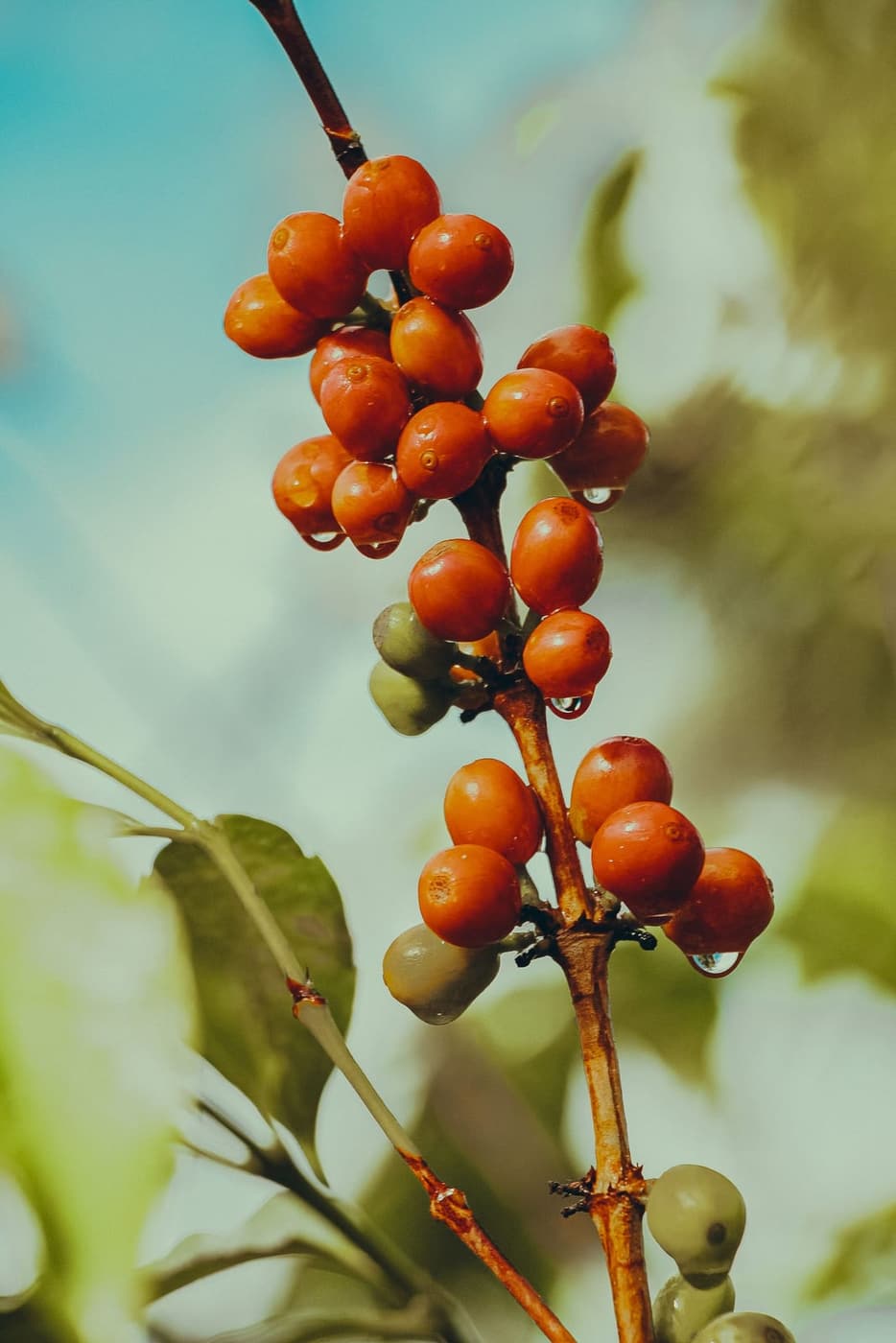
Ripe coffee cherries (illustrative planting scene). Image: Edouard MIHIGO / Pexels; shot in Burundi, not an actual scene in Yunnan
This village, so remote it is almost cut off from the world, is considered the birthplace of Yunnan coffee. Regarding the starting point of Zhukula coffee, local and industry sources commonly give two accounts, 1892 and 1904; the missionary is usually called Tian De. The more consistent account is that he brought coffee seeds or seedlings from the direction of Vietnam, tried planting them near the church, and gradually taught the villagers to grow them.
No one expected that these few coffee trees would take root in China. Zhukula sits in a low-hot river valley, where elevation, sunshine, and temperature differences happen to all suit Arabica coffee, and the coffee trees thrive here even more than in their "homeland." Over a hundred years have passed, the church is still there, and the coffee trees beside the church are still there too—only they have grown into a grove of ancient coffee. It's said that more than a thousand old coffee trees still survive in the village, many over a hundred years old, called by experts one of the earliest surviving coffee groves in China. In earlier years, when experts went into the mountains to survey and saw these old trees with gnarled branches and heavy fruit, they could hardly believe their eyes: the "living fossil" of Chinese coffee had been hidden all along in this village that is hard to find on a map. It's said that in the early 1990s, a survey team went into the mountains and formally confirmed the value of this ancient coffee grove, and only then did the name Zhukula first enter the literature of coffee research.
Even more interesting is the villagers' habit. Over the past hundred-plus years, the people of Zhukula have long treated coffee as their own: the older generation roasts coffee beans in an iron wok, sometimes adding a little sugar to roast together, then pounds them after they become fragrant and boils them in water to drink like tea. This method passed down through generations—roast the beans, pound them, add sugar, boil and drink—has now been listed in the Dali Prefecture intangible cultural heritage registry, becoming one of China's oldest ways of drinking coffee. You could even say this: in Zhukula, coffee has never been a "foreign drink"—it is simply a daily cup of tea for mountain people.
Every year in March and April, when the coffee trees bloom, Zhukula is covered in white coffee flowers, delicate petals crowding the branches, a faint fragrance spreading through the valley. When the picking season comes, villagers carry bamboo baskets up the mountain to pick the red cherries and dry them in the courtyard. Today, this ancient coffee grove has become a "holy site" in the hearts of coffee lovers; some travel specially from other places just to see China's earliest coffee trees—in coffee circles, Zhukula is called "a place every coffee pilgrim must visit once in a lifetime."
Coffee spread outward from here. It's said that the missionary gave coffee seedlings to surrounding villages, and coffee spread along the valleys of western Yunnan: first near Binchuan, then Baoshan, Lincang, Dehong, Pu'er... This low-latitude, high-altitude land proved to be the most suitable place in China for growing coffee. But for coffee to truly leave the mountains and become an industry, it would take several more decades.
The Yunnan-Vietnam Railway and Republican-Era Cafés: Coffee Enters the City for the First Time
While the coffee trees of Zhukula grew quietly, in another corner of Yunnan, coffee made its entrance in another way. In 1910, the Yunnan-Vietnam Railway opened—this railway from Kunming to Haiphong in Vietnam, built by the French, was then Yunnan's most direct channel to the world. The train brought telegraphs, telephones, Western hospitals, and cinemas to the plateau, and also brought a "foreign drink" into the lives of Yunnan people: coffee.
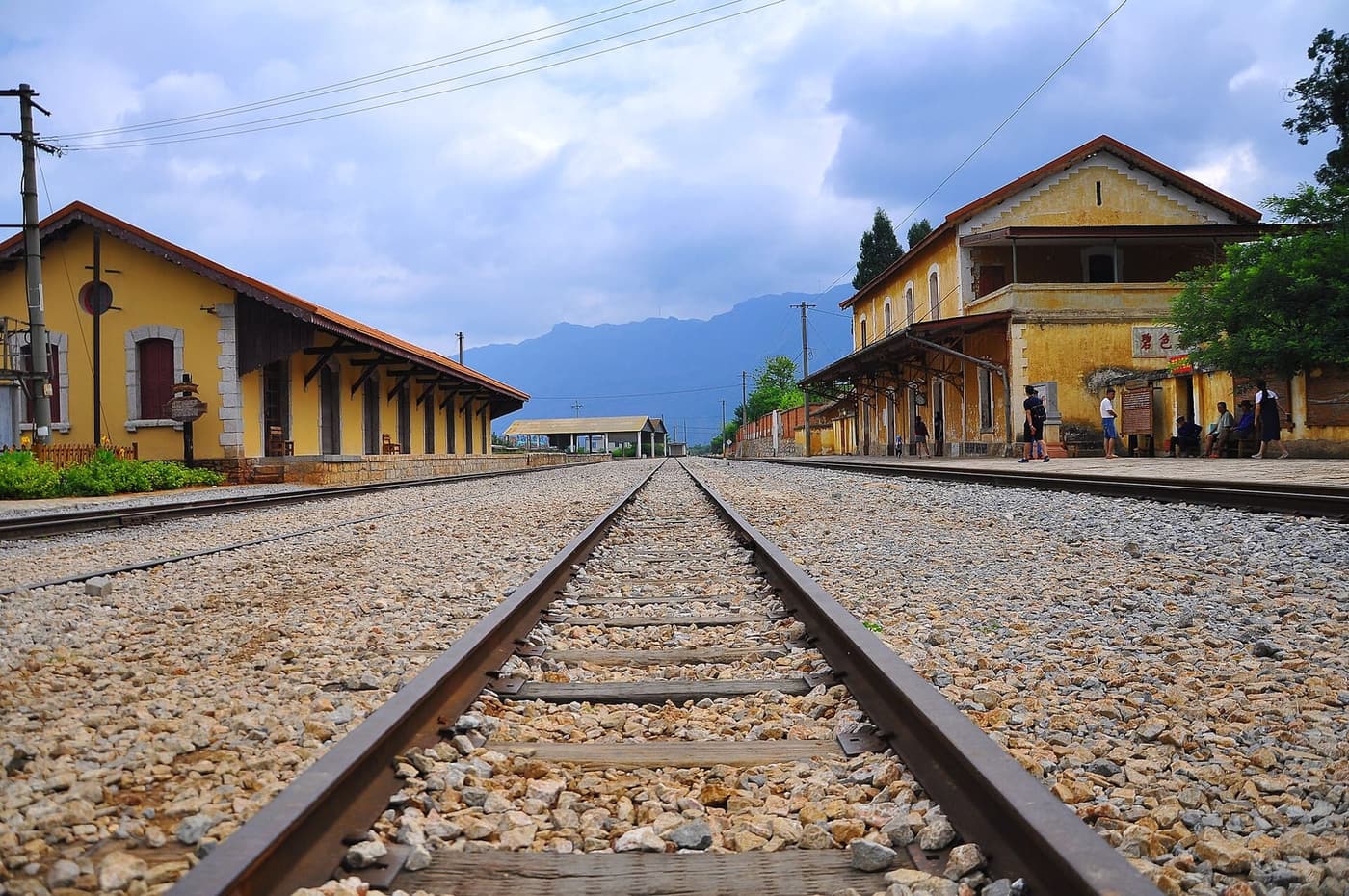
Bisezhai Station on the Yunnan-Vietnam Railway. Image: Zhangmoon618 / Wikimedia Commons, CC BY-SA 4.0
Mengzi, which the railway passed through, had opened even earlier—in 1889, Yunnan's first customs house was set up in Mengzi, one of the earliest places to come into contact with foreign goods. Kunming, as the provincial capital, became even more cosmopolitan. According to records, Western-style cafés had already appeared on the streets of Kunming during the Republican period, said to have existed around Nanping Street: people in long gowns and people in Western suits ordering a coffee in a café, chatting, discussing business, reading newspapers. It was an era of transition between old and new, and coffee, together with gramophones and kerosene lamps, became a symbol of "modernization." For many Yunnan people, that was the first time they knew there was a drink in the world called coffee—more bitter than tea, more fragrant than tea, and refreshing to drink.
The stations along the railway also became lively. Bisezhai Station in Mengzi was one of the busiest stations on the Yunnan-Vietnam Railway in those days; the French-style station building with yellow walls and red tiles stood in the middle of the fields, where goods from France, Vietnam, and China were transferred. It's said that coffee was sold near the station—travelers on the platform drinking a cup while waiting for the train were probably Yunnan's earliest "railway coffee." Today, if you go to Bisezhai, the old station building is still there, now a nostalgic spot for photos.
But it must be made clear: the coffee of this period was almost entirely imported. Although Yunnan already had the coffee trees of Zhukula, the output was too small and hidden deep in the mountains, so it could not reach the city at all. The coffee that Kunming people drank during the Republican era was mostly beans that had crossed the ocean, from distant origins. Coffee at the time was a drink for the few—merchants, officials, and intellectuals in the port cities, a fashion within a small circle.
In other words, Yunnan coffee in the first half of the twentieth century consisted of two unrelated lines: one in the deep mountains, where the trees planted by the missionary grew quietly and villagers drank them as tea; the other in the cities, where café coffee was imported, fashionable, and belonged to the few. For the two lines to truly merge, the arrival of New China was needed.
State Farms: The 1950s, Coffee's First Large-Scale Planting
In the 1950s, Yunnan began to develop coffee cultivation in a planned way, and this time the main players were the state farms. It is generally believed that around 1952, Lujiangba in Baoshan—a low-hot basin in the Nujiang River valley, today part of Longyang District—was the first to begin large-scale planting of small-bean coffee, that is, Arabica. This dry-hot river valley, with abundant sunshine and large day-night temperature differences, was regarded as a treasure land for growing Arabica. State farms and the agricultural reclamation system became the main force; row after row of coffee seedlings were planted, and for the first time Yunnan coffee took on the appearance of an "industry."
By the way, coffee is divided into small-bean and medium-bean types: small-bean is Arabica, with delicate flavor, the darling of specialty coffee; medium-bean is Robusta, with high yield and high caffeine content, mostly used for instant coffee. Yunnan from the start focused on small-bean—Arabica grown at high altitude with large temperature differences has an inherent quality advantage, and this is also the foundation for Yunnan coffee's later ability to take the specialty route.
In the same period, the old trees of Zhukula in Binchuan, Dali, were rediscovered. It's said that in the 1950s the relevant authorities sent people into the mountains to survey and took cuttings from these century-old trees to propagate elsewhere—part of Yunnan's earliest coffee germplasm came from this ancient coffee grove. But people at the time did not yet know what a precious living history they were guarding.
Yunnan coffee in this era was exported as an agricultural product—to put it plainly, exported as raw material to earn foreign exchange. Coffee beans were harvested, dried, hulled, packed into sacks, shipped to ports, sold abroad, and exchanged for foreign currency. Farm workers cared about output: how many kilograms of beans per mu, how much money they could sell for. As for whether the coffee made from these beans tasted good or had "flavor," almost no one cared—it was just a bulk commodity, no different from cotton or rubber.
This road was not smooth. In the following two or three decades, Yunnan coffee rose and fell several times: when international coffee prices fell, purchase prices fell with them, and growing coffee was less worthwhile than growing other things, so in some places coffee trees were cut down and replaced with grain and other cash crops; when prices recovered, some people planted again. By the early 1980s, Yunnan's coffee planting area had shrunk severely, and the industry had almost returned to the starting point.
The turning point came in 1988.
1988: Nestlé Arrives, Yunnan Coffee Takes Off
Around 1988, the Swiss food giant Nestlé entered Yunnan—this is the time point that appears repeatedly in public reports. What Nestlé initially valued was Yunnan's low-latitude, high-altitude climate: the Arabica grown here was exactly the raw material its global supply chain needed. Nestlé's approach was direct: promote coffee cultivation in Simao—today's Pu'er—provide seedlings and technical guidance to farmers, establish a purchasing system, and take the coffee beans away. For farmers who were still scratching a living from the land at the time, this meant a new livelihood: grow coffee, with someone to teach you, someone to buy it, and money to be made.
For the farmers of Simao, those were fresh years: Nestlé technicians came into the villages and taught everyone how to raise seedlings, prune, fertilize, and pick, explaining clearly what to do and when; someone came to collect the harvested beans, so there was no need to worry about carrying them to the market oneself. Many farmers learned for the first time that their own hillsides could grow a red fruit that could be sold for money.
The effect was immediate. Yunnan's coffee planting area surged, from almost nothing in the 1980s to more than a million mu later on. Small-bean coffee (Arabica) became the absolute main variety. The map of producing areas also became clear: Pu'er, Baoshan, Lincang, and Dehong gradually became Yunnan's four major coffee-producing regions, lined up along the low-hot river valleys of southwestern Yunnan. Yunnan coffee output jumped to first in the country and left the second place far behind—to this day, about 98% of China's coffee output comes from Yunnan. Global brands like Starbucks and Nestlé have Yunnan on their purchasing lists.
Here is a fascinating contrast: Yunnan is both the homeland of Pu'er tea and the heart of Chinese coffee—tea and coffee, the two most popular beverages in the world, have taken root in this land one after the other. In Pu'er, you can even see tea trees and coffee trees growing side by side on the same hillside, with a thousand years of tea culture on one side and a hundred years of coffee history on the other. Some say Yunnan is "one mountain, two drinks": pick tea on this side of the mountain, pick coffee on the other side.
Pu'er is the center of this takeoff. This city famous for tea thus gained another identity—China's coffee capital. Nestlé later built its own coffee center in Pu'er, offering training, testing, and purchasing as a one-stop service; locals also learned to "watch the futures market's mood": the purchase price of Yunnan coffee has long followed the New York coffee futures market.
This brings a deep problem: Yunnan coffee sells raw material, and the price is set by others. In years when the international market is good, coffee farmers earn decently; in bad years, the beans don't sell for a price, and a year's hard work may be wasted. From the 1990s to the 2000s, these two decades, Yunnan coffee solved the problem of "from nothing to something" and "from small to large," but never solved the problem of "from raw material to product."
The industry once looked like a giant raw-material workshop: much of the instant coffee and commercial blended coffee drunk around the world contains Yunnan beans, but few people know these beans come from Yunnan, China. Yunnan coffee's reputation lags far behind its output.
In other words, Yunnan coffee spent thirty years completing an expansion that took others a hundred years: from almost zero to hundreds of townships and hundreds of thousands of farming households making a living from it. The numbers are astonishing, but the model behind the numbers is also clear—grow beans, sell beans; once the beans leave Yunnan, they have nothing to do with Yunnan anymore.
Specialty Coffee: From Raw Material Base to Estate Coffee
Starting in the 2010s, things began to change. The change first came from the consumer side: specialty coffee shops in Chinese cities grew more and more numerous, and people began to ask "which estate does this cup come from, what processing method was used." For the first time, coffee was regarded as "an agricultural product with terroir"—just as wine emphasizes origin, coffee began to emphasize terroir: elevation, soil, and microclimate all get written into the flavor of the beans.

Pour-over coffee equipment (illustrative). Image: Dammián Sinué / Pexels
Yunnan caught this wave. Cupping competitions were held one after another—the Baoshan small-bean coffee cupping, the Pu'er Yunnan green coffee bean competition—with judges holding cupping spoons, scoring and grading Yunnan beans. The rules of cupping are simple and strict: grind the beans, pour water, smell the aroma, slurp, and judges score each item by flavor, acidity, and aftertaste; high-scoring beans can sell for a good price. For coffee farmers, cupping is a term they only heard in recent years, but it is quietly changing the way coffee is priced—previously sold by the jin, now sold by the score. Estate processing methods were also introduced one by one: beyond traditional washing, methods popular in the specialty coffee world such as natural, honey, and anaerobic fermentation were all tried by Yunnan estates. Simply put, washing makes beans clean and bright, natural gives beans rich fruity aroma, and honey processing falls in between—each processing method is a different way of expressing the bean.
Specialty coffee shops began to bypass middlemen and buy directly from producing regions, and "direct trade" became a new term. In 2012, Starbucks set up a coffee farmer support center in Pu'er, its first in Asia, specifically to teach coffee farmers to grow better and more consistent beans. Pu'er also built the Yunnan International Coffee Trading Center, incorporating green bean trading, cupping, and standards.
Producing regions also "upgraded." Xinzhai Village in Lujiangba, Baoshan, began growing coffee in the 1950s; today almost every household in the village grows coffee, and the media call it "China's No. 1 Coffee Village"—terraced coffee gardens on the hillsides, with coffee estates, processing plants, and experience centers in the village; visitors can see coffee trees, watch the processing, and drink a freshly roasted cup. Pu'er's coffee estates have even become travel destinations: stay at an estate, pick red cherries with coffee farmers in the morning, learn cupping in the afternoon, and drink pour-over under the stars at night—this kind of "coffee travel" is becoming a new way to experience Yunnan.
Local brands and roasters have also emerged. Previously Yunnan beans were exported as green beans; now more and more beans stay in the country, roasted by local roasters into beans with a "Yunnan taste": some estates give their beans names and tell their own stories; some roasting brands use "Yunnan" directly as a selling point. Yunnan beans are changing from "cheap raw material" to "a product with terroir," with flavors often described as a base of nuts, chocolate, and caramel with clean fruit acidity. Of course, this process is still underway, and the specialty transformation is far from complete—but the direction is already very clear.
But specialty coffee has its difficulties too. Yunnan's main variety is Catimor—a hybrid descendant of Arabica and Robusta, with high yield and strong disease resistance, but its flavor was once criticized as one-dimensional. In the specialty wave, some estates began trial-planting more delicate varieties such as Typica and Geisha, and also worked on processing methods; but new varieties need time to adapt to high-altitude regions, and Catimor remains Yunnan's "main force." This road is destined to be walked step by step.
Dali Today: Sitting at the Foot of Cangshan with a Cup
In this process, Dali's position is very special: it is both the consumer end and the participant end. The café density in Dali Old Town ranks among the highest of any old town in China—behind this is the café tradition left by the Foreigner Street era of the 1980s, as well as the specialty coffee culture brought by later newcomers; we told those stories in the "newcomers" chapter, so we won't expand on them here. Interestingly, coffee estates and experience workshops have also appeared around Dali: not far away is Binchuan, the county where Zhukula is located; some cafés in the old town directly put up signs for "Yunnan beans," "Baoshan beans," and "Binchuan beans," connecting the cup in your hand with hillsides hundreds of kilometers away.

Iced coffee preparation (illustrative). Image: Zainal Lakembe / Pexels
Today, when you drink coffee in Dali Old Town, the choices are so many it's hard to choose: on Renmin Road, cafés crowd together with bars and bookstores, and the small blackboards at the door say "Yunnan small-bean" and "natural process"; Yeyu Road is quieter, with a few tables in a courtyard, and the barista may also be the roaster, roasting the beans himself; in the Chuangdanyuan Art District, old factory buildings converted into spaces mix coffee with art exhibitions and craft markets, and you can sit there all afternoon. More and more cafés are also using local elements: rubing cheese latte, sour papaya americano... Yunnan's local products are having a wonderful chemical reaction with coffee.
Sitting at the foot of Cangshan drinking a latte made with Yunnan beans is now part of traveling in Dali. The beans in the cup in your hand may come from an estate in Baoshan, from a hillside in Pu'er, or from Binchuan—the place where a French missionary planted the first coffee tree over a hundred years ago. Every sip you take is connected to Yunnan's modern history.
Dali's slow life and coffee are a match made in heaven: people here have plenty of time to sit in cafés daydreaming, chatting, working, and reading. Coffee's "slowness" perfectly matches Dali's "slowness." Many Dali residents can't say exactly when Dali began to "coffee-fy"—but one thing is certain: the story of this cup of coffee in Dali has only just reached its climax.
In the past two years, Dali has also held coffee markets and cupping sharing sessions, where baristas, estate owners, and enthusiasts gather to cup Yunnan beans, discuss processing methods, and exchange news from producing regions. For visitors, catching one is one of the most "flavorful" experiences of a trip to Dali.
The Livelihood Behind a Cup of Coffee
However, if we only talk about coffee's flavor and romance, we miss the heaviest and most real part of this story: livelihood. Behind the halo of Yunnan coffee today is the daily life of hundreds of thousands of coffee farmers. From late October to March or April of the following year is Yunnan's coffee picking season; coffee farmers pick ripe coffee cherries by hand, one by one—coffee cherries are red when ripe, like small cherries, and the coffee bean is what's wrapped inside. Picking is purely manual work: pick one by one, carry baskets down the mountain one by one, and what it demands is patience.
Life for coffee farmers is not easy. Yunnan coffee has long been mainly exported as raw material, and purchase prices follow international futures: when international coffee prices are low, the beans don't sell for a price, and the labor cost of picking may be more than the beans are worth, so the phenomenon of "cutting trees and switching crops" appeared—during the coffee price trough a few years ago, quite a few Yunnan coffee farmers really cut down coffee trees they had grown for decades, a sight that broke many people's hearts. The specialty transformation is largely aimed at changing this fate: only when beans sell for a better price can coffee farmers' incomes be more stable and the coffee trees not be cut down.
The good news is that the direction is improving. Yunnan coffee prices have clearly recovered in recent years, and specialty beans and estate beans can sell for several times the price of traditional raw material; the government, enterprises, and brands are working together to promote industrial upgrading, from seedlings and planting standards to processing and branding, the whole chain is being re-polished; coffee is tied to tourism and rural revitalization—estate tourism, coffee festivals, and coffee study tours let more people walk directly into producing regions and get to know coffee farmers. Yunnan coffee has also begun to "go global"—winning awards in some international competitions and evaluations, and more and more international buyers come specially to Yunnan to look for beans.
Behind a cup of coffee is the livelihood of many people—this sentence is not rhetoric; it is the truest face of Yunnan coffee. The latte you drink in Dali Old Town, from the red cherries on the hillside to the milk coffee in the cup, passes through picking hands, drying yards, roasting ovens, and the barista's counter. At every link, someone is living earnestly.
In the past two years, more and more city people are willing to walk into producing regions: stay at coffee estates, learn picking from coffee farmers, join coffee study tours, and some specially go to Zhukula to see the century-old trees. Coffee has connected the mountains with the world outside—just like the Tea Horse Road of old, except this time it's not horse caravans carrying beans out of the mountains, but express delivery and e-commerce.
Where to See, Where to Drink
· Zhukula Village, Binchuan (Pingchuan Town, Binchuan County, Dali Prefecture): the birthplace of Yunnan coffee. See the Catholic church and the century-old ancient coffee grove, and hear villagers tell old stories of "drinking coffee as tea." The road is not easy, but it's worth it—this is the starting point of Chinese coffee.
· Lujiangba, Baoshan (Longyang District): the starting point of Yunnan's large-scale coffee planting in the 1950s, a low-hot basin in the Nujiang River valley. Xinzhai Village is called "China's No. 1 Coffee Village," with coffee estates and experience centers where you can see coffee gardens and drink freshly roasted Baoshan small-bean coffee.
· Pu'er: China's coffee capital. Nestlé has a coffee center here, and Starbucks has a farmer support center; estate tours are the highlight—stay at an estate, pick coffee, learn cupping, and visit the Yunnan International Coffee Trading Center.
· Dali Old Town cafés: highest density on Renmin Road, Yeyu Road, and around Chuangdanyuan. When ordering, you can ask "Do you have Yunnan beans?"—chances are you'll get a cup with a story of origin.
· Coffee estates and experience workshops around Dali: in recent years some coffee estates and experience programs have appeared in Binchuan, Yangbi, and other counties; if you have time, you can set out from the old town to see a coffee garden growing on the mountain.
As for how to drink a good cup of coffee in Dali: chat a bit with the barista and ask about the origin and processing method of the beans—Yunnan baristas are generally very happy to talk; if you see signs for "Yunnan beans," "Baoshan small-bean," or "Binchuan beans," order with confidence—what you're drinking is the taste of this land itself.
One Cup of Coffee, Over a Hundred Years
Let's go over this line once more: around 1904, a French missionary planted Yunnan's first coffee tree in Zhukula, Binchuan; in 1910, the Yunnan-Vietnam Railway opened, and coffee entered the cafés of Kunming and Mengzi as a "foreign drink"; in the 1950s, state farms made coffee large-scale for the first time in Lujiangba, Baoshan; in 1988, Nestlé entered Yunnan, the four major producing regions of Pu'er, Baoshan, Lincang, and Dehong rose, and Yunnan coffee output accounted for nearly 98% of the country's; from the 2010s to today, the specialty transformation has turned Yunnan beans from cheap raw material into a product with terroir.
The starting point of this road is in Dali. The caffeine in the latte you drink in Dali Old Town comes from the fruit of a tree, and that tree's ancestors may have grown beside the Catholic church in Zhukula—watching the missionary say Mass, watching villagers drink it as tea, watching horse caravans pass by, the railway open, farms reclaimed, factories built, and watching coffee grow from a small grove deep in the mountains into Yunnan's calling card.
Next time you order coffee in Dali, take an extra look at the beans in the barista's hands. The cup you drink is not an ordinary beverage—it is the story of more than a hundred years of this land, condensed into one cup. And this story is still being written.
References and Notes
· Zhukula Village as the birthplace of Yunnan coffee, the French missionary's introduction of coffee around 1904 (there is also a claim of 1892), the surviving century-old ancient coffee grove and Catholic church: see public reports such as Yunnan Net's "A Century of Ancient Coffee, Fragrance Drifts Through Zhukula" (2021), Dali Culture and Tourism's "Binchuan Zhukula: That Patch of China's Earliest Coffee Grove," and Yunnan Net's "Here Is Yunnan's First Coffee Tree" (2025).
· The Zhukula villagers' tradition of roasting beans with sugar and boiling them to drink, and "Zhukula coffee-making technique" being selected as Dali Prefecture intangible cultural heritage: see public materials such as "Dali Intangible Cultural Heritage Coffee! See the Pingchuan Zhukula Coffee-Making Technique."
· The Yunnan-Vietnam Railway opening in 1910, Western-style cafés in Kunming during the Republican period, and Mengzi opening as a customs port in 1889: see public materials related to Yunnan's modern history and railway history.
· Trial planting of small-bean coffee in Lujiangba, Baoshan, in the 1950s, and the development of coffee by state farms and the agricultural reclamation system: see the Baoshan Municipal Government's "Baoshan City: Small-Bean Coffee, Great Prospects" and public reports on the coffee industry in Longyang District.
· Nestlé entering Yunnan around 1988, promoting planting and establishing a purchasing system in Simao (today's Pu'er): see Nestlé China's official website "Nestlé Promotes Yunnan's Coffee Industry" and related public reports from Pu'er City.
· Yunnan coffee output accounting for about 98% of the country's, the four major producing regions of Pu'er, Baoshan, Lincang, and Dehong, Starbucks setting up a coffee farmer support center in Pu'er in 2012, and the Yunnan International Coffee Trading Center: see Xinhua Net, Yunnan Daily, and public materials on the Pu'er coffee industry.
· Xinzhai Village in Baoshan as "China's No. 1 Coffee Village," the specialty transformation and fluctuations in coffee farmers' incomes (the "cutting trees and switching crops" phenomenon): see public reports on the Lujiangba coffee industry and Yunnan coffee's specialty transformation in Yunnan Net, Baoshan Daily, and other outlets.
Keep exploring Dali
 Dali Wild Mushrooms: Mushroom Season, Table Recipes, and Two Thousand Years of Mushroom-Eating HistoryEvery June, when the rainy season arrives in Yunnan, mushrooms start to pop up. Yunnan has 2,753 known wild mushroom species, accounting for more than half of China's total. This article covers the dried beef mushroom (ganba jun), termite mushroom (jizong), green-headed mushroom (qingtou jun), matsutake, and jianshouqing on Dali people's tables, how locals stir-fry them and preserve them in oil until next year, and also records from Zhuangzi, Bencao Gangmu, and Xu Xiake of Yunnan people eating mushrooms for over two thousand years—as well as the safety bottom line that must be upheld when foraging and eating mushrooms.→
 Scripts, Songs, and Wine in the Valleys: The Spread of Christianity in Yunnan's BorderlandsFrom James O. Fraser's early encounters with the Lisu people in Tengchong, explore the scripts, songs, churches, and wine of Yunnan's borderlands.→
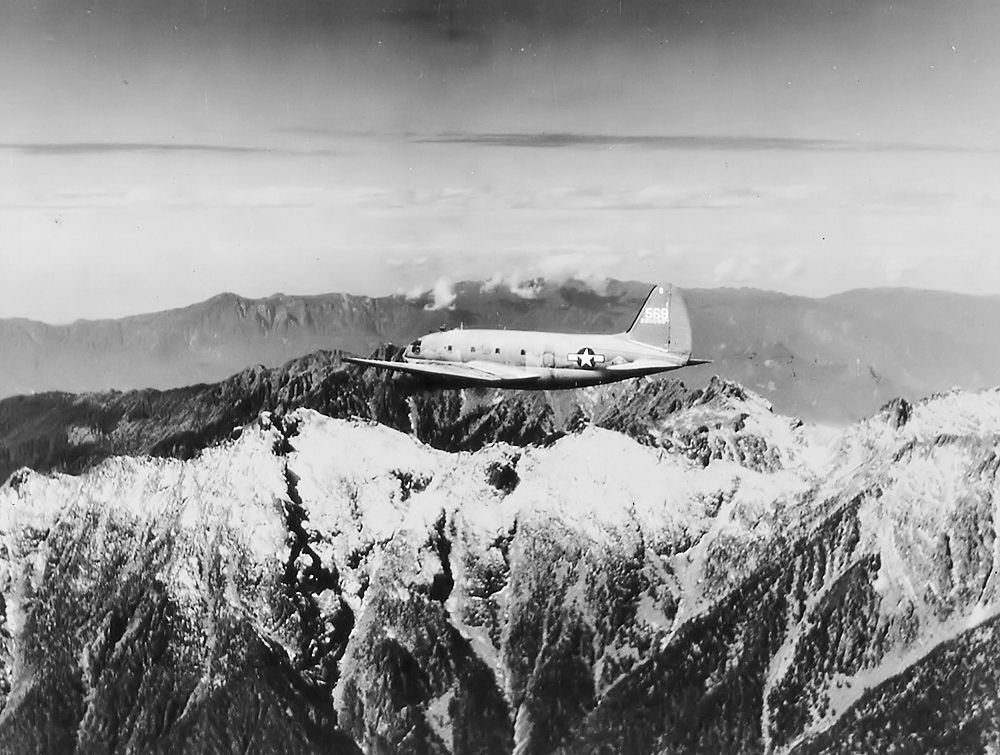 The Hump Route and the Burma Road: Two Lifelines of the War of Resistance Through YunnanOne leads through the mountains west of Xiaguan to Myanmar, the other flies over the mountains from Yunnanyi in Xiangyun. How did the Burma Road and the Hump Route maintain China's connection with the world during the most difficult phase of the War of Resistance? Why did Dali become an important node on both lifelines simultaneously?→
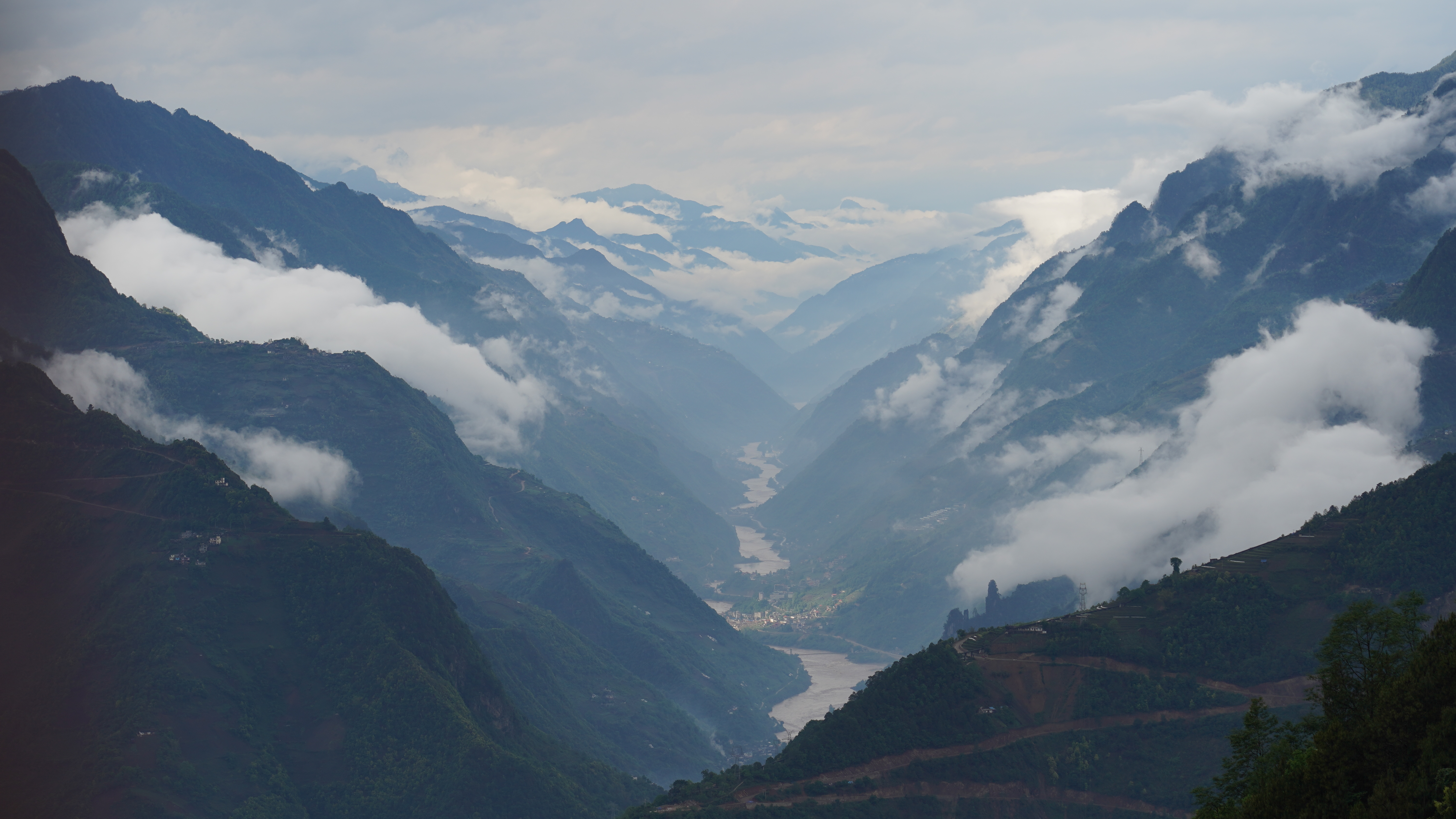
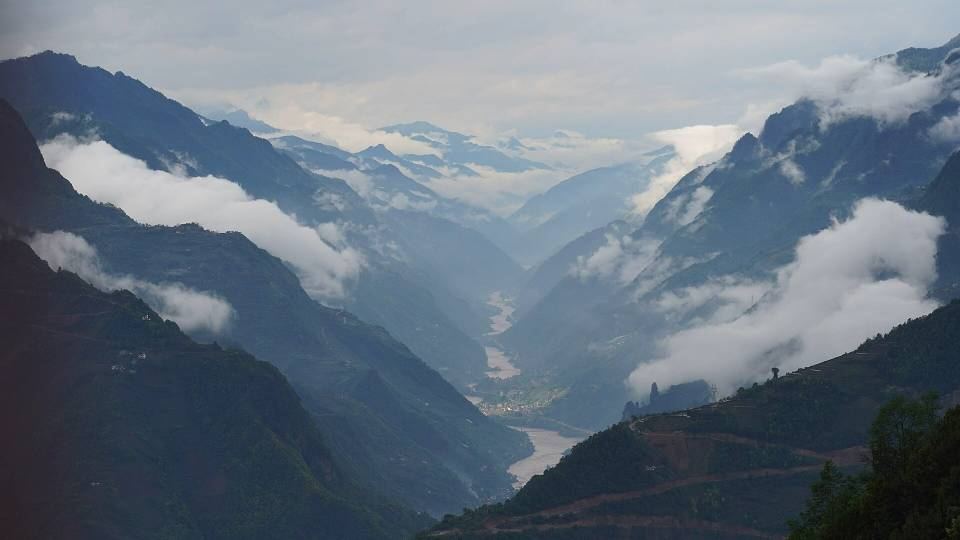 The Nujiang, Lancang, and Jinsha Rivers: the unique nature and culture of the Three Parallel RiversStarting from Dali and heading north, crossing over the Cangshan Mountains, you will enter a massive fold split open by three great rivers. The Nujiang (Salween), Lancang (Mekong), and Jinsha (Yangtze) rivers—three great rivers originating from the Qinghai-Tibet Plateau—cut through the land of northwestern Yunnan from north to south like three parallel knives. They run so close together—at their nearest point, the straight-line distance is less than seventy kilometers; and they flow side by side for over one hundred seventy kilometers before each turns and heads toward a different destination. This is the "Three Parallel Rivers," inscribed as a UNESCO World Natural Heritage site in 2003, and it is also a key to understanding Yunnan. Many people think the beauty of Yunnan is simply the wind, flowers, snow, and moon by Erhai Lake→
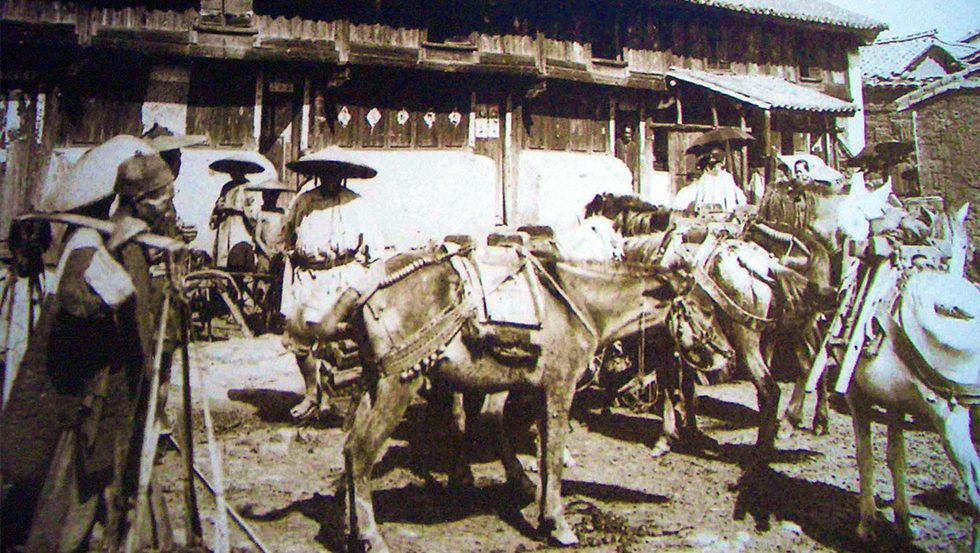 Dali, Yunnan and the Ancient Tea Horse Road (Chama Gudao): A Thousand Years of One RoadIf you had to describe the Tea Horse Ancient Road (Chama Gudao) in just one word, many people would blurt out "road." But those who have truly walked this route will tell you: it was never a single road. It is a network—a web spread across the folds of the Hengduan Mountains (Hengduan Shannmai), linking the basins of Yunnan, the Sichuan Basin (Sichuan Pendi), the highlands of the Tibetan region, and the river valleys of Myanmar. For centuries, horse caravans (mabang) carried tea, salt, medicinal herbs, cloth, and silver back and forth across this web, with the sound of bells ringing all the way from Dali to Lhasa, and from Xiaguan all the way to Bhamo in Myanmar. The Tea Horse Ancient Road is different from the Silk Road. The Silk Road had clear starting and ending points, with caravans flowing like water along fixed→
Comments
Comments
…