Summer Huang | Dali: A Paradise on Earth
A little preface :
It can be said that if "Cangshan Hiking Home" is wonderful, it is because of the very different, yet similar, tour leaders and the richly sensitive guests. Just like a deep conversation, it must be a sincere and rich exchange between the two.
--- Jason
----------------------
Above 2,000 meters above sea level, the earth becomes pure, like the shrinking surface of an airplane as it takes off. It's like the saying, "The higher you stand, the farther you see." The appearance of all things in the world is merely a "phase" presented in different dimensions. Humans are limited by our perceptual channels, and objective things are beyond our grasp. This is why Kant first established " space and time" as a priori premises for his discussion of knowledge. These a priori premises represent an objective world that our reason can never grasp. Whenever I'm in nature, the closer I get to the sky, the more I feel a sense of cleansing, clarity, and clarity. Dali truly deserves to be called a "paradise on earth." I first visited at the age of seventeen, just before leaving for England. At that time, in the throes of adolescence, I had no time to appreciate or experience its beauty.
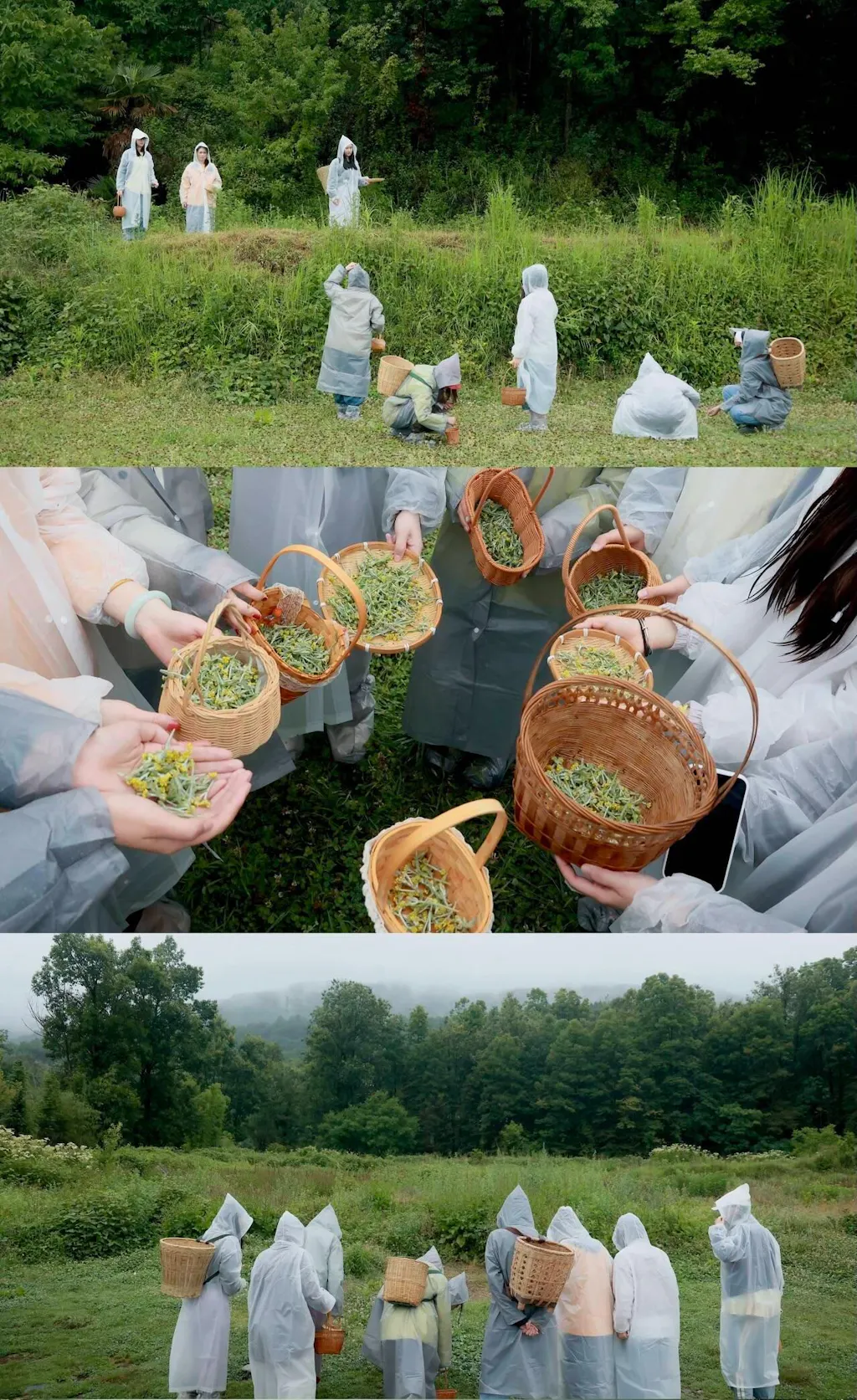
During the 2024 Christmas holiday, we spent over ten days in Dali, immersed in nature. Before leaving, we found a group of young people living in Dali online and decided to join their activities. They truly loved nature, and many were experts in their fields. Every day, we joined them at the foot of Cangshan Mountain and the edge of Eryuan: hiking to Cangshan Mountain to pick pine cones, painting moss by the stream, and watching the stars and birds from Eryuan Lake. We also visited farmers on the west slopes, visited beekeeper Chunyu's apiary, and hiked to Huoshan Mountain to watch the sunset. Now, over half a year later, flipping through photos, I can still smell the scent of the sun-kissed earth, recalling the carefree and lighthearted feeling of those days.
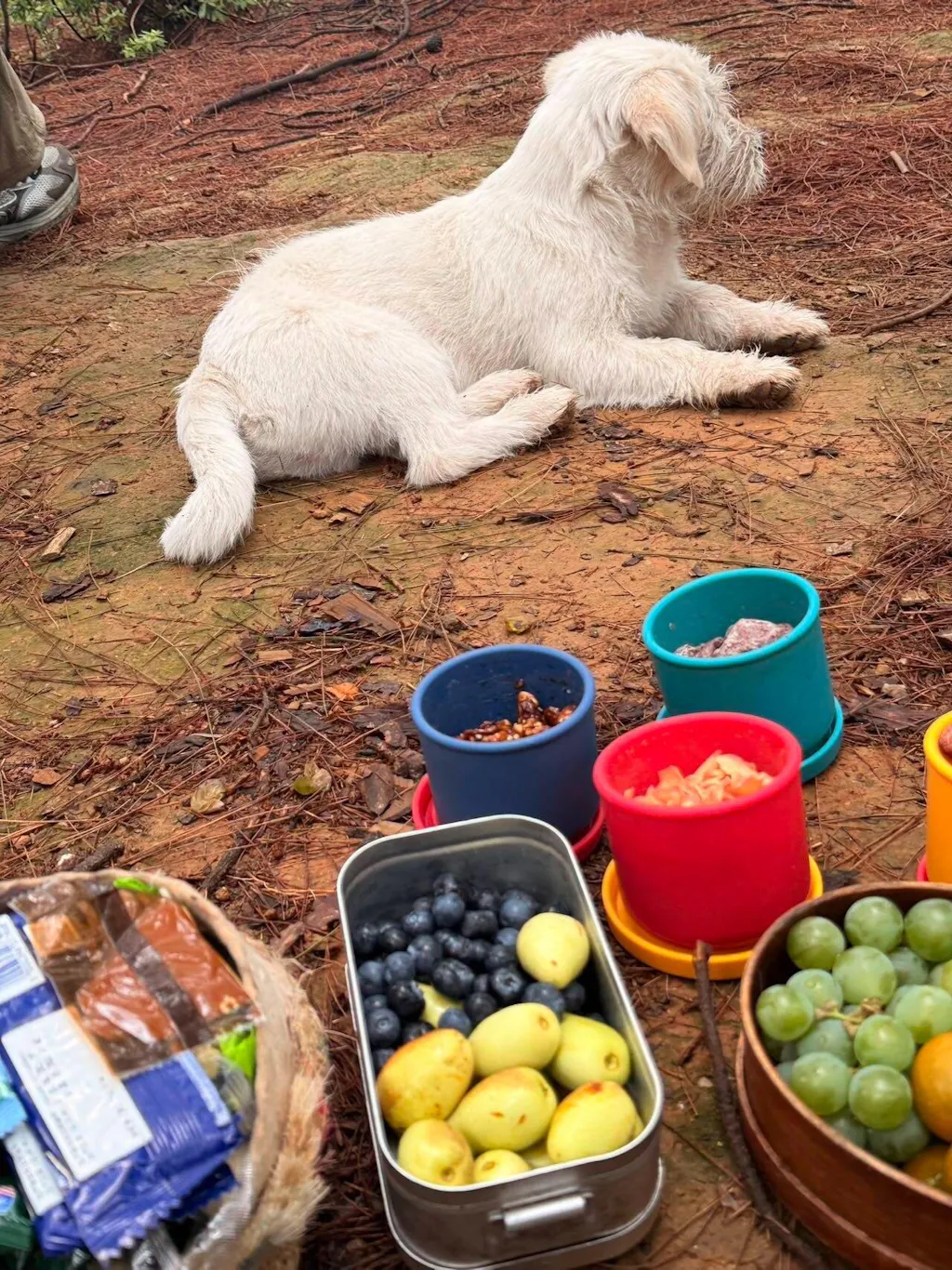
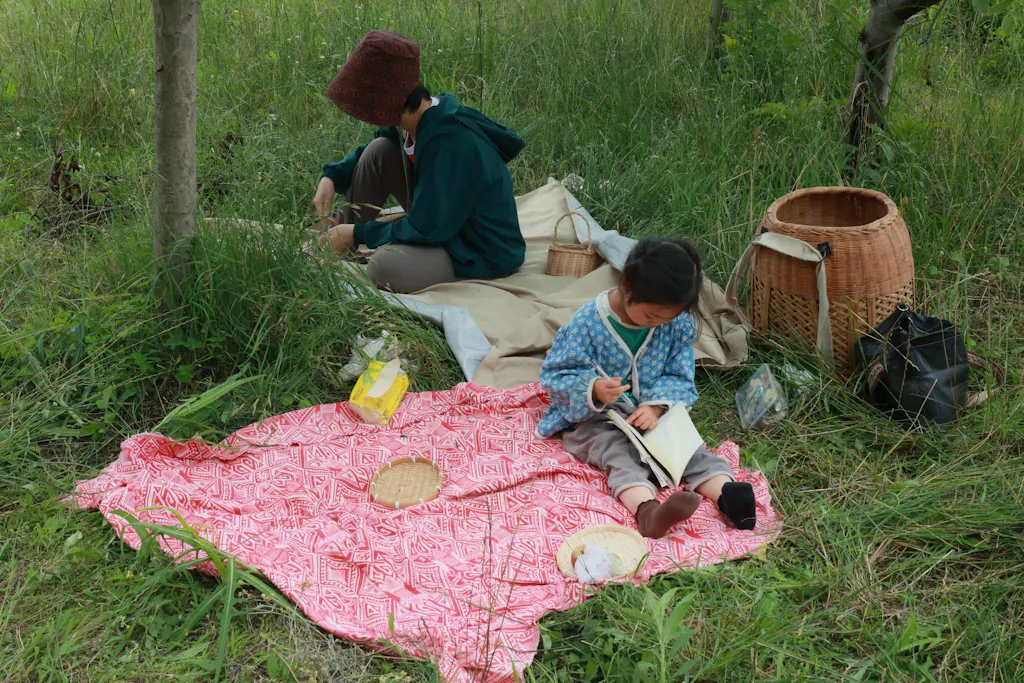
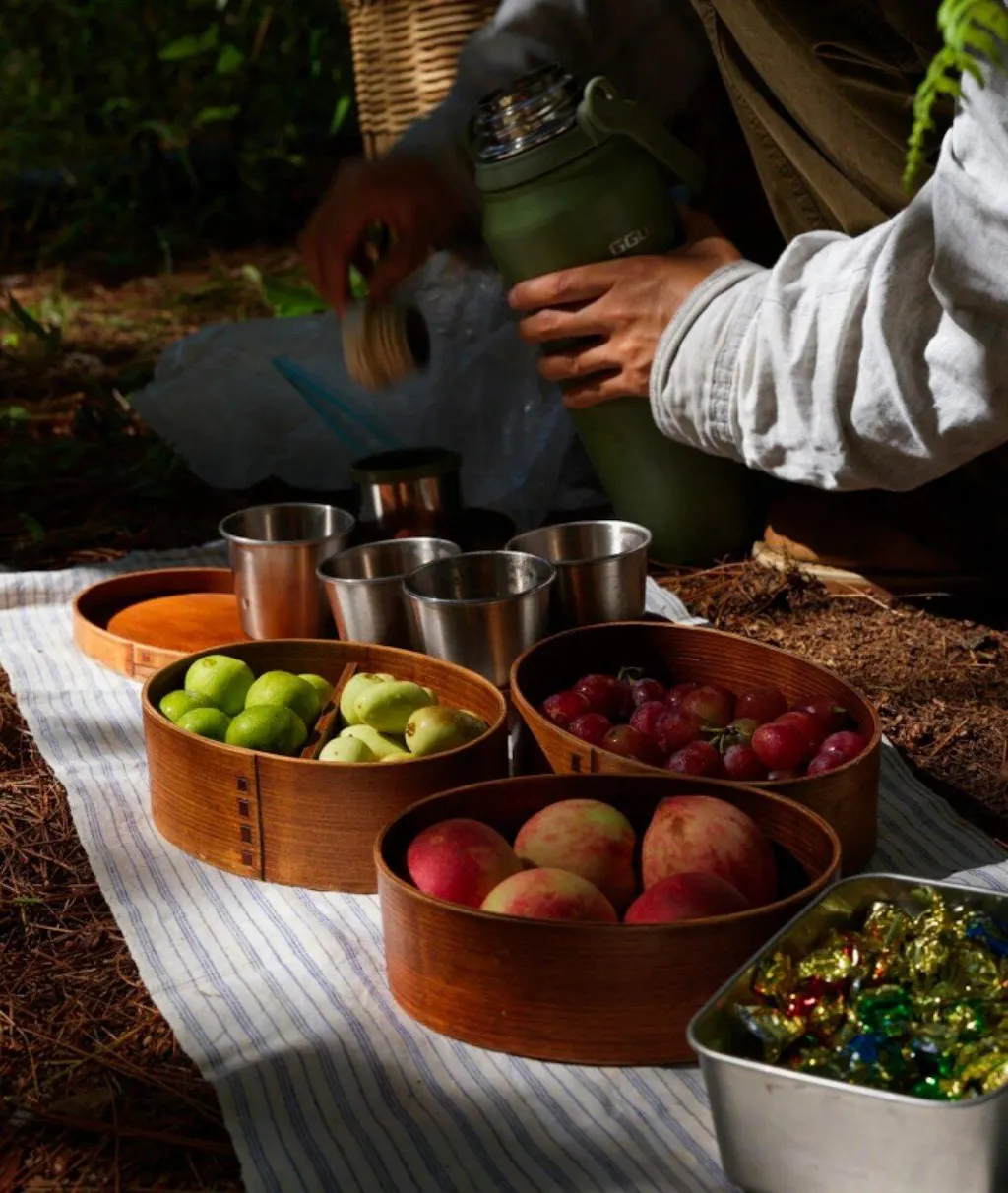
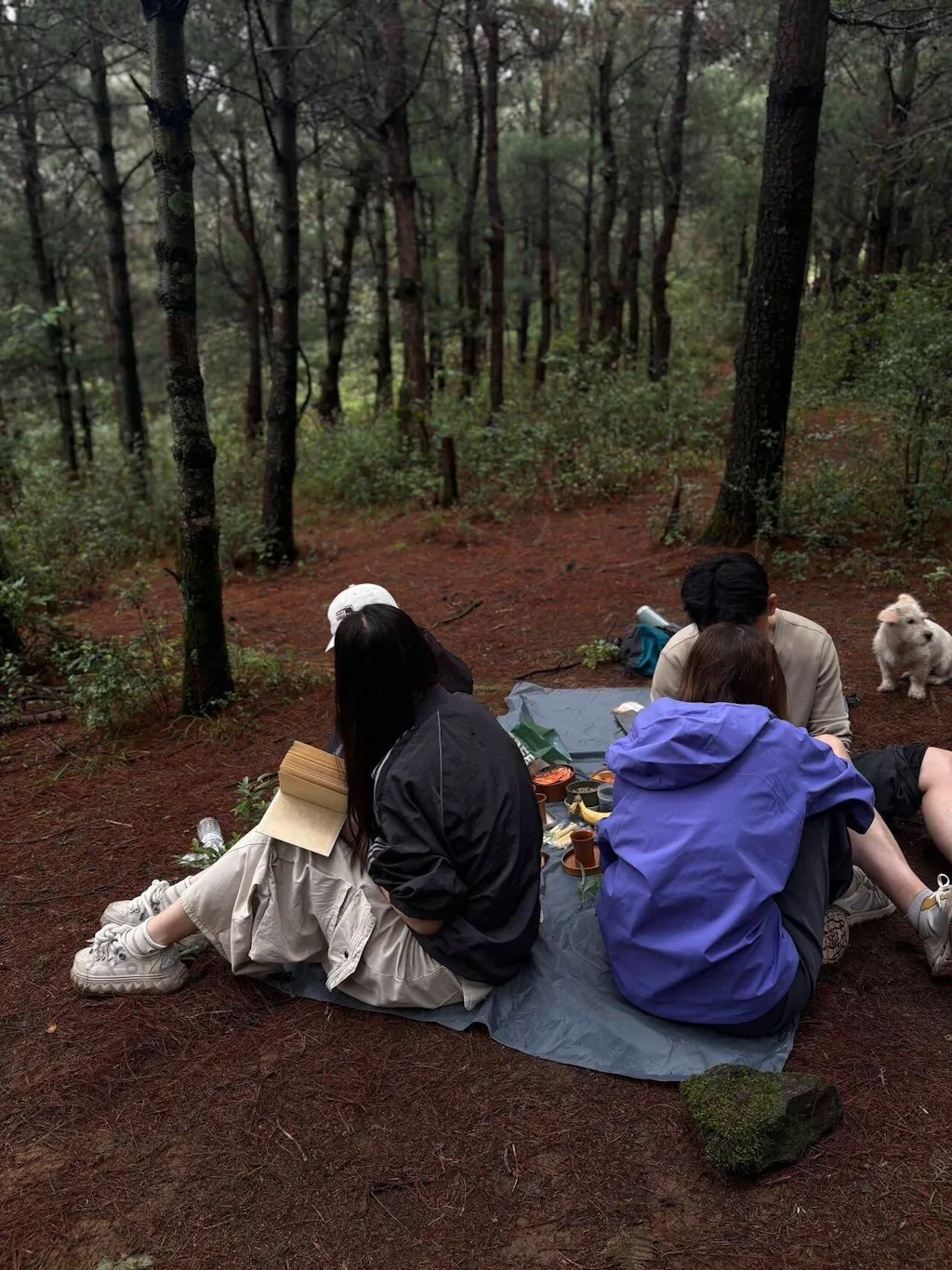
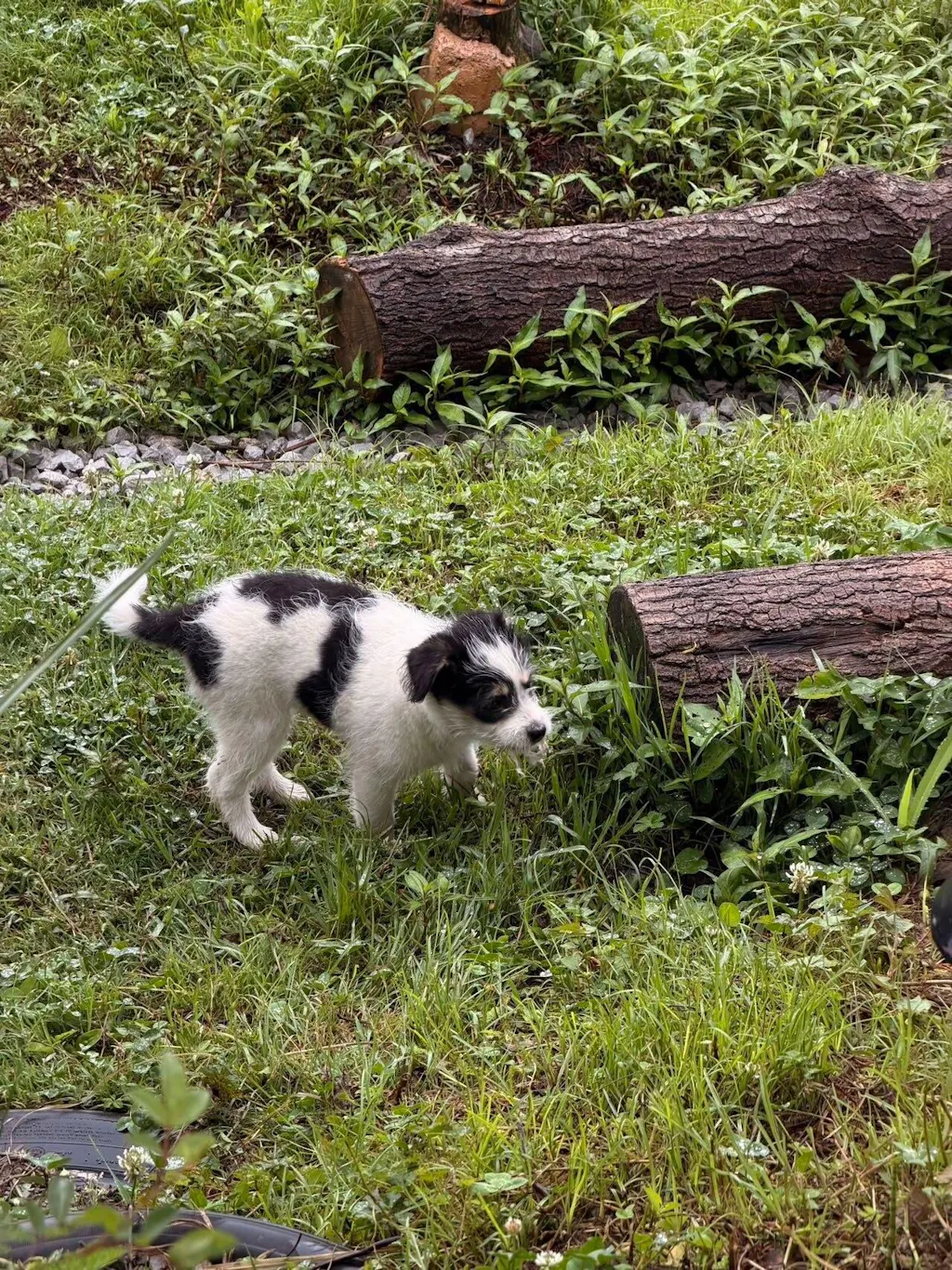
On the first day of moss-picking at the foot of Cangshan Mountain, our leader, Xiaomi, arrived in a minivan loaded with bamboo baskets. From the van jumped Xiaoxi, a local dog. Carrying a large bamboo basket, she brimmed with treasures. She exuded a natural, pristine spirit – the very nature we were looking for. We instantly knew we'd made the right choice. She led us on a moss-hunting expedition along the unassuming hillside. The diverse shapes required careful observation to discern and distinguish. Moss is a favorite plant of mine – despite its tiny size and inconspicuousness, it possesses a tenacious vitality, an unsung hero of the ecosystem. We gently scraped out clumps of different mosses with a small shovel, arranged them into crisscrossing miniature worlds in glass jars, and watered them with mountain spring water from the stream. These living, breathing natural micro-scapes were born. We each held a bottle of moss and flew back to Shanghai. Six months later, one still remained, vibrantly green. The most joyful moments were sitting beneath a pile of fallen leaves in the woods, sipping tea and enjoying snacks. The dry leaves on the ground rustled under our feet. In the dappled sunlight, we spread out our earthy, dark green mats. Xiaomi smiled as she opened her backpack, finally revealing the treasures within: several stacked, oval wooden boxes tied together with rubber bands, filled with fresh grapes, local dried fruits, golden oranges, and crispy biscuits. A large pot of tea, two liters of boiled apple juice, accompanied by five or six stainless steel cups, gleamed with a warm luster in the sunlight. Surrounded by a silent forest, we sat on the dry, fluffy coniferous leaves. In such a peaceful and warm atmosphere, I couldn't express my happiness.
After a pleasant morning of birdwatching at West Lake, we were increasingly excited for the next exploration. Birdwatching is nothing new to us. Growing up, our children have experienced numerous birdwatching trips under the guidance of professional instructors in various suburban parks in Shanghai, especially along migratory routes. Once, I specially invited a professor from Shanghai Ocean University to rise at 5 a.m. to join me in spotting waterfowl along the shores of Nanhui Harbor. A heron, roughly my size, suddenly landed on the muddy path less than five meters away. I could clearly see its gray-blue back and a single slender feather on the back of its head swaying in the wind. It was an unforgettable sight. This time, birdwatching expert Wang Bin took us on a boat tour of the lake for the first time. Eryuan West Lake, as the starting point of Erhai Lake, is rarely visited by tourists. We drove an hour to the lake's edge. Wang Bin had borrowed a boat from a local villager, which he used for farm work. The afternoon sun was blazing. Donning conical hats and holding binoculars, we boarded this picturesque boat. A few small seats were neatly arranged on the green hull, and the electric motor made a barely perceptible hum, ensuring a tranquility that wouldn't disturb the birds.
The clear, tranquil surface of Eryuan's West Lake instantly transported me to a dreamscape of birds vying for the ferry, startling a flock of gulls and herons. As the boat set sail, a flock of golden birds flew overhead. A closer look revealed a row of birds, white-headed and plump, perched on the edge of a field. Teacher Wang Bin told us they were Ruddy Shelducks. Most birds seen this season are migratory birds, wintering in Dali. Since then, plump and robust Ruddy Shelducks have repeatedly appeared before our eyes, making them the easiest birds to spot. Perhaps due to their bulk, they're reluctant to fly, resting on the edge of a field or amidst the waterweed.
It was a thrilling experience from the very beginning. As the boat entered the reed marsh, I was struck by the sight before me—thick fields of wild reeds, several meters tall, swaying gently in the wind, like entering a vast maze. Our boat slowly glided in, enveloped by the dense reeds. It was the perfect culmination of the "struggle to cross, struggle to cross" atmosphere. We played hide-and-seek with the waterfowl. The boatman, knowing every corner of the lake like the back of his hand, expertly steered the boat, quietly turning a corner and emerging from behind the reeds, instantly startling a flock of gulls and herons. The birds fluttered into flight, circled the sky a few times, and then descended into another patch of waterweed. We slipped quietly down the river, searching for the next flock of waterfowl, startling another flock of gulls and herons. We fully savored the pure joy of childhood, forgetting all our worries. Just as we were enjoying ourselves, we suddenly spotted a few purple moorhens nestling in the waterweed. Three or four years ago, while birdwatching in a Shanghai country park, Heina stumbled upon a drawing of a bird. Ava immediately remarked that it looked very similar to the purple moorhen, a Class A protected species found primarily in Yunnan. I never imagined I'd be able to see the purple moorhens I'd imagined in person today. Their feathers change color under the sunlight, creating a gradient of purple and blue that looks incredibly dazzling. Purple moorhens are resident birds and don't like to fly unless absolutely necessary. Our boat was completely immersed in the waterweed, only a meter or two away from them. They remained calm and composed, showing no sign of wanting to fly away. This gave us ample time to admire their beauty up close. Their ombre feathers captivated us, capturing this fleeting beauty with our cameras, and we were reluctant to leave.
The most comical water bird is undoubtedly the white-bone avian. They have dark bodies but a large patch of white on their heads. White-bone avian birds are migratory and often gather in large flocks, making them particularly conspicuous among the flocks. We saw many white-bone avian birds on the waters of Nanhui, Shanghai. Teacher Wang Bin said that white-bone avian birds are somewhat clumsy. Because of their unbalanced bodies, they glide for a long time each takeoff and landing. If you see a bird leaving streaks of water on the lake surface when it takes off, it is definitely a white-bone avian. And they don't fly very high. Despite not being naturally gifted, their ability to become migratory birds is truly admirable.
We drove toward the vast lake. Above us, and in the distant mountains, flocks of waterfowl took flight. A large flock of greylag geese circled gracefully in the open sky, their gray-blue feathers exuding an elegant grace. We chased them relentlessly, our cellphone cameras in hand, hoping to capture this delightful moment.
Under the sunshine, a gentle breeze rippled the lake's surface. Occasionally, a tiny duck emerged from the water, then, with its tail raised, dove headfirst back into the lake. About 30 seconds later, it would resurface. We were very familiar with this adorable little grebe. If you look closely, you might even spot a crested grebe with pigtails on its head, but I don't have the eyesight to see it.
Speaking of big black cormorants, I immediately think of the French picture books "Camelito," which were Heina's favorites as a child. Each story in this series is incredibly long. We've read it to Heina countless times, each one typically taking forty minutes. By the end, we're all dry-mouthed. The French, with their inherently sentimental and romantic temperament, write stories with incredibly long and complex dialogues, leaving us feeling breathless after each reading. There's a character named Perrault the Cormorant in the picture books, so every time I see a cormorant, I can't help but think of him.
After two or three hours of wandering on the lake, the sun gradually faded, the wind shivering slightly as we slowly made our way back to shore. The teacher's birdwatching that day also included: the ever-graceful Little Egrets and Herons; and species requiring specialized knowledge and extensive experience to distinguish: White-eyed Pochard, Crested Pochard, Red-headed Pochard , Spot-billed Duck, Mallard, Gadwall, and Common Merganser. Even more fortunately, we looked up and spotted a low-flying White-bellied Harrier streaking across the sky.
We spent the second day of our Xipo trip in a secluded village. Our tour leader, "The Tailor," picked us up in the morning in a vintage van similar to Xiaomi's, accompanied by his Border Collie. This toy-like minivan, long a thing of the past in the city, holds a unique vitality here. As we cruised along the highway, the whirring wind and roar of the engine blended together, evoking a strange sense of nostalgia. This rustic, mechanical feel brings a sense of relaxation that those so-called "intelligent" electric vehicles can never replace.
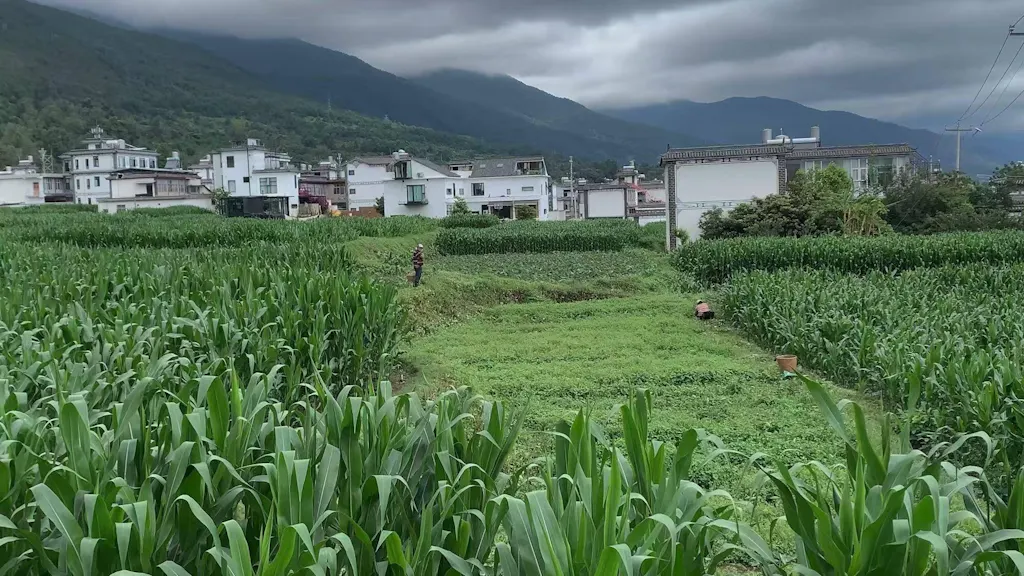
After nearly two hours of driving, we arrived at a secluded village nestled against the backdrop of Cangshan Mountain. Over 80 kilometers from Dali, it lies deep in the valley on the west slope. The further we go, the fewer people there are, until only three or four households remain. As the car pulls to a stop, the cries of pigs and cows fill my ears. I eagerly rush to the pens, seeing so many livestock up close for the first time: four pigs huddled together, one pair particularly plump. I hear they'll be the star of tomorrow's pig slaughter dinner, and I immediately feel a mixture of emotions—a sense of the tragic grandeur of execution. Chickens and ducks frolicking about, and dogs guarding the house.
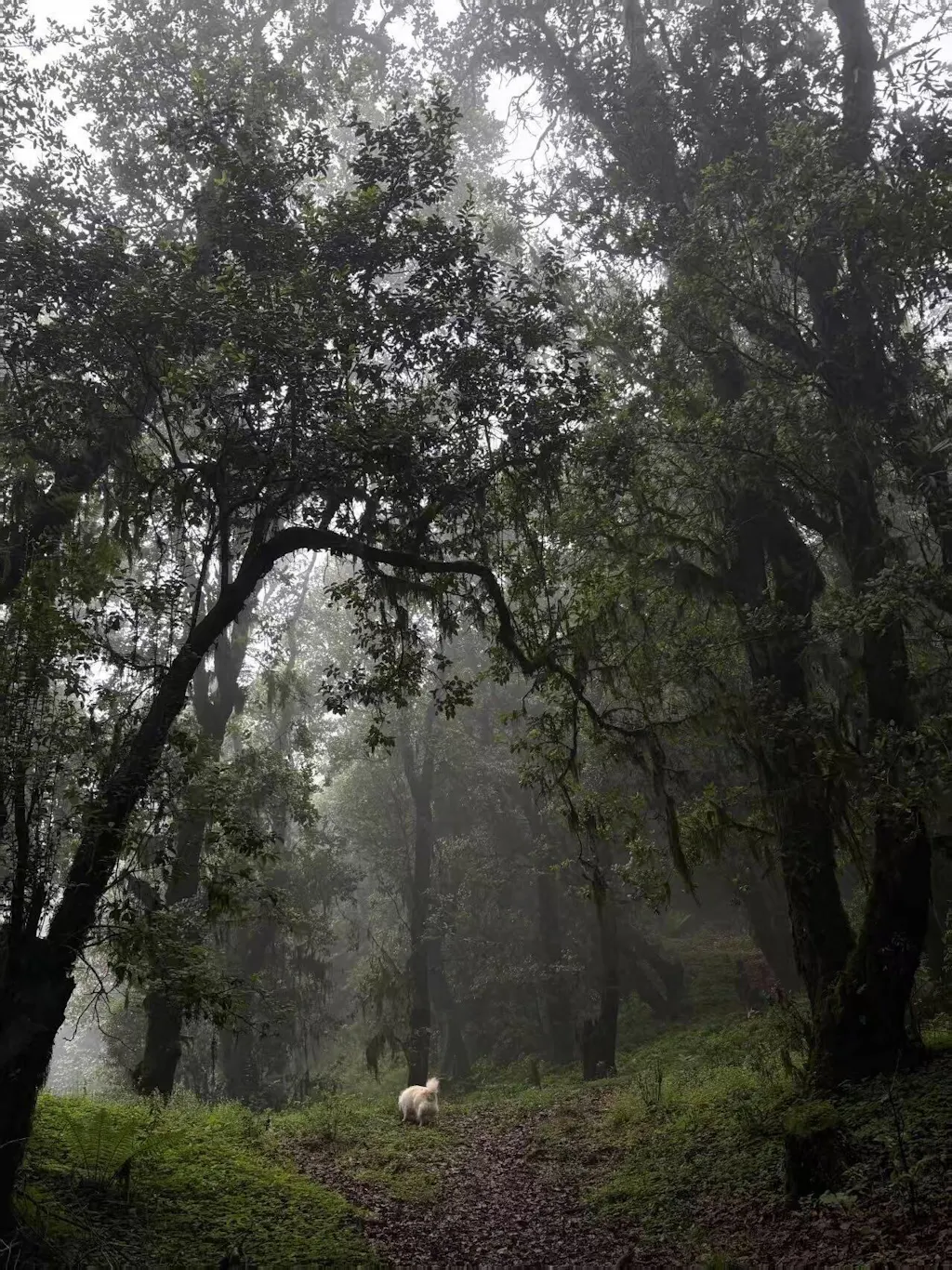
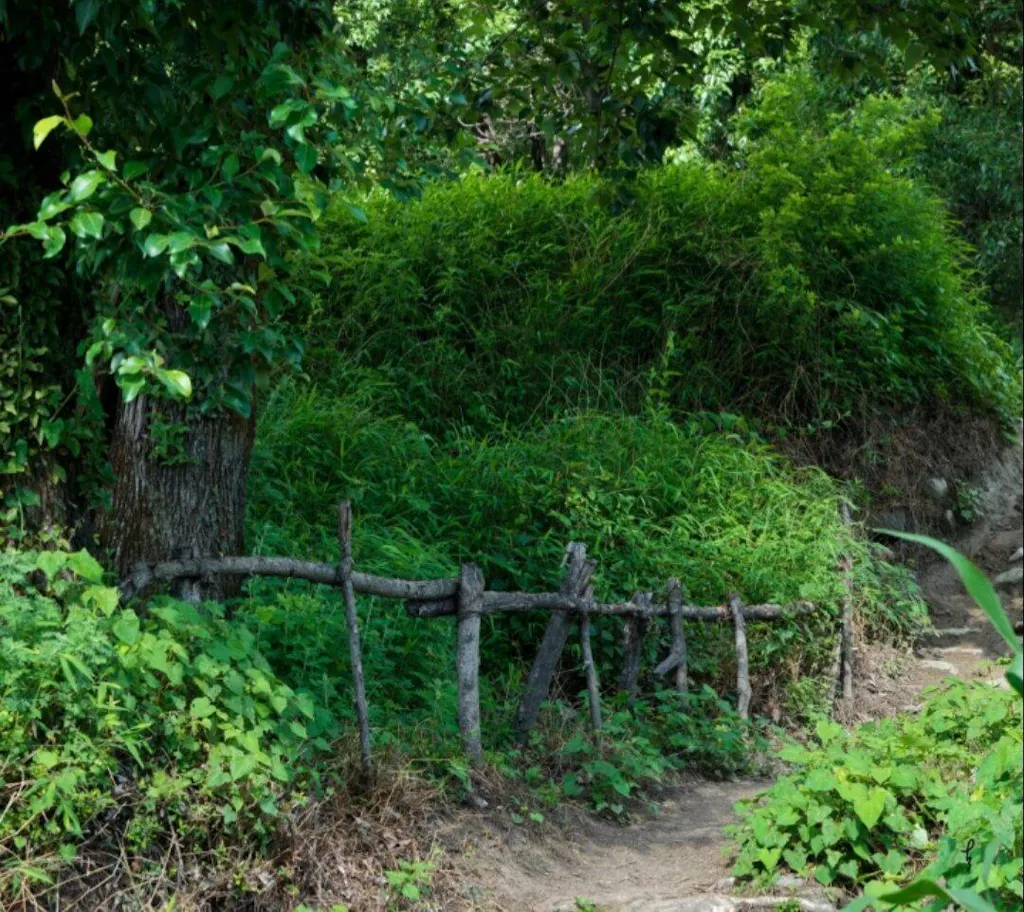
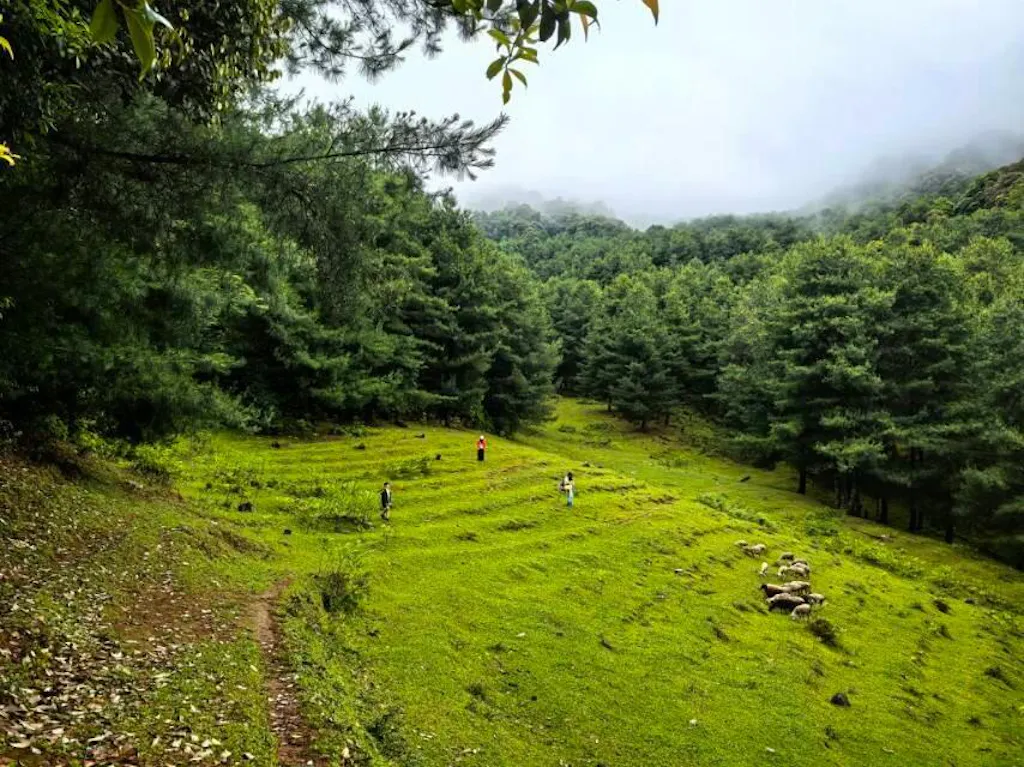
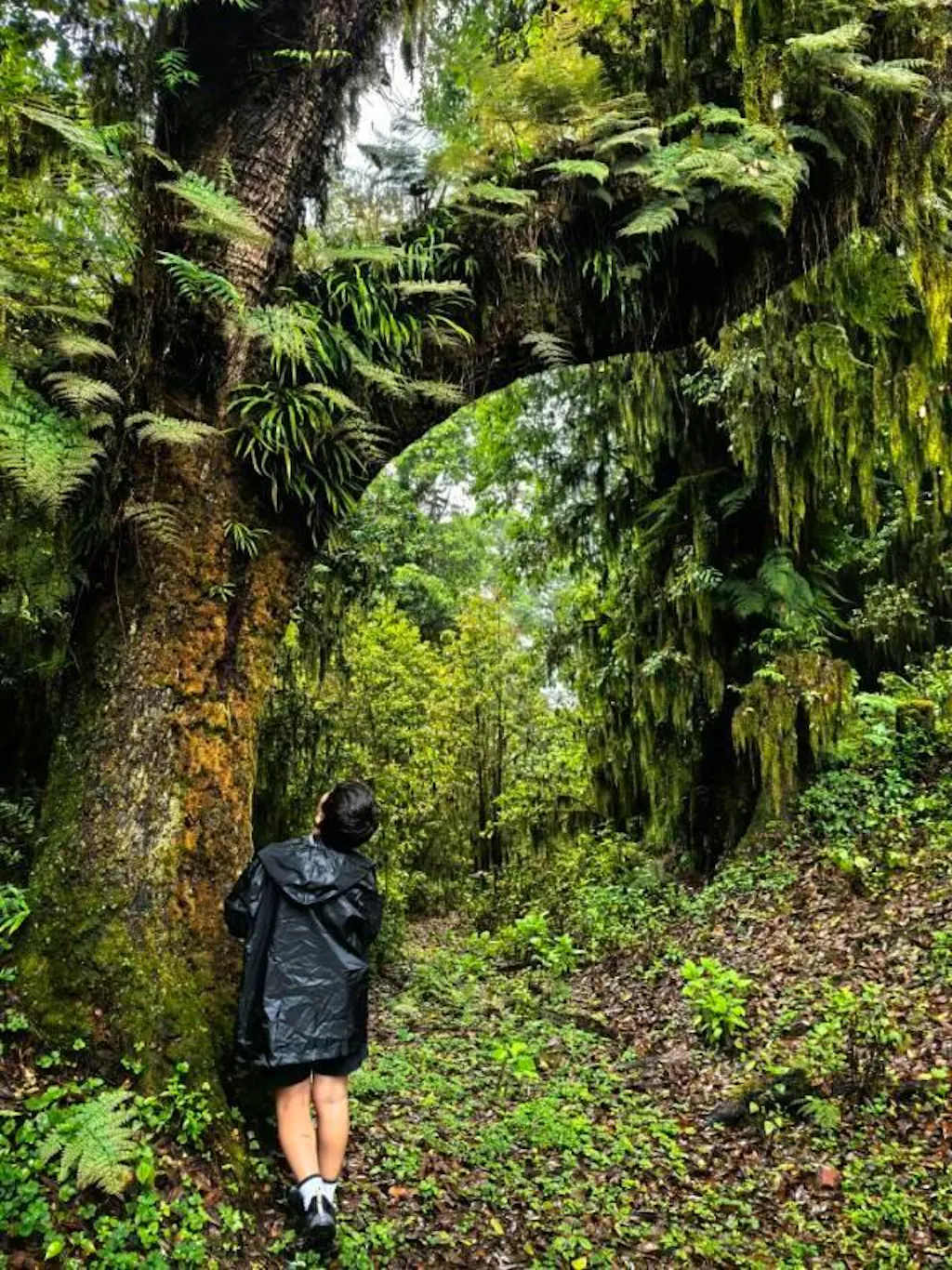
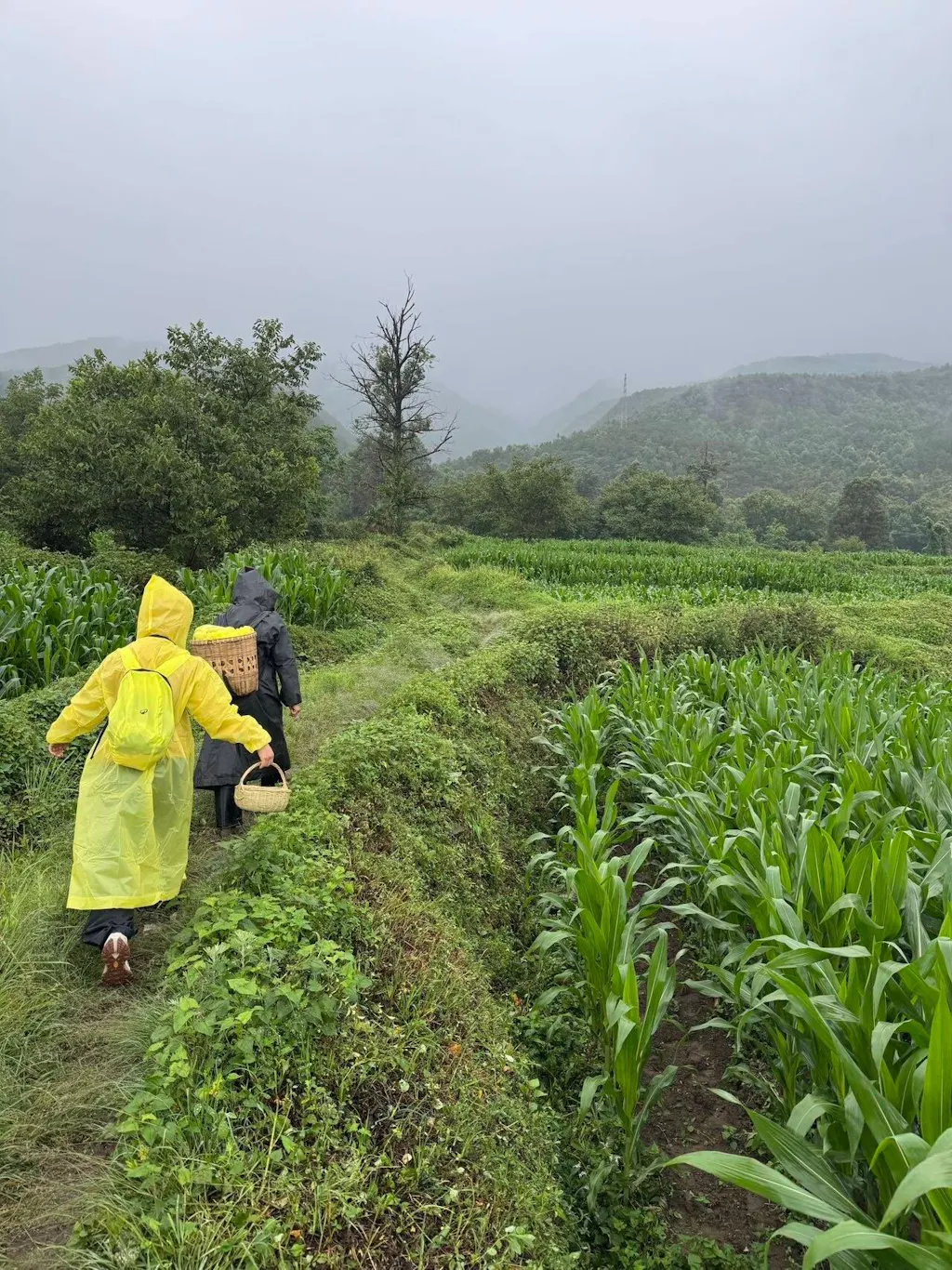
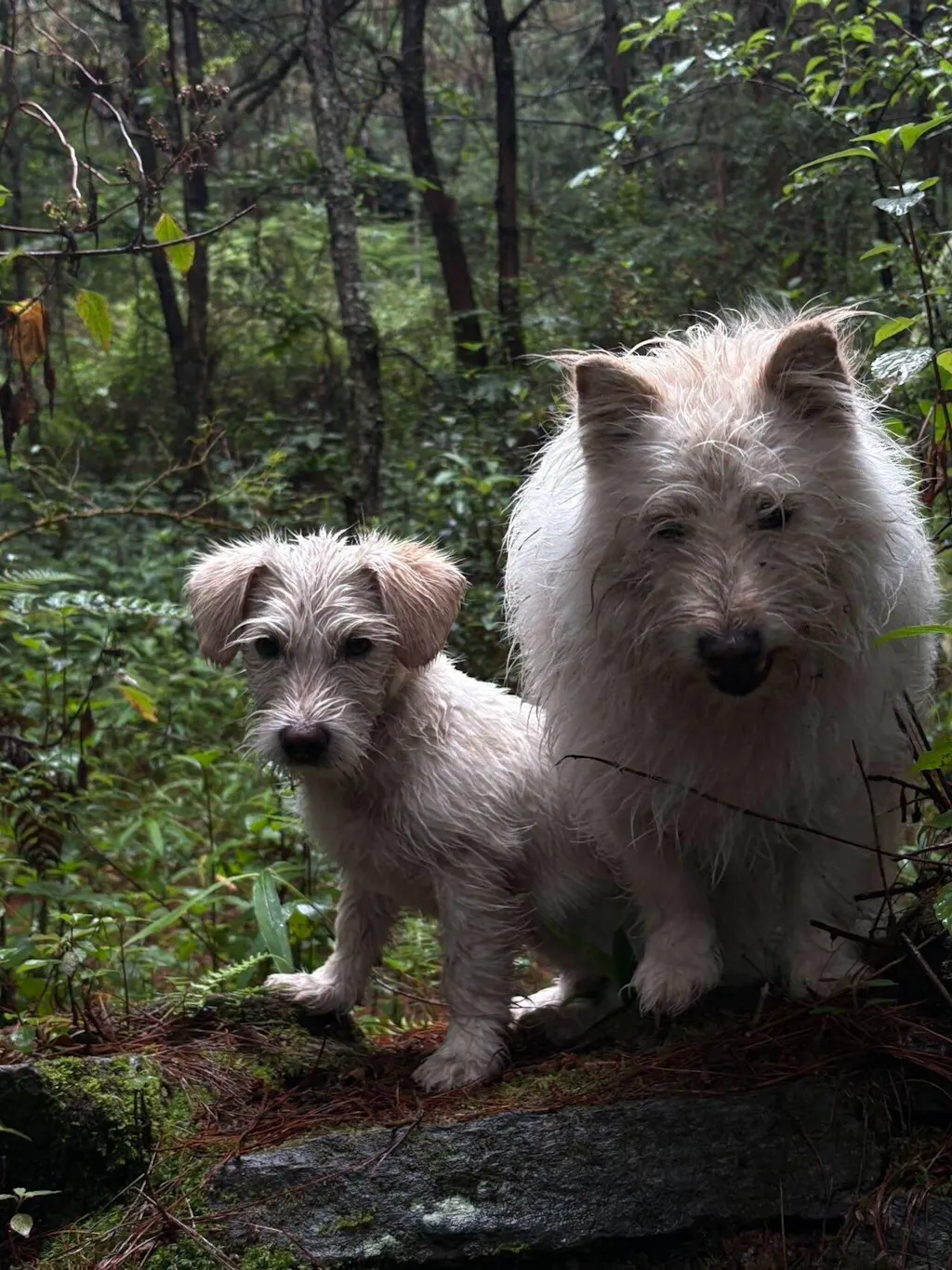
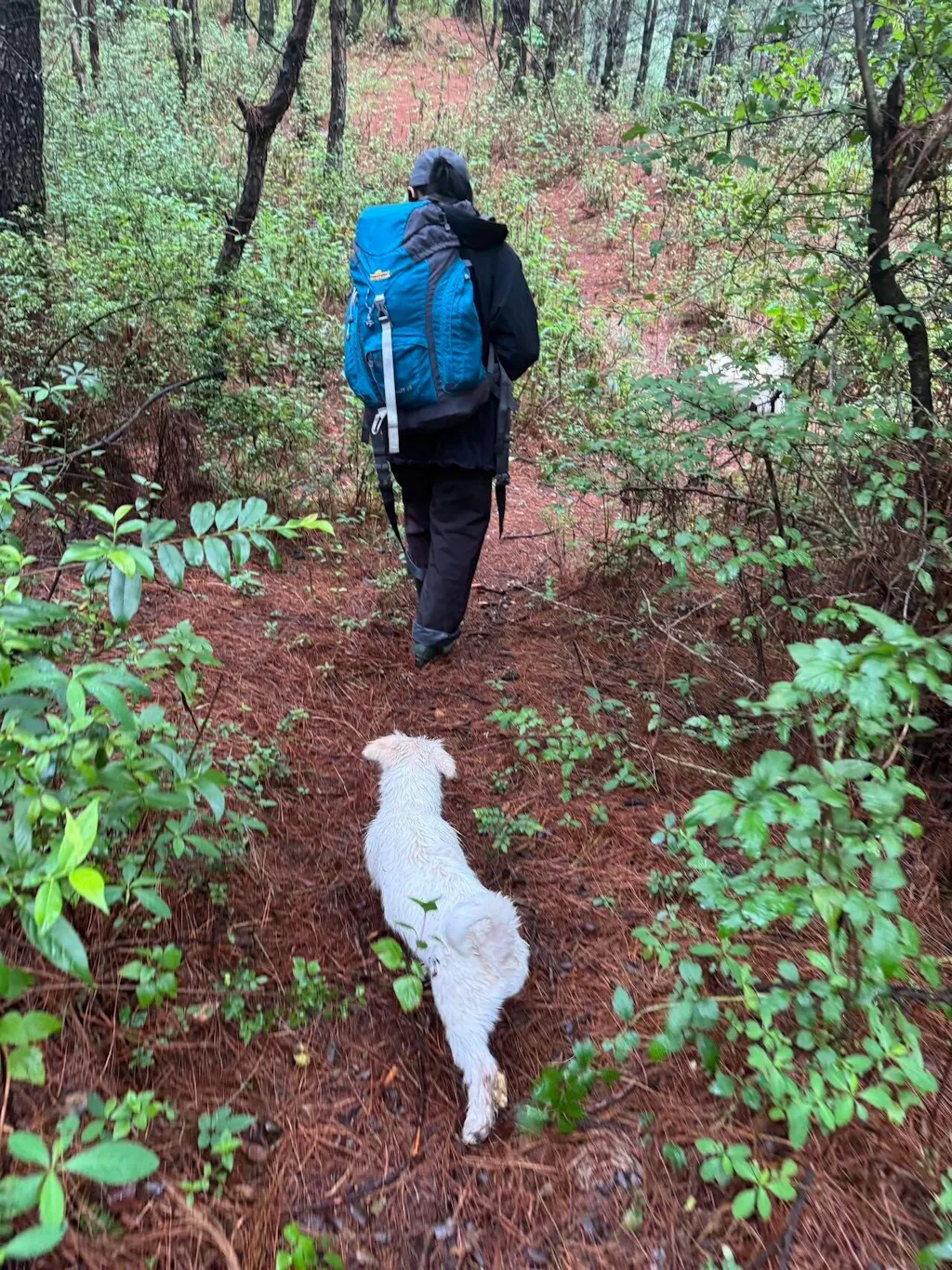
After a simple farm lunch, we set out from the wheat fields behind the farmhouse, following a path up the hillside and into the forest. In addition to our Border Collie guide, we were joined by the farm's native dog, Qian Duoduo. This clever terrier mix knew every nook and cranny of the forest like the back of his hand, like an experienced guide. Above us was the blue sky and white clouds, before us the vibrant colors of autumn. Underfoot, I slept on the soft, fallen leaves, breathing in the fresh air. The layered colors of Van Gogh's paintings drifted through my mind, their purity and clarity. Completely immersed in the freedom and vastness of nature, I wished time would stop here forever. Along the way, we discovered many interesting things: a massive, hollow old tree, its trunk hollow enough to easily accommodate three people, yet still lush and leafy; and bird feathers scattered among the trees.
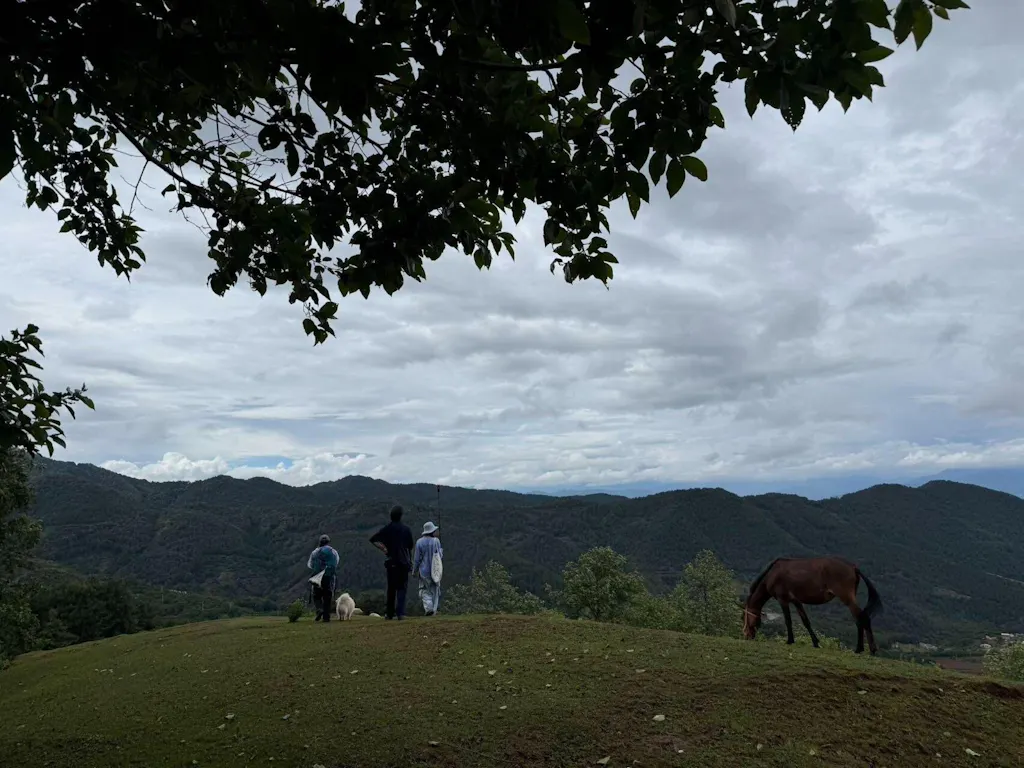
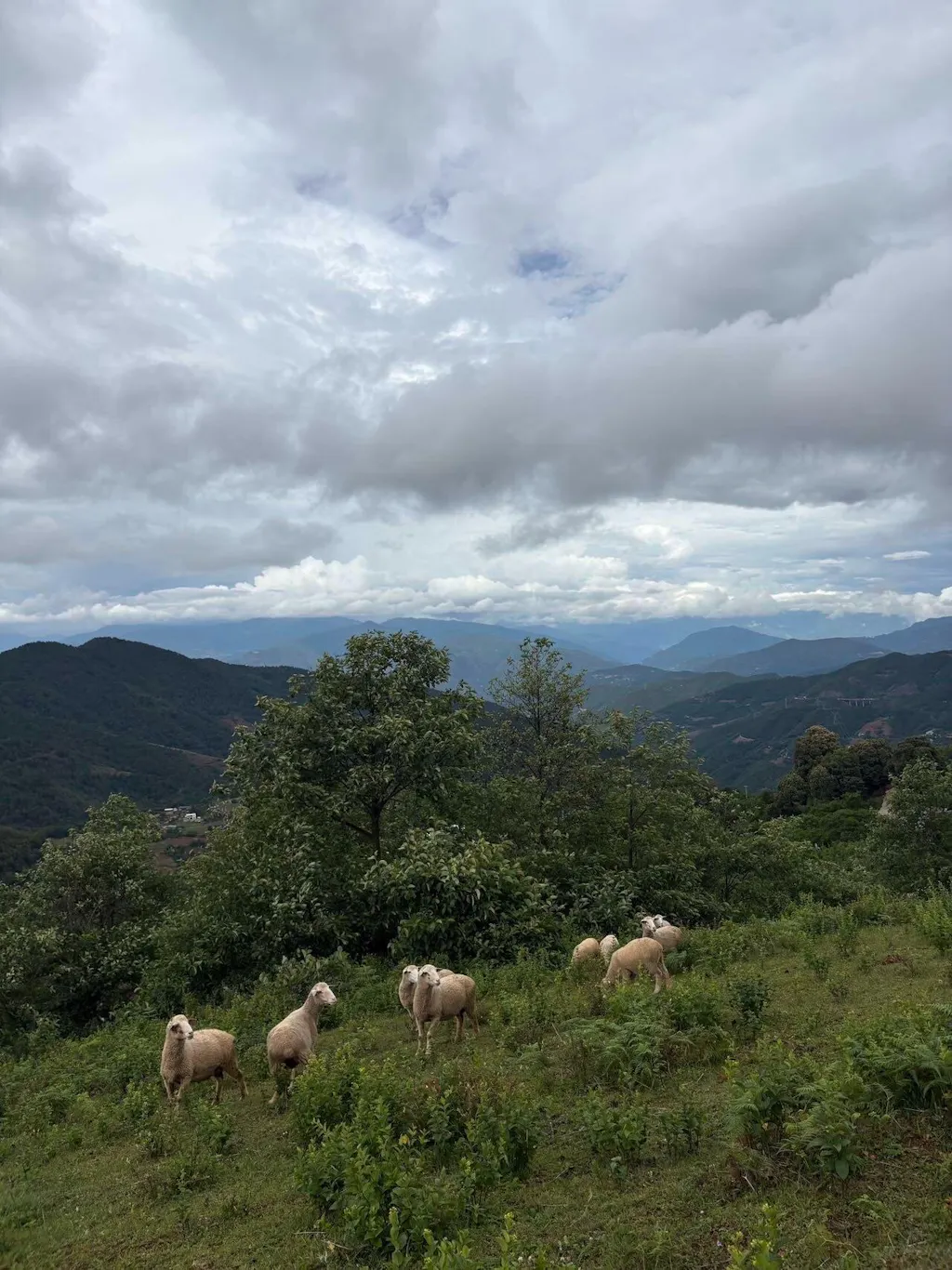
We ascended the winding mountain road, turning a corner and finally discovering a new village. We reached the alpine pasture, our destination. In the distance, scattered cattle and sheep grazing in the fields were seen by villagers. They retreated cautiously upon seeing us. They were fortunate and content to be free in the vast grasslands. In that moment, we too felt the essence of our own existence. The lead tailor, like Xiaomi, unpacked a wooden box from his backpack, containing biscuits, cheese, fruit, and a large 4-5 liter pot of tea. We spread out a light mat and sat on the ground. Our two dogs also lay down, enjoying the soft grass and the warm sunshine. As we sat quietly, we noticed a large field of wooden boxes, evenly spaced, at the far end of the pasture. The boxes, neatly arranged at the edge of the pasture, seemed not far away, but as we approached, we discovered they were primitive beehives made from hollowed-out tree stumps. After carefully examining several of the hives, we were surprised to discover one already had a complete hive. The honeycomb is the most mysterious shape insects can construct in nature, and its hexagonal form embodies the most robust geometric principles. On our return journey, we happened to see shepherds herding their flocks home. The bells of the lead sheep jingled, and hundreds of black and white sheep followed closely behind. In the afterglow of the setting sun, we drove along the winding mountain road back to Dali, ending a wonderful day.
Stargazing at West Lake from a boat on Eryuan's West Lake at night was the most unique experience of our trip. Nighttime stargazing depends on the weather. Weather, climate, cloud cover, wind direction... every factor is crucial. Furthermore, finding a sanctuary free from light pollution is even more challenging. Even in the pristine Dali, escaping artificial light is a challenge.
Astrologer A Tu, a persistent star chaser and former stargazing engineer, looked for a place among the mountains and lakes in Dali and finally chose Eryuan West Lake, where there are few people and we also did bird watching there.
The lake was calm, and when night fell, it felt like I could reach out and touch the stars. Dali is located on the plateau, and the nights reach very late in the summer. We waited until 7 or 8 pm before boarding the boat and following the last rays of light as they faded from the horizon.
When I think of stargazing, I immediately picture the image of stargazer Ah Tu: one hand in her trouser pocket, the other clutching an infrared pen. As soon as a star appears, she launches into a captivating explanation. Every star tells a story. Ah Tu's explanations are a walking astronomical encyclopedia, covering everything from ancient mythology to the latest research in modern science, from astronomy to geography, and she can ramble on for two or three hours. She makes every star come alive.
Heiner possessed astonishing vision and perception. He could easily spot all sorts of stars—fixed stars, wandering satellites. I couldn't keep up. While everyone else was searching for the next star, I was still struggling to find the ones I'd mentioned. Heiner suddenly pointed in the direction of the Pleiades. The naked eye can only see six or seven stars in the Pleiades. In ancient times, those who could clearly see seven stars were said to qualify as observers if they could see three. Even modern pilots are supposedly able to distinguish only six or seven. No matter how hard I tried, I could only see a blurry mass of light.
As the night faded into pitch black, the stars twinkled like diamonds on black velvet. Heiner suddenly pointed to the distant sky, "Look, what's that bright light, like fire?" We looked, only to see a hazy halo slowly moving across the night sky. Ah Tu excitedly exclaimed, "Wow, that's Musk's Starlink! Boy, you're amazing! We usually only see it once a year!" We were all stunned by this sudden surprise. The vastness of the universe, the endless expanse of the sky, suddenly brought home the limitations of human technology and our own self-righteousness. Three thousand years ago, while Thales, gazing at the grape-purple Greek seashore, studied and calculated astronomy, did he also ponder the ultimate question, "Who was by the river? When did the moon first shine on me?" In this ever-changing universe, exploring the unknown is humanity's destiny.
We were worried about the biting cold wind late at night, so we put on thick down jackets, hats, and scarves. But it turned out not to be as cold as we imagined. It was so romantic to sit by the warm fire on the boat, listen to Ah Tu's stories about the universe, and look at the starry night sky.
While picking pine cones, we met the most adorable tour guide, Li Zhenhao. True to her name, she was truly wonderful. When we first met Li Zhenhao, she was driving the standard minivan for tour guides, but hers was painted army green. Wind chimes made of dried pine cones and fern leaves hung on the windows, capturing the essence of the wild. She was carrying a large backpack and waved at us with a smile.
Zhenhao was incredibly enthusiastic and immediately bonded with the children. She took us up Cangshan Mountain to pick pine cones. She explained that most of the pine cones we see are Cangshan pine, while the larger ones are from Armand pine, found only at slightly higher altitudes. We hiked five kilometers through Cangshan Mountain—not a long distance, but a significant climb, traversing narrow, rarely traveled paths through the jungle. She always referred to the five-kilometer mountain trail as "just two more steps." Every time we breathlessly asked how much further we had to go, Zhenhao would respond with a relaxed, "We're almost there, just up ahead." After walking for over half an hour, we asked again, only to be met with the same response: "We're almost there, just past here."
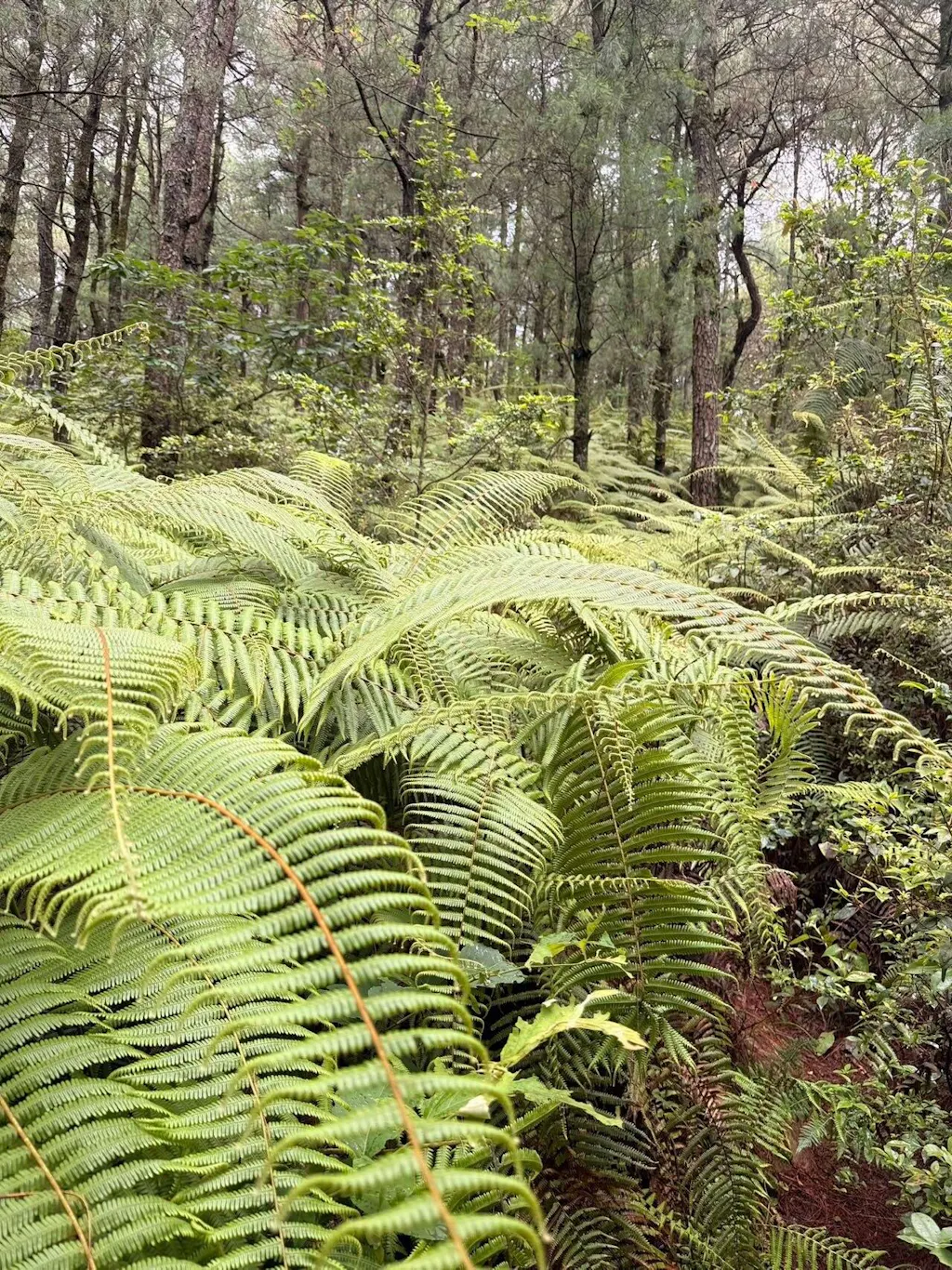
Along the way, she searched for large, perfect pine cones. Along the path, she saw many amazing plants, like something from another planet—lollipops curled into snail-like spirals. These were fern sprouts. Dali is home to vast expanses of ferns, some of the oldest plants. It was so nice to casually pick a fern leaf and stick it on dark clothing, instantly staining it white.
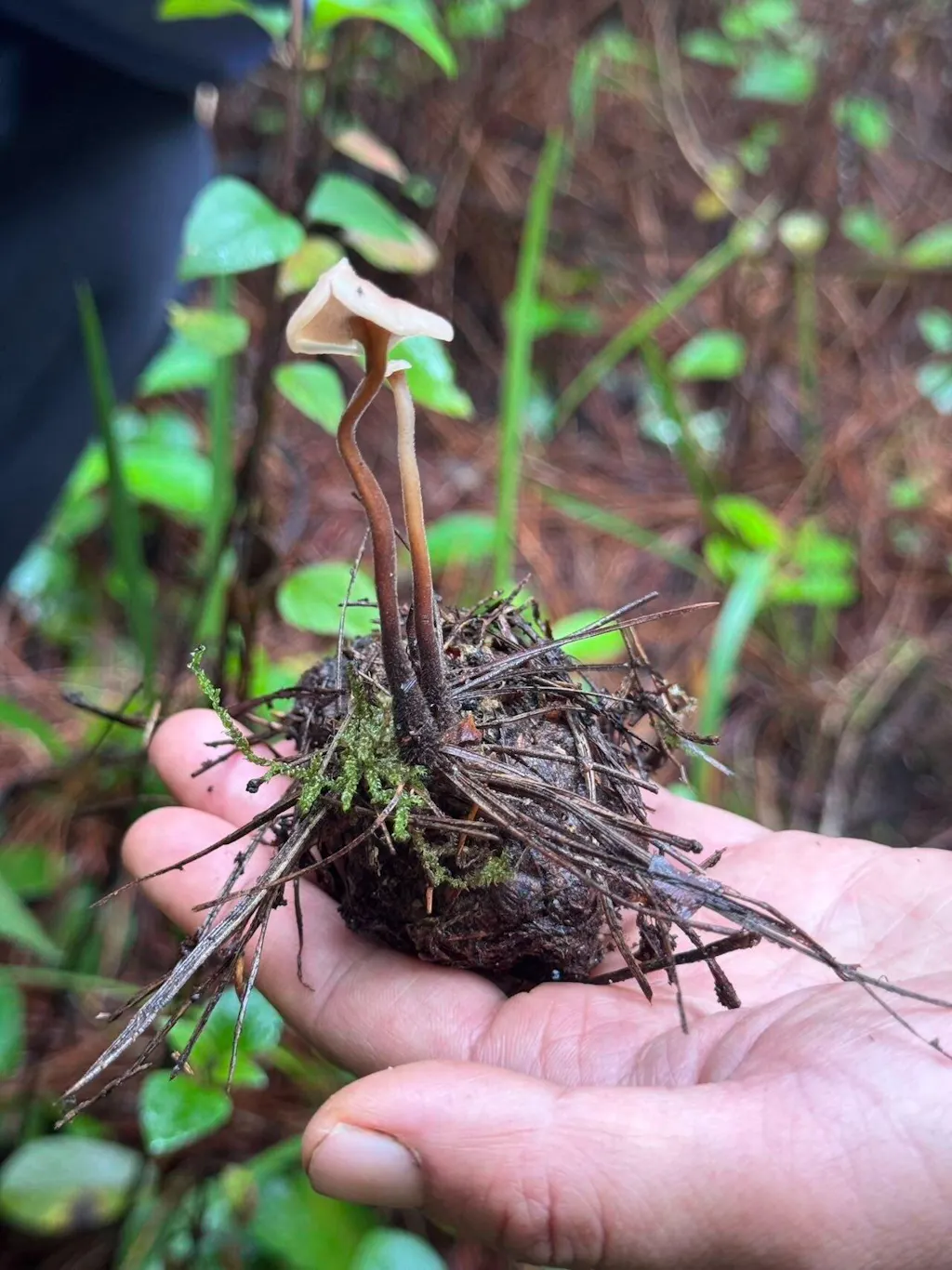
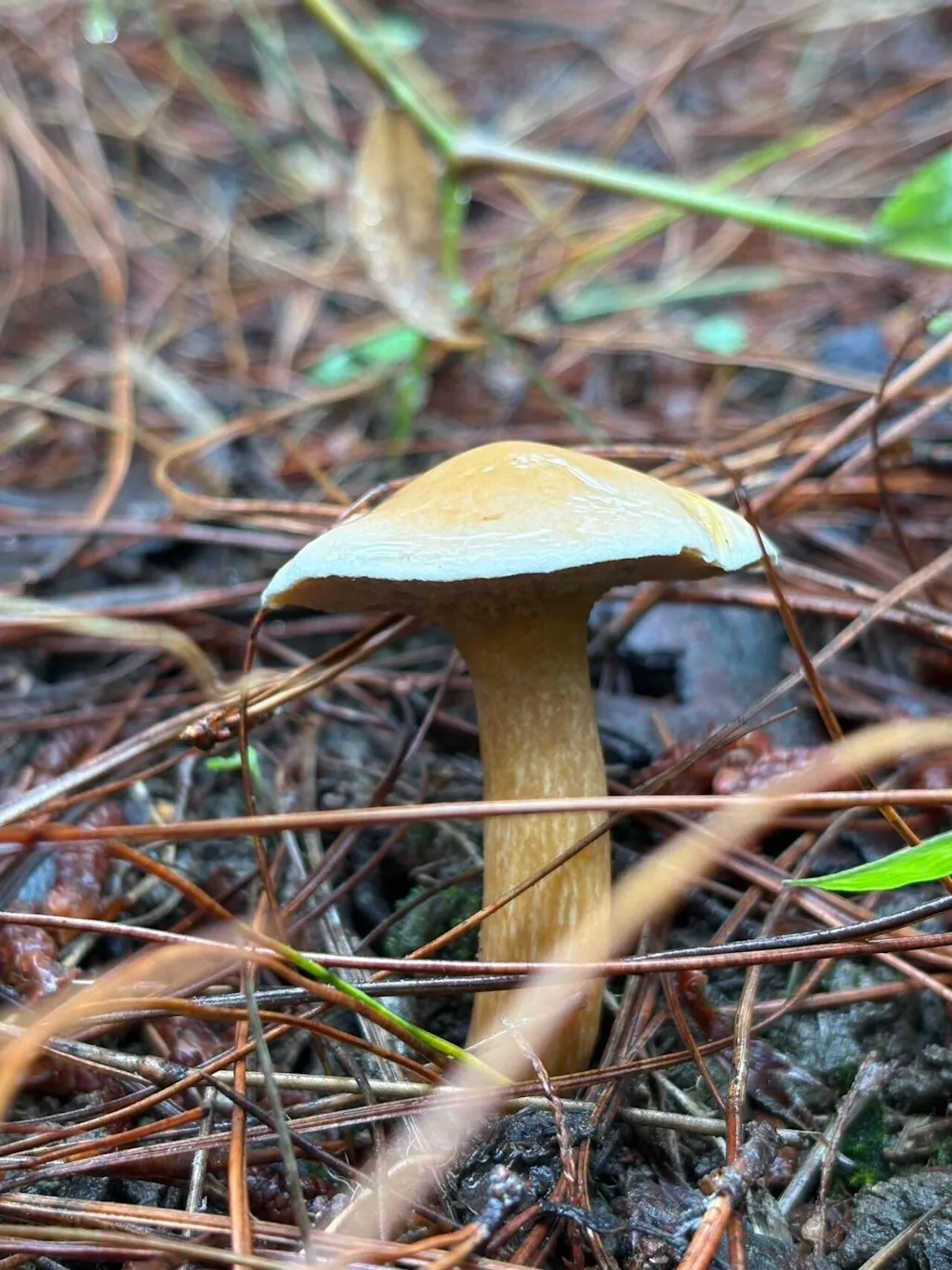
We played along, climbing the steep slope. As we climbed, we found larger and more beautiful Armandi pine cones. After a long walk, the view finally opened up, revealing a flat patch of land amidst the jungle. The children and I eagerly took out our mats and lay down, gazing at the blue sky through the dappled sunlight. The sunlight flickered like a vivid mosaic in a movie. Gently moving our heads from side to side, it was like looking through a kaleidoscope, a breathtaking sight. Zhenhao had brought out a lot of crafting tools, and we crafted with the pine cones, twigs, leaves, ferns, and flowers we'd found along the way. We all wanted to take our handicrafts and our harvest home, so after selecting them, Zhenhao packed them up for us and mailed them back to Shanghai. We agreed to return to Dali in the fall to take us mushroom hunting in the mountains.
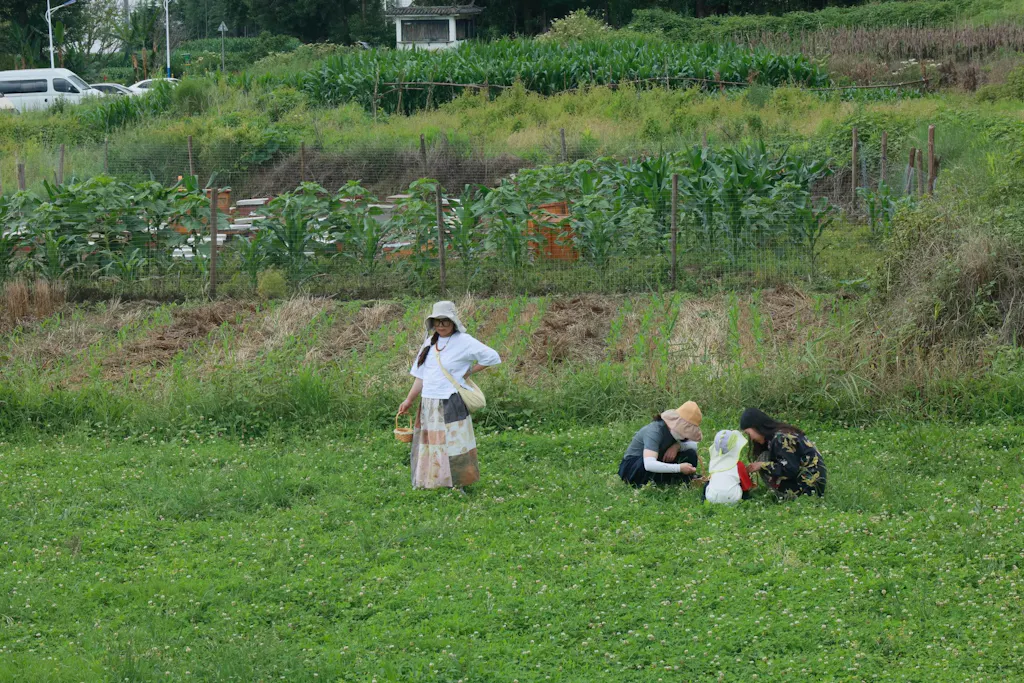
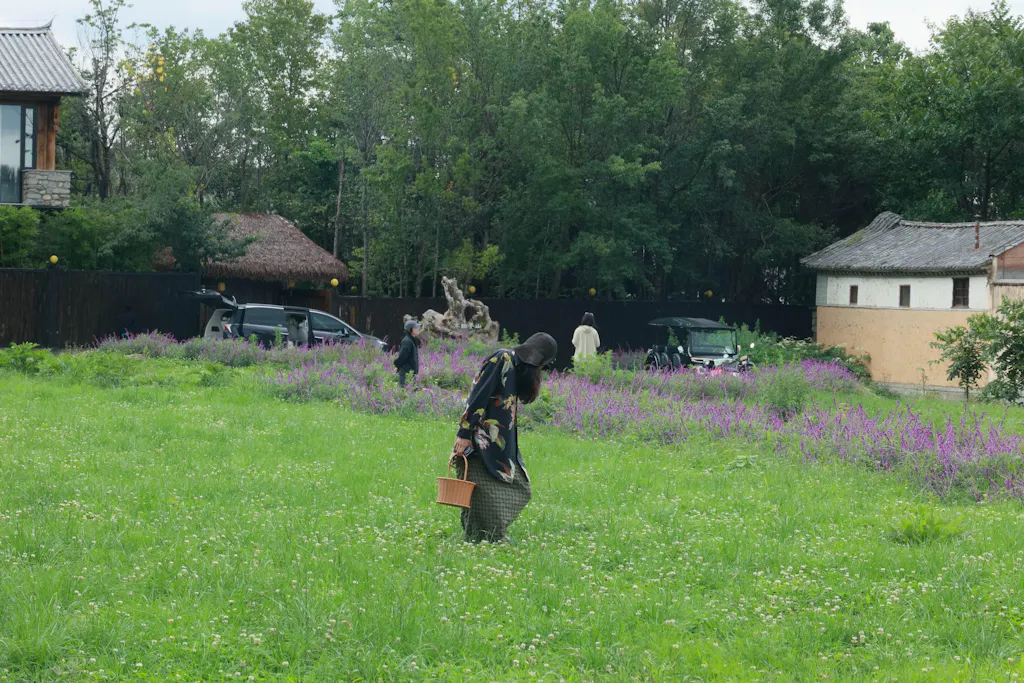
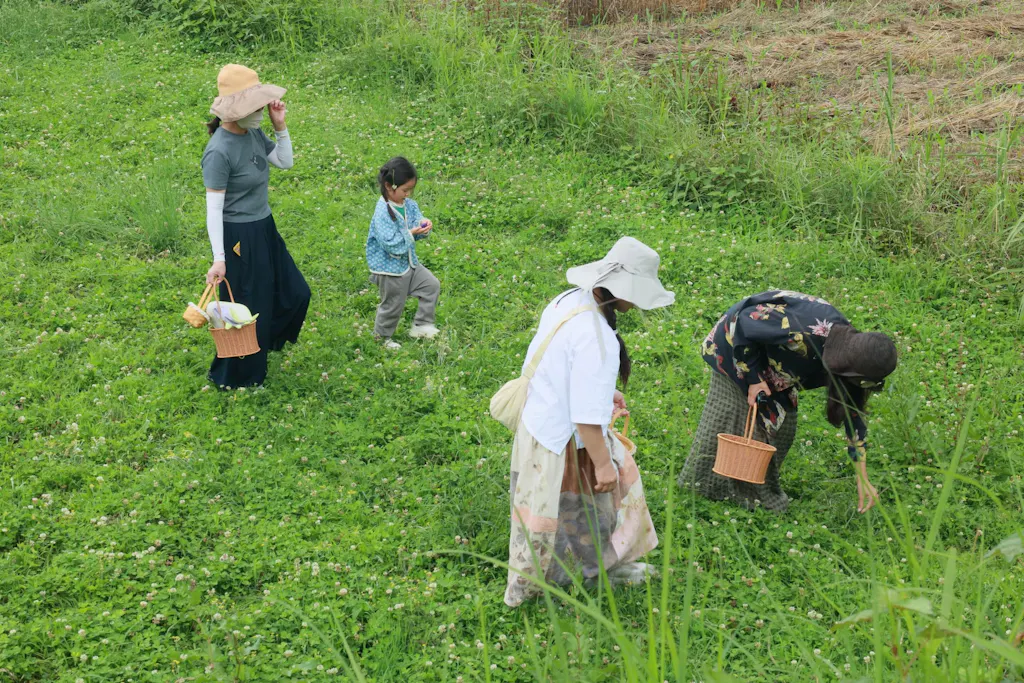
Do you remember our first tour guide, Xiaomi? As soon as we had some free time in Dali, we thought we'd take these nature ambassadors out for some outdoor fun. One afternoon, we made a last-minute appointment with Xiaomi to go rubbing plants by the stream. Amidst the flat fields and woods at the foot of Cangshan Mountain, Xiaomi and his adorable dog, Xiaoxi, led us through the fields, picking leaves, ferns, and flowers, and then we walked to the stream to rub the plants.
We've been playing with rubbing dye since we were little. We'd often pick plants from our garden and outdoors and hammer them onto canvas bags and silk scarves. Now, we walk along a mountain path to a stream strewn with small stones. We find a place to rest and a large natural rock as a platform to hammer our cloth bags in the great outdoors. This is a quiet, deserted canyon. The moment we enter, we feel a cool breeze. Touching the stream water with our hands, a chill washes through us.
Xiaomi took out the rubbing tools from her backpack. We first selected and arranged the plants, securing them to the cloth bag with scotch tape. Then, we hammered the cloth evenly and slowly. Large ferns look best when rubbing. The afternoon was a bit chilly by the stream. On the way back, we reached the mountainside and overlooked the village, Erhai Lake, the forest, and the blue sky. Dali is so beautiful no matter how you look at it!
We're all too familiar with nature observation. When our children were young, we met a group of incredibly friendly, nature-loving European instructors who took us on weekend trips through every forest in Shanghai's suburban parks. They allowed us to experience Nordic forest games: making bamboo rafts with branches, making mud masks, and sensory games—all so pure and authentic. From then on, our love of nature exploration was unstoppable.
Curious, we wanted our nature guide to open our eyes to the richness of Dali's vegetation. Just before our departure that afternoon, it unexpectedly began to rain heavily, marking the first time we'd seen rain in our week-long visit. Here, the rain falls in the east and the sun shines in the west. When we met our guide, Phoebe, the diminutive figure pulled a treasure trove from the trunk of her car. She gave Haiyun and Haina a collection of Japanese children's manga and French picture books she had translated herself. Standing under the hood of the car, Phoebe shared her hand-drawn artwork with us, taking shelter from the rain. After a short wait, the rain subsided, and we headed back into the mountains.
Phoebe's backpack was packed to the brim; even with three long-handled umbrellas inside, it towered over her head. She led us calmly inside, stopping to examine tiny wildflowers and inconspicuous leaves. Her backpack and everything on her body were like Doraemon's treasure chest, ready to pull out unexpected tools. When petals and leaves were too small to make out, she quickly pulled a magnifying glass from her pocket. Standing was a bit tiring, so she pulled three small stools from her backpack for us to sit on and take notes in our notebooks (I was wondering what these stools were; they turned out to be small folding stools). Colored pencils, various pens, double-sided tape, and clear tape were used to affix specimens to paper. Around Phoebe's neck hung a heavy SLR camera for us to capture. It was a true luxury to be treated as we should in the wild.
We played as we walked, gluing bamboo grass to our eyebrows (actually, using the bamboo grass's tiny hooks to hold them in place), laughing so hard we rolled over. After a leisurely two kilometers, we found a slightly more spacious spot, spread out a thin blanket, and took out the snacks and hot tea we'd prepared. We sat leisurely while the two children slowly documented the plants they saw. Every day, we watched the sunset in the dry forest, the vibrant colors and temperatures transporting us to a fairytale world.
Speaking of beekeepers, we'd seen them once before at an apiary near Shanghai. But this time, Chunyu completely surpassed my understanding of beekeepers. I was so ignorant I hadn't even known there were professional beekeepers. Their beekeeping life was like something out of a storybook—they put their bees in a large pickup truck and took them on a quest for nectar, following wherever flowers bloomed. It was similar to herding cattle and sheep, but with a crisscrossing experience—what a romantic journey. Chunyu claimed he only graduated from elementary school, yet his knowledge of bees and the entire food chain surpassed even that of an expert. Even more remarkable was his ability to narrate them with encyclopedia-style images, a logical and engaging narrative. He spent over an hour recounting the life cycle of a bee, opening his hive for us to observe the birth of bees and scraping fresh honey directly from the hive with a knife for us to taste. Chunyu's simple, kind, and enthusiastic nature truly touched us. He said he would soon embark on a journey of beekeeping across China. I hope that in the future I can meet the bees and pickup trucks of spring rain somewhere where flowers bloom.
He Chen, our leader for the Huoshan Sunset Hike, may look incredibly cool, but he's actually incredibly warm, enthusiastic, and patient. He led us to Huoshan, across from Cangshan Mountain, to witness the stunning sunset and Erhai Lake. The climb was steeper than we'd imagined, but He Chen was familiar with the flora and fauna, meticulously explaining each particular plant and tree we spotted. He was incredibly patient with each of us, keeping tabs on everyone along the way. We began our ascent in the afternoon, and after just over two hours, we quickly reached the summit. From this stunning vantage point, we could see Cangshan Mountain opposite, mirroring Erhai Lake in the sunset. Despite the strong wind at the summit, we sipped hot tea and watched the sunset's afterglow shift from blue to pink to purple in the fleeting hues of the clouds. After sunset, the sky quickly darkened on the return descent, and by then, the fishing fires on Erhai Lake had been lit.
Summer Huang
Completed in Shanghai on October 8, 2025